Blueberry Not-Quite-A-Pound Cake

13 Mar

Blueberries are not in season. Despite this undeniable fact, I couldn’t resist them when the grocery store had them for buy-one-get-one-free last week. I begin longing for berries long before the first ones roll around in June, so bear with me here. Obviously what we’re getting in the mid-Atlantic US right now aren’t the sweetest or plumpest berries, but the tartness does make them great for baking applications. That combined with a citrusy glaze make this humble loaf cake something special. Its texture and flavor closely resemble that of a pound cake, but the ratio of ingredients isn’t quite there, so let’s just call it something else.

Blueberry Not-Quite-A-Pound Cake

Cake:

  • 4 oz. butter, softened
  • 1 cup sugar
  • 2 eggs
  • 1/4 cup milk mixed with ¼ cup sour cream
  • 1 teaspoon vanilla extract
  • 1 3/4 cups all-purpose flour
  • 1 teaspoon baking powder
  • 1/4 teaspoon salt
  • 1 cup fresh or frozen blueberries

Glaze:

  • 1 orange, for zest and juice
  • ½ -3/4 cup powdered sugar

Grease and flour a 9×5 in. loaf pan and preheat the oven to 350 degrees F.

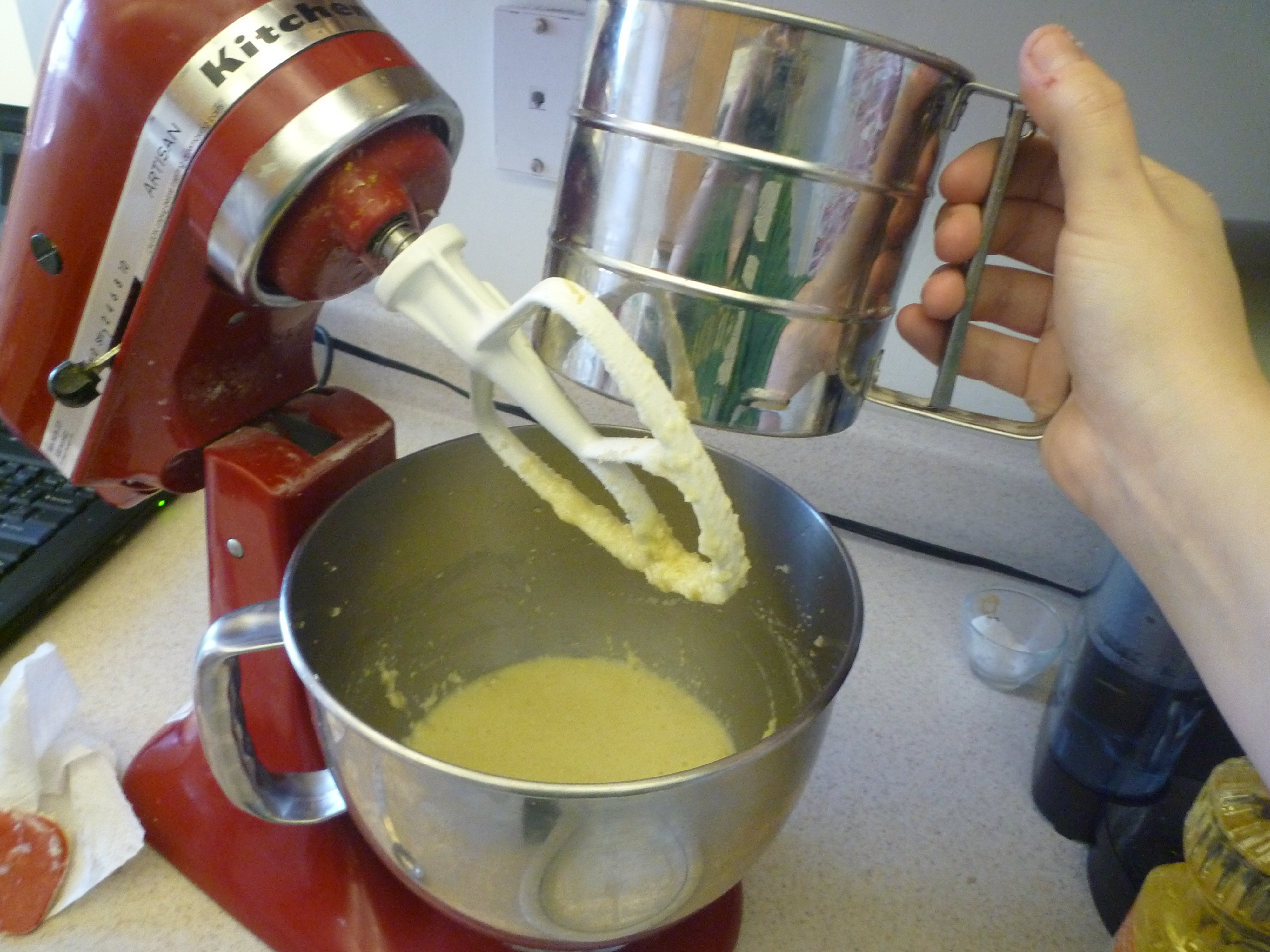
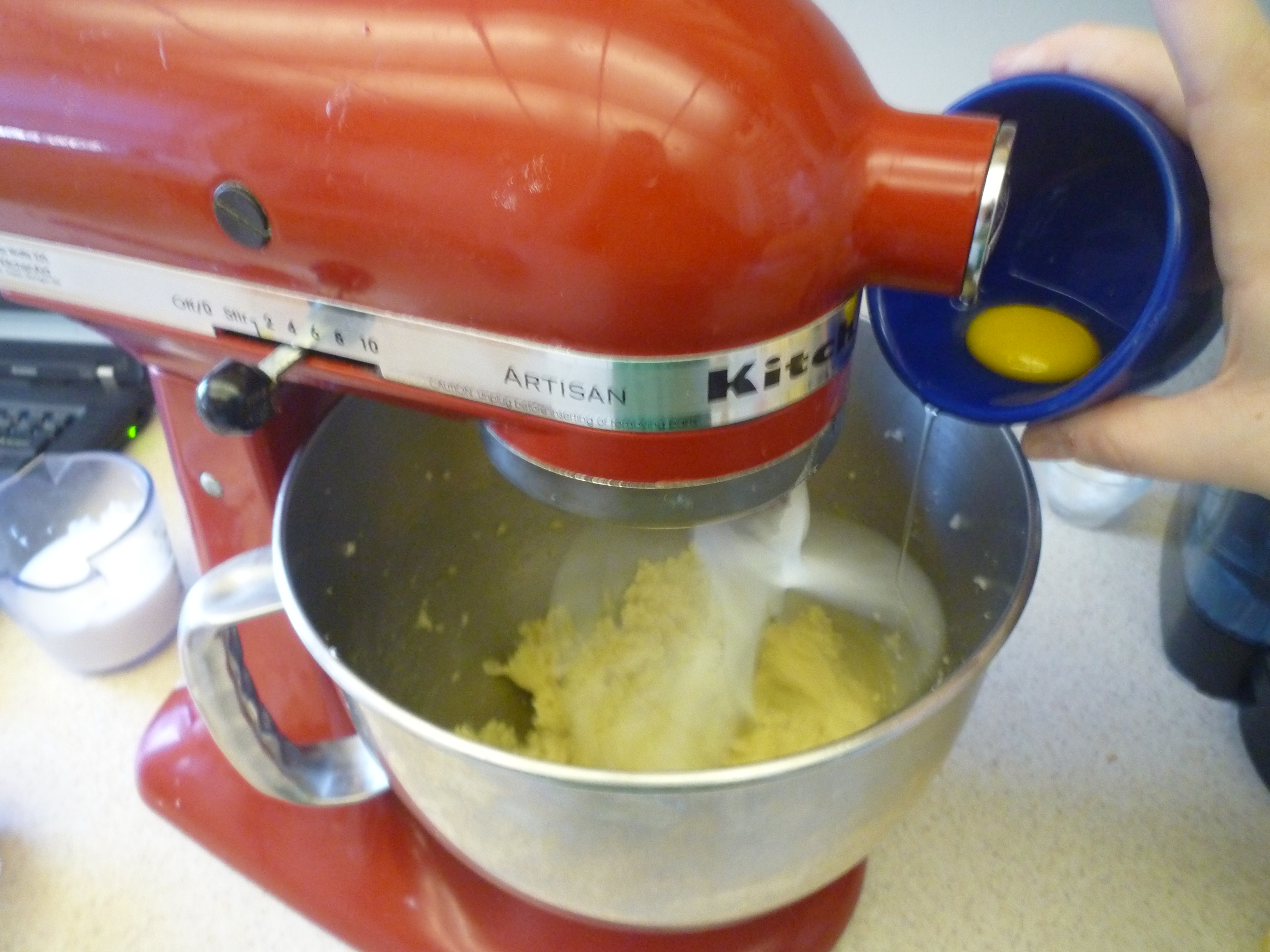
In a large mixing bowl, cream the butter and sugar. Add the eggs, one at a time, followed by the milk/sour cream and the vanilla extract.


Put the flour, baking powder and salt in a sifter. Gradually sift the dry ingredients into the wet and mix just until combined.

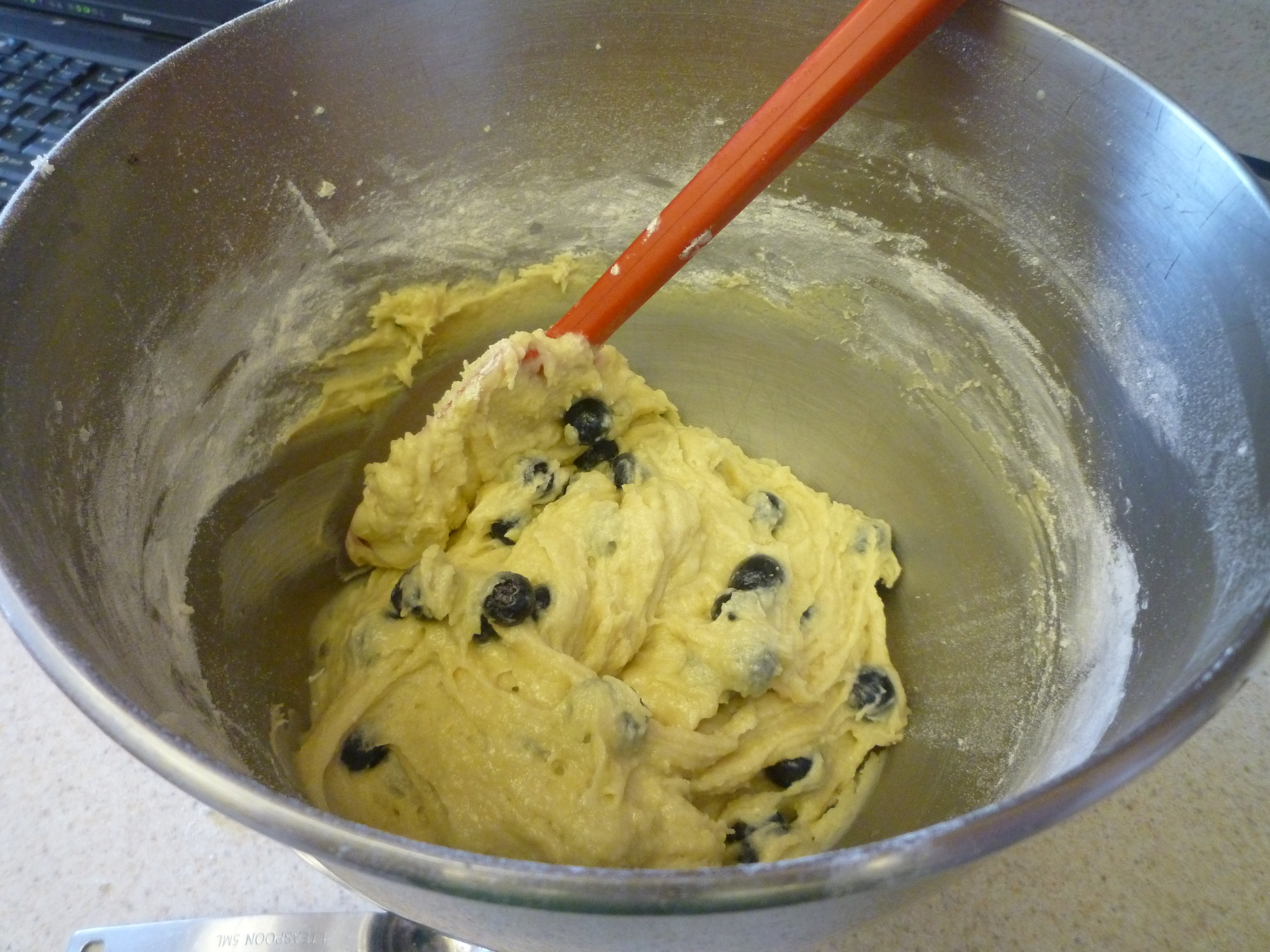
Gently fold in the blueberries. The batter will be quite thick.

Spread the batter evenly into the loaf pan and bake for 55-60 minutes, or until a toothpick inserted in the middle comes out clean. Once removed from the oven, let it cool in the pan for 15 minutes before turning out onto a rack to cool completely.

To make the glaze, squeeze the orange (I used a seedless navel orange) into a bowl until you have about 3 tablespoons of juice. Then grate 1-2 tsp. of orange zest and add it to the juice. Mix in powdered sugar until a consistency is reached that will allow the glaze to ribbon when poured. Drizzle this over the cake while it is still warm. I’d wait about 40 minutes to cut into the cake so that it is sturdy enough to slice evenly without smashing.

It’s really good. How good? I’ve made two in the last week at super-fiance’s request and he refuses to share it with his coworkers (sorry EAB, I tried!).

Ciao for now,

Neen

How to not be grumpy on Valentine’s Day

14 Feb

I’ll say it: I like Valentine’s Day.

It’s an easy holiday to loathe. Super-saturated with frilly pink hearts, unreasonable expectations, gender imbalance, and overpriced candy (the horror!), I can understand why it might lead to feelings of grumpiness. But like many things in life, it’s about changing perspective. Eight years ago, my now-fiancé was the first person to ever take me out on what some consider the world’s most frustrating holiday. I didn’t really date much before I met Joe, and so my view of Valentine’s Day developed outside of the narrow frame that greeting card companies would prefer you to acknowledge.

As with Christmas, I feel like you have to strip away the over-commercialization and remember that holidays are just extra reminders to acknowledge and thank the people in your life who make it brighter. Whether it be co-workers that help the workday go a little faster, friends and family that bring you joy, or that special someone who makes you feel like the coolest person in the world, just say “thank you.” Remind someone that he or she makes a difference. Heck, go to CVS and buy some Batman valentines if you want to be silly. It’ll make someone smile.

And isn’t that really one of the best things in life, making people smile?

This time last year, I wrote about being grateful for the people who have impacted my life in a positive way over the last decade. How they made it possible to heal, grow, and accept that while life is never perfect, it is always hopeful. As Mary Oliver writes in my favorite poem, “Whoever you are, no matter how lonely, the world offers itself to your imagination…”

So if you’re feeling down today and you really need a boost, just say “thank you” and share a smile with someone.

Oh, and make banana bread! (Come on, it wouldn’t be Neen’s Notes without a good recipe). Here’s what I made for some of the great people in my life today. When life hands you overripe bananas and ricotta leftover from making lasagna—but not enough to make another lasagna—make banana bread.

Truly Lovable Banana Bread

Ingredients

  • 2 cups flour
  • 1/2 tsp. salt
  • 3/4 tsp. baking soda
  • 1/4 tsp freshly ground nutmeg
  • 1 tsp. cinnamon
  • 1/2 cup brown sugar
  • 1/2 cup white sugar
  • 4 tbsp. butter
  • 3 bananas, mashed
  • 1/3 cup part-skim ricotta cheese
  • 1 tsp. vanilla extract
  • 1/4 tsp. almond extract
  • 2 eggs

Method

Preheat the oven to 350 degrees F.

Combine the flour, salt, baking soda, and spices in a medium sized bowl and set aside.

In the bowl of a stand mixer, beat the butter and sugars together until smooth and then add the eggs one at a time, beating well between each addition. Add the ricotta, bananas, and extracts and mix just until combined.

Add the flour mixture and beat on low speed or by hand just until a batter forms and there are no remaining dry spots.

Spoon the batter into a greased 9×5 or 8×4 1/2 loaf pans and bake for 1 hour, or until a toothpick inserted in the center comes out clean.

Enjoy, my friends, and a happy Valentine’s Day to you all.

Ciao for now,

Neen

Strawberry-Lemon Macarons

22 Jan

Oh hi, I didn’t see you there…Happy New Year!

I was a busy holiday season. Lots of candy, cookies, and granola were made and many smiles were shared with family and friends.

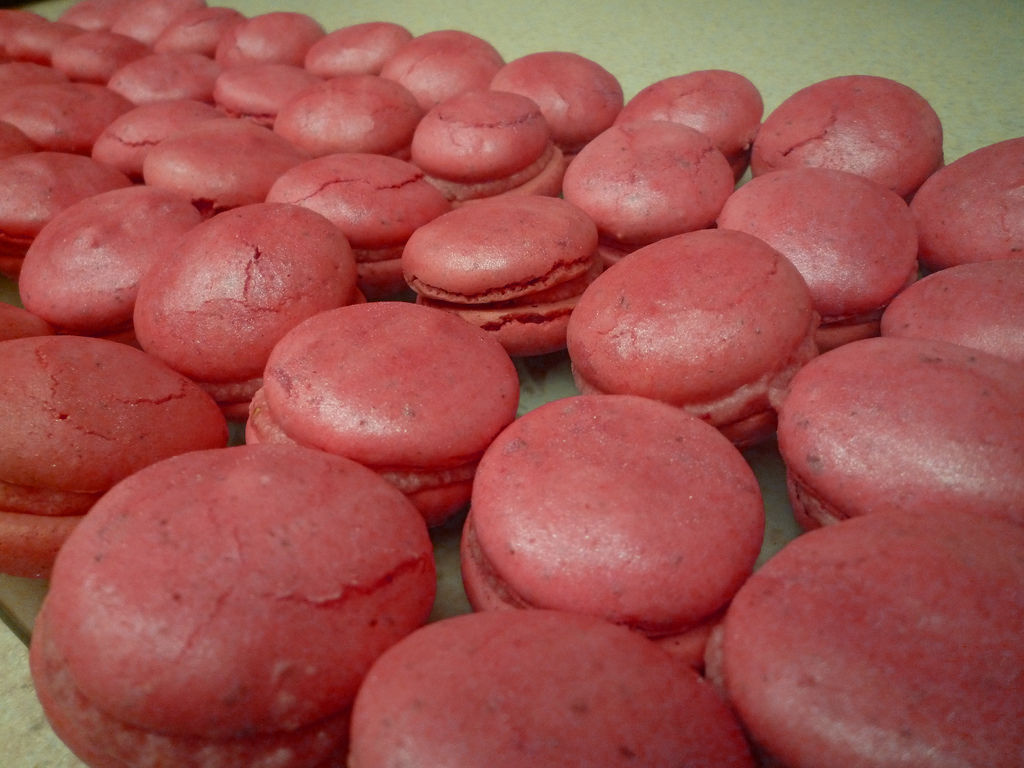
Neen’s Notes is finally back after a whirlwind few months, and I’ve brought you something truly delightful and delicate: The Macaron! And what an awesome little cookie it is. Finely ground almonds and powdered sugar mixed into well-beaten egg whites to form an incredibly delicious meringue. When baked correctly, they come out with crisp outsides and chewy middles. The best part is figuring out what to sandwich between them. Yum.

There are many methods for making macarons floating around. I found this to be the one that worked best given the time frame I had and the equipment and relatively small space of my kitchen at home.

Shall we get our French cookie-baking on? I think we shall…

Strawberry-Lemon Macarons

Ingredients for the cookies:

  • 5 oz. sliced almonds (blanched will give you a more polished look)
  • 8 oz. powdered sugar
  • 5 oz. egg whites
  • 2.5 oz. granulated sugar
  • 1 tsp. vanilla extract
  • Pinch of salt
  • Zest of one lemon
  • Red food coloring (optional)

Ingredients for the strawberry-lemon filling:

  • 4 oz. butter, softened
  • 3 cups powdered sugar
  • 4-5 strawberries
  • 1-2 tbsp. cream
  • Zest of one lemon
  • Pinch of salt

First, get your workspace ready. Fit a piping bag with a plain ½ inch tip (or just cut the corner off of a plastic bag) and line 4 baking sheets with parchment paper.

In the bowl of a food processor, grind the almonds until fine and then grind with the powdered sugar and lemon zest until a sandy texture is reached.

Mix the food coloring into the granulated sugar and set aside (the color doesn’t need to be perfectly distributed). I went very easy on the food coloring, so my cookies looked almost salmon-colored when piped, but gel food colorings brighten as they set so I always err on the light side. You’ll see that the finished product is very pink.

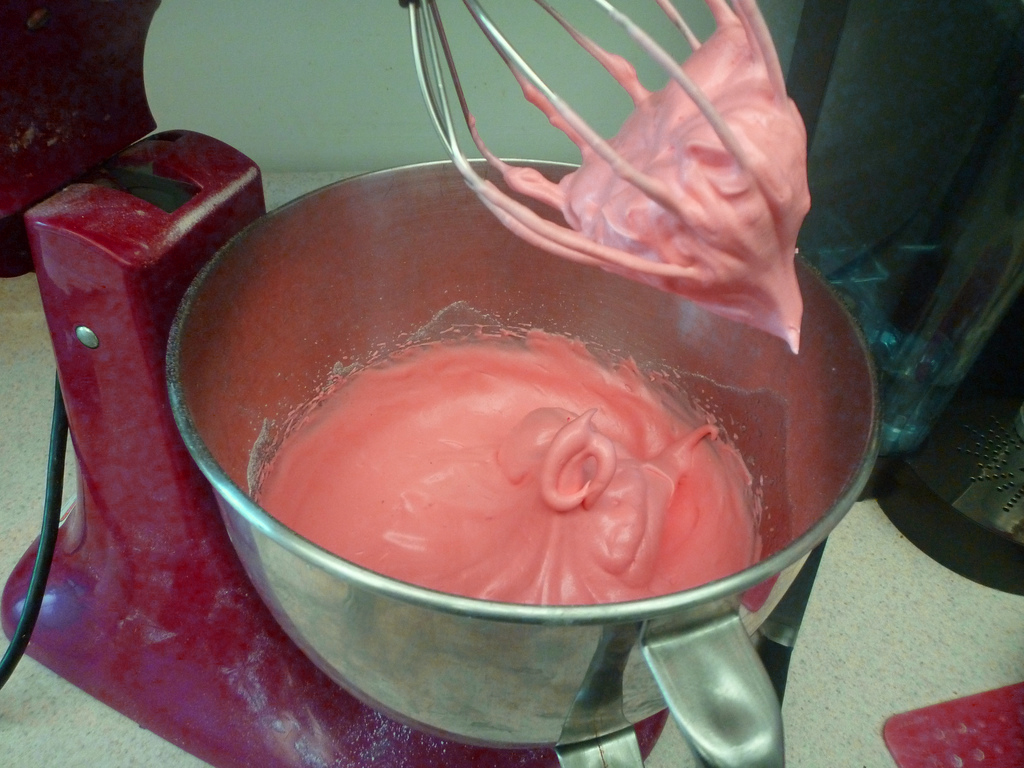
Put the egg whites and salt in the bowl of a stand mixer and whip them on medium speed until foamy. Increase the speed and slowly add the granulated sugar. Beat until stiff peaks form.

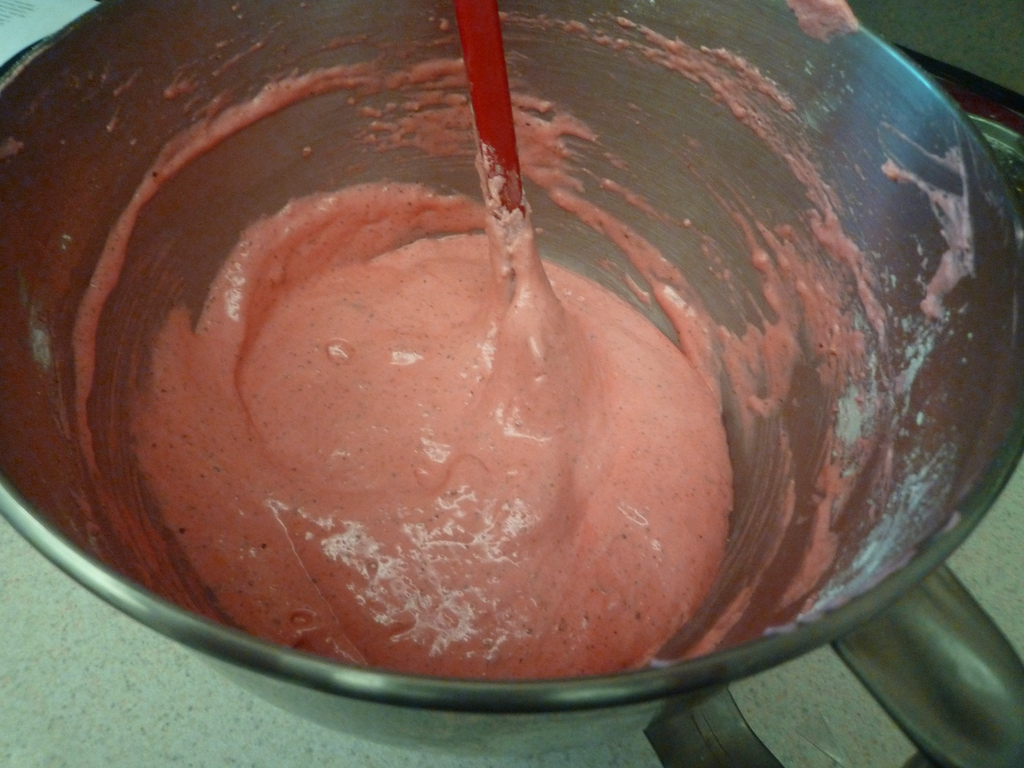
Add the almond mixture and vanilla extract to the meringue and start folding and mixing it in. I do this by hand because it is much easier to feel when it smooths out. You don’t want to overbeat it, but you want a nice texture that ribbons when you lift the spatula out of the bowl.

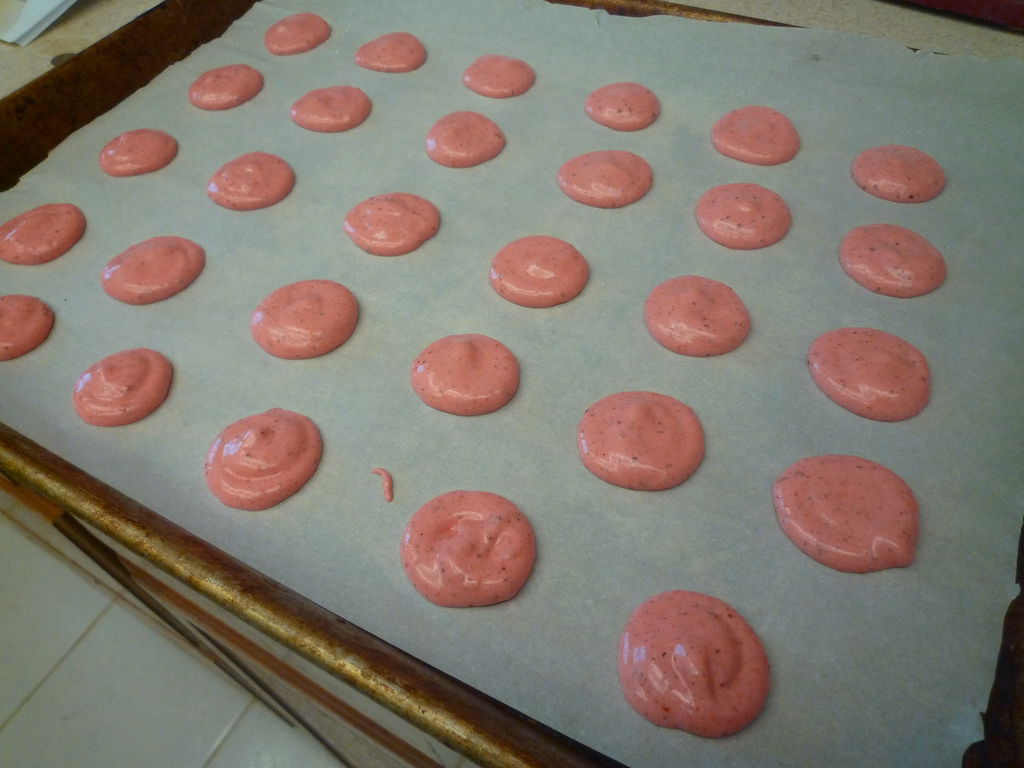
Transfer the batter to the piping bag and pipe small 1.5 in. circles about 1 inch apart on the baking sheets. Tap the baking sheets on the counter to get rid of any air bubbles in the batter. Leave the baking sheets of cookies at room temperature for about a half hour or until the tops appear somewhat dry.

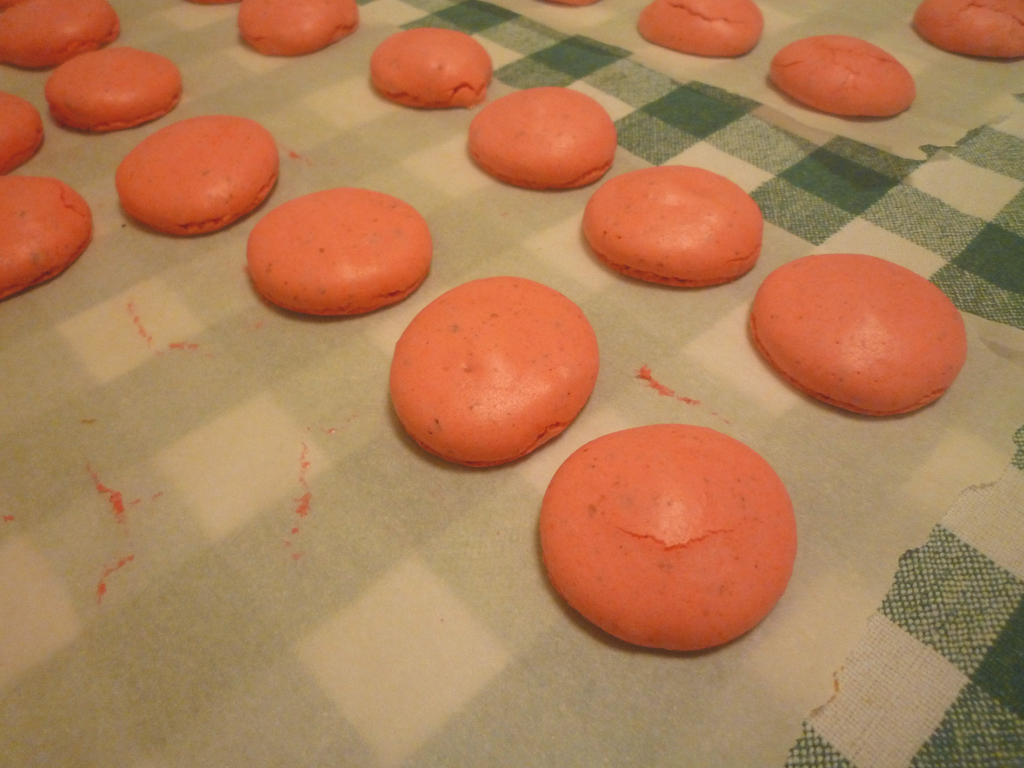
Preheat the oven to 300 degrees F. Bake the cookies for 16-20 minutes, or until they are puffed up, feel dry, and peel away from the parchment paper easily. Rotate the pans once in the middle of cooking. Cool on a wire rack.

While the cookies are cooling, prepare the strawberry-lemon filling.

In the bowl of a food processor, puree the strawberries and then add the butter and 2 cups of powdered sugar and process until well combined. Add a pinch of salt, the cream, and powdered sugar until a creamy texture is reached. Again, cut the corner off of a plastic bag and transfer the icing to it.

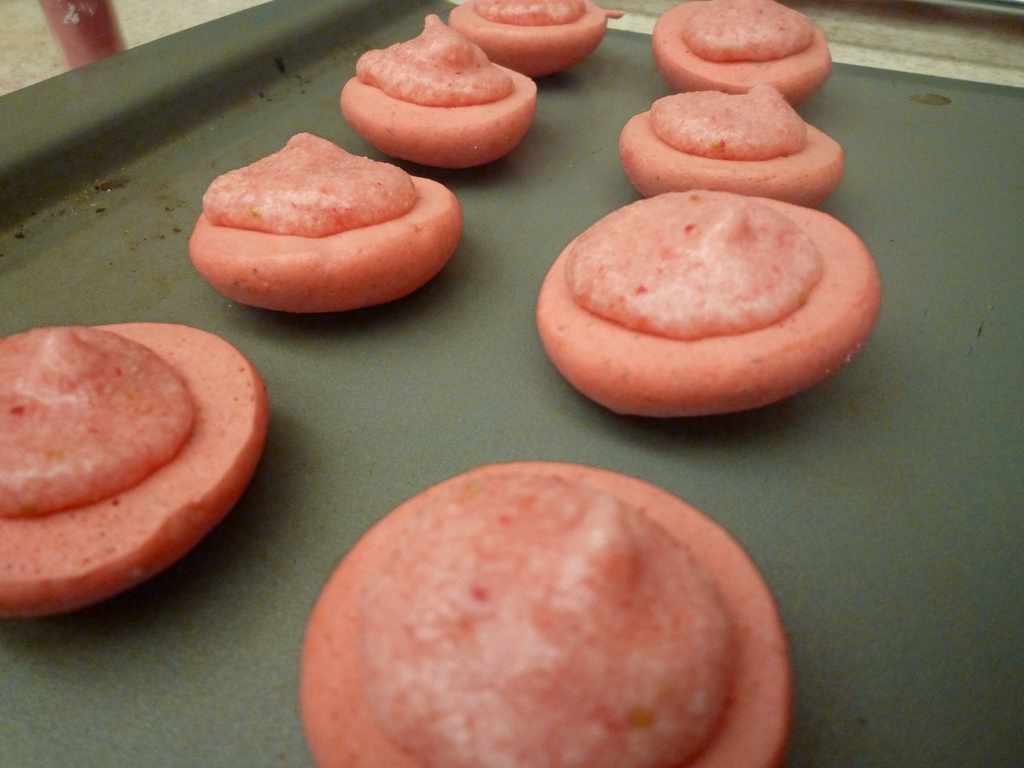
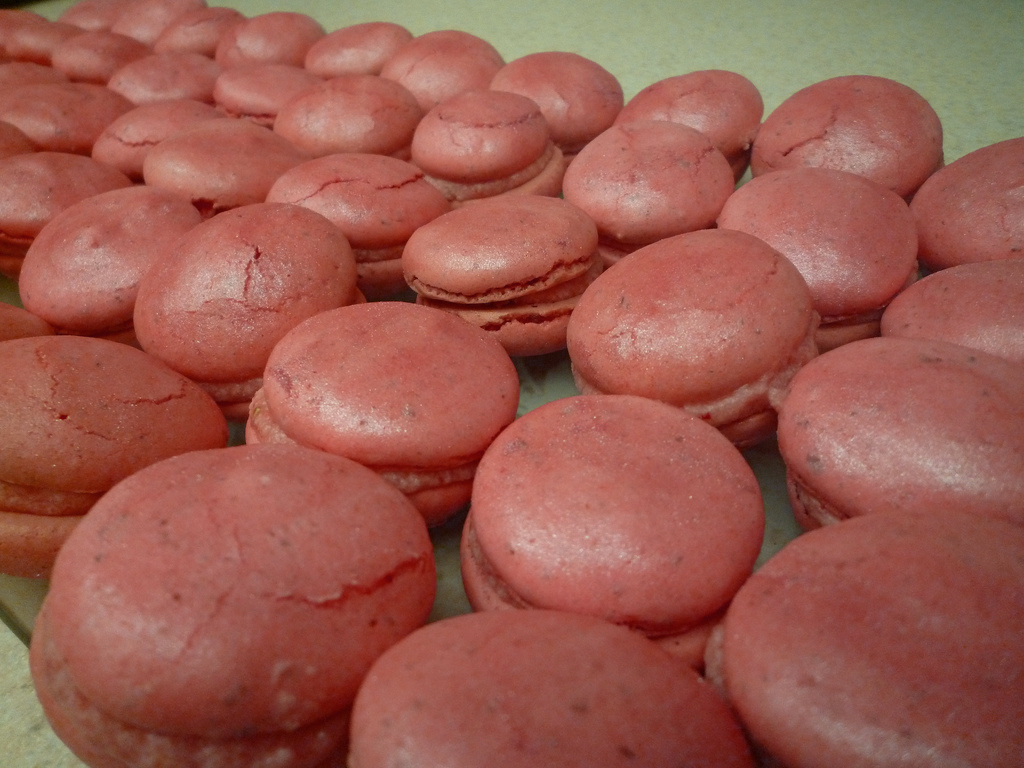
Pipe small circles onto the flat side of one meringue and sandwich another cookie on top, pressing lightly to spread the filling to the edge. Be gentle, as you’ll see from my final photos, the cookies are delicate and crack easily.

I brushed these ones with a little bit of luster dust to make them shiny.


Store the cookies covered in the refrigerator for up to a week. These were sent off to Joe’s office as a Friday treat for him and his colleagues.

Looking forward to sharing all sorts of recipes with you in the new year. Let’s make 2012 the most delicious one yet!

Ciao for now,

Neen

Coconut Cake for Lynn

16 Nov

Over the summer, I discovered my future mother-in-law’s love for coconut cake. Her only complaint was that half the time you order it somewhere, it turns out to be a plain white cake covered with tooth-achingly sweet seven-minute frosting and bland shredded coconut. The coconut flavor just isn’t there. Right then, I knew exactly what I’d make for her birthday this year.

Many coconut cake devotees insist that the only way to achieve real coconut taste is to use a fresh one, but I couldn’t find one anywhere in Northern Virginia. I’d even charged the power drill, but it wasn’t to be. After some research I discovered other ways of injecting some true coconut flavor into the cake, and I have to say that I think it turned out even better because of how the ingredients created a soft, tender cake and rich icing with just the right amount of sweetness. It was a big hit among the family and I think honestly, one of the best cakes I’ve ever made.

Coconut Layer Cake for Lynn

For the cake:

  • 2 1/4 cups cake flour, sifted
  • 2 1/4 teaspoons baking powder
  • 1/2 teaspoon salt
  • 1 2/3 cups sugar
  • 1/3 cup butter, softened
  • 2 large eggs
  • 1 (14-ounce) can light coconut milk
  • 1/2 tablespoon vanilla extract
  • 1/2 tablespoon coconut extract

Frosting and decoration:

  • 16 oz.cream cheese
  • 4 oz.butter, softened
  • 2 cups powdered sugar
  • 1/2 cup cream of coconut
  • 2 cups shredded coconut, half sweetened, half unsweetened, toasted until golden in a 350 degree F oven for 3-5 minutes.

Preheat oven to 350°.

Coat 2 (9-inch) round cake pans with butter and dust with flour.

Whisk together 2 1/4 cups sifted flour, baking powder, and salt, and set aside.

Place sugar and butter in a large bowl; cream at medium speed until well blended (about 5 minutes). Add eggs, 1 at a time, beating well after each addition. Add flour mixture and coconut milk alternately to the wet ingredients, beginning and ending with flour mixture. Stir in extracts.

Pour batter into prepared pans. Sharply tap the pans once on countertop to remove air bubbles. Bake at 350° for 30 minutes or until a wooden pick inserted in the center comes out clean. Cool in pans 10 minutes on wire racks, and then remove from pans. Cool completely on wire rack.

Wrap cooled cakes tightly in plastic wrap and refrigerate overnight.

Prepare the icing by beating the cream cheese and softened butter together on medium speed until fluffy and smooth. Then, switch to a whisk and slowly add the powdered sugar and cream of coconut and whisk until smooth. Cover the bowl of icing and refrigerate until use.

To assemble the cake, unwrap one layer and cover it with a layer of frosting. Add the next layer and frost the entire cake lightly and return it to the refrigerator. Once the icing has set up slightly, apply a final, smooth coat of icing and finish with the toasted, shredded coconut.

Oktoberfest Brew-Curds Cheddar

12 Oct

October has definitely arrived. Fortunately, that just means we’ve moved into football/beer season.

And comfort food season! Fall food is my kind of food. This weekend I decided it was finally time to combine cheese making and beer. Ever put beer in a mornay sauce? Do it and tell me if you ever make macaroni and cheese without it again.

Back in March, I made a wheel of Farmhouse Cheddar that came out pretty darn good. Good, but not great. For the last few months, I’ve been having some…issues…with cheese making. My wheel of gouda dried out because the humidity in my cheese fridge kept dropping too low. I pressed a second one over the weekend, but it will be waxed this time since my cheese making cohorts have advised me that the coating will protect it in a slightly less-than-ideal aging environment. Part of the reason it dried out so easily was due to equipment problem number 2: My pot. Because my largest pot (that fit a burner on my electric range) was still too small to fit two gallons of milk, I was halving recipes and making smaller wheels of cheese. I might have gotten away with the thicker rind on a larger wheel of cheese, but on the small ones it just meant the whole thing turned into a little brick.

Undeterred, I scoured the Internet until I found just the ticket: A 12 quart double-boiler. Now I could finally heat 2 gallons of milk evenly over a water bath with greater accuracy and better long-term temperature control. Armed with a new pot, new blocks of shiny red wax, and recently calibrated thermometer, I got back on the horse with a decidedly autumn cheese:

Brew-Curds Cheddar

 Just in time for Oktoberfest, it’s a cheddar wherein the curds are soaked in beer before pressing. Let’s do it.

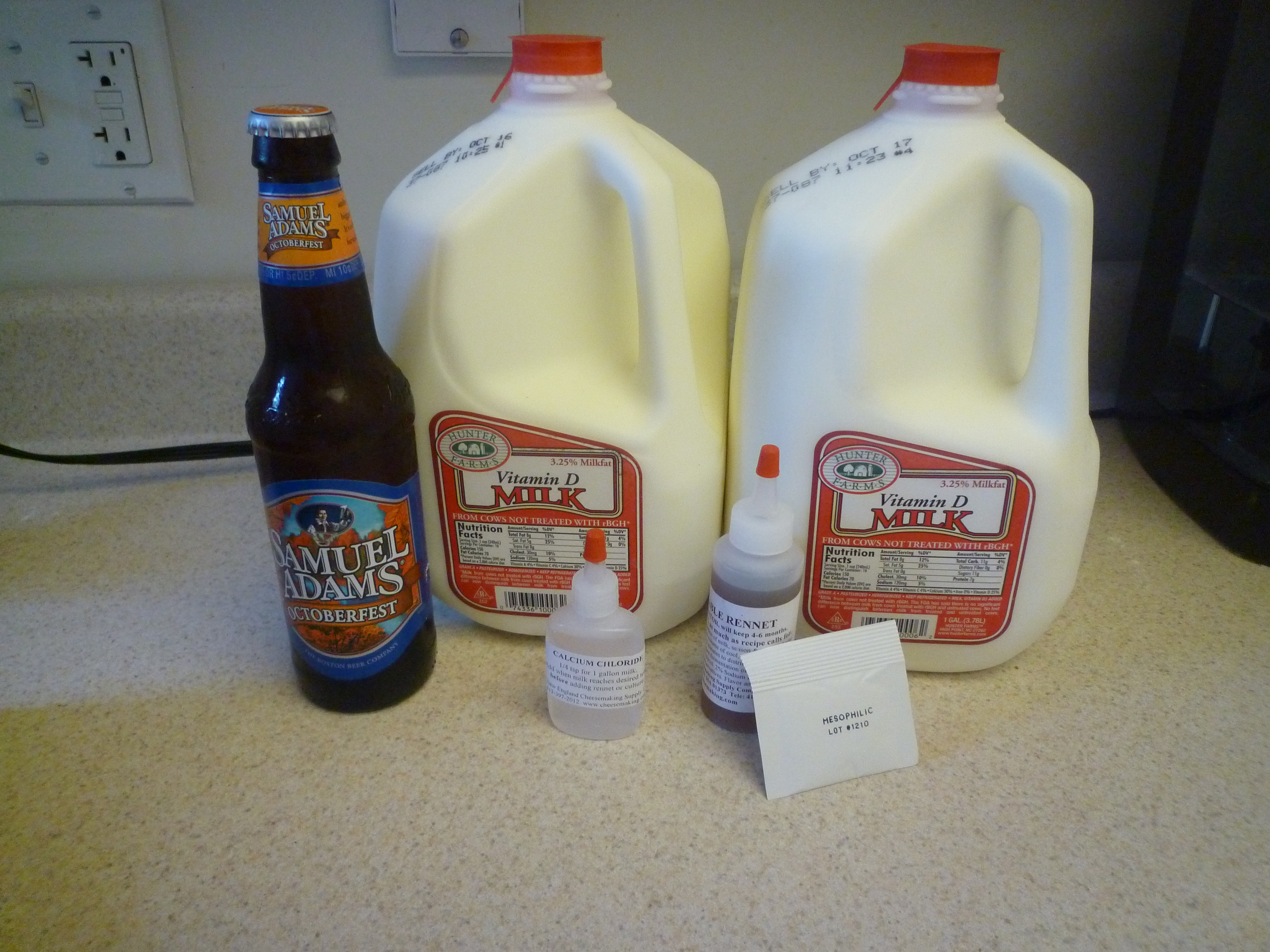
Ingredients

  • 2 gallons whole milk
  • 1 packet mesophilic starter
  • ½ tsp. calcium chloride diluted in ¼ cup cool water
  • ½ tsp. rennet diluted in ¼ cup cool water
  • 1 bottle stout or ale of your choice , at room temperature. Pick something that you enjoy drinking!
  • 1 tbsp. kosher salt
  • Cheesecloth


Method

Slowly heat the milk in a pot set over a water bath to 88 degrees F over a period of about 15 minutes. Turn off the heat. Sprinkle the starter into the milk and allow it to rehydrate for five minutes before stirring it into the milk thoroughly with a whisk using an up and down motion. Maintaining the 88 degree temperature, cover the pot and allow the milk to ripen for 45 minutes.

Add the calcium chloride and mix for one minute, then add the rennet and mix for one minute. Once again, maintaining the 88 degree temperature, cover the pot and allow the mixture to set for 30-45 minutes or until the curd gives a clean break when cut with a knife.

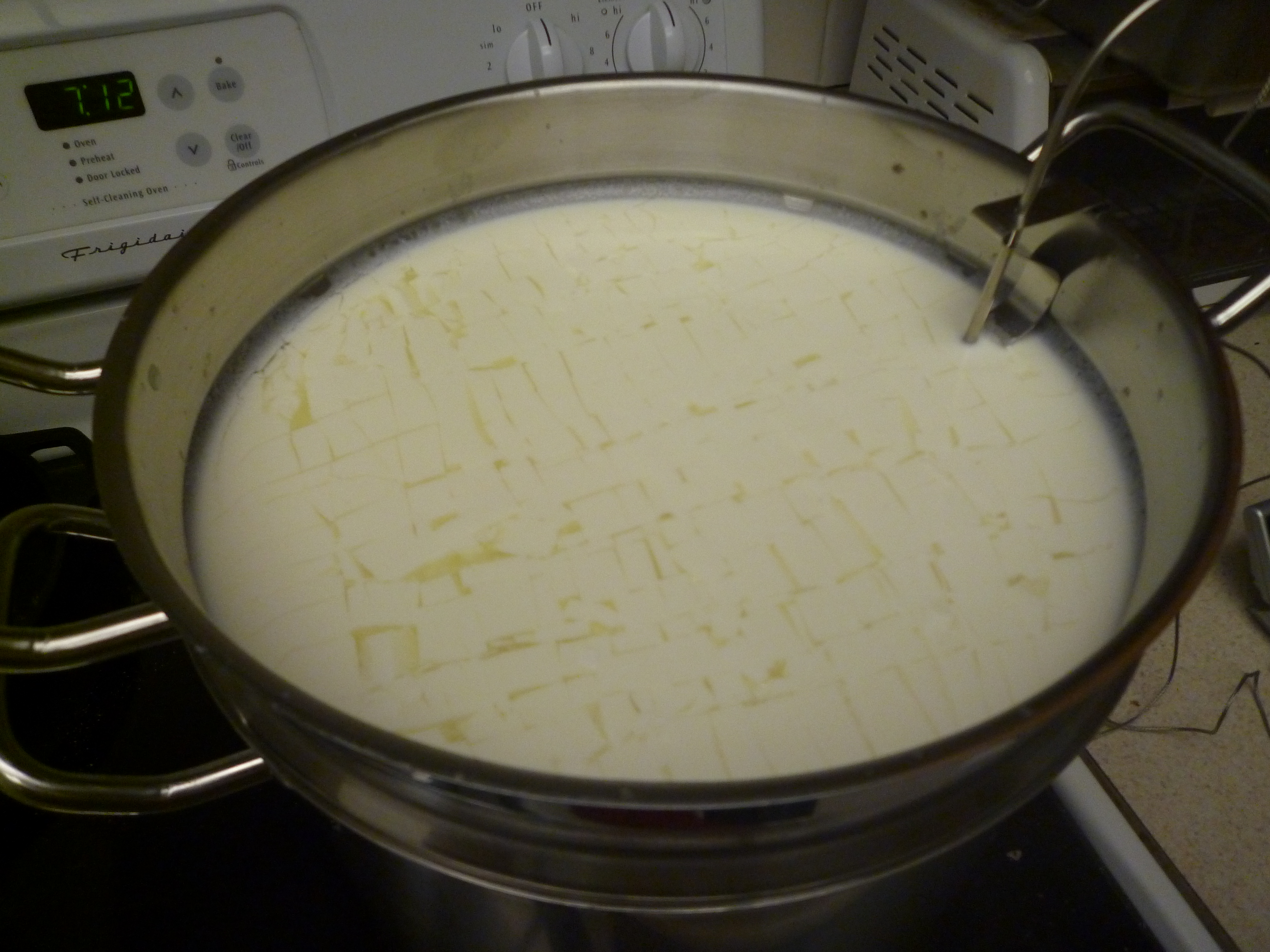
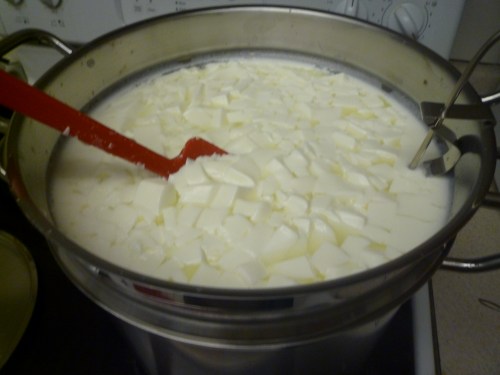
Cut the curd into ½ in. cubes and let them sit for 5 minutes.

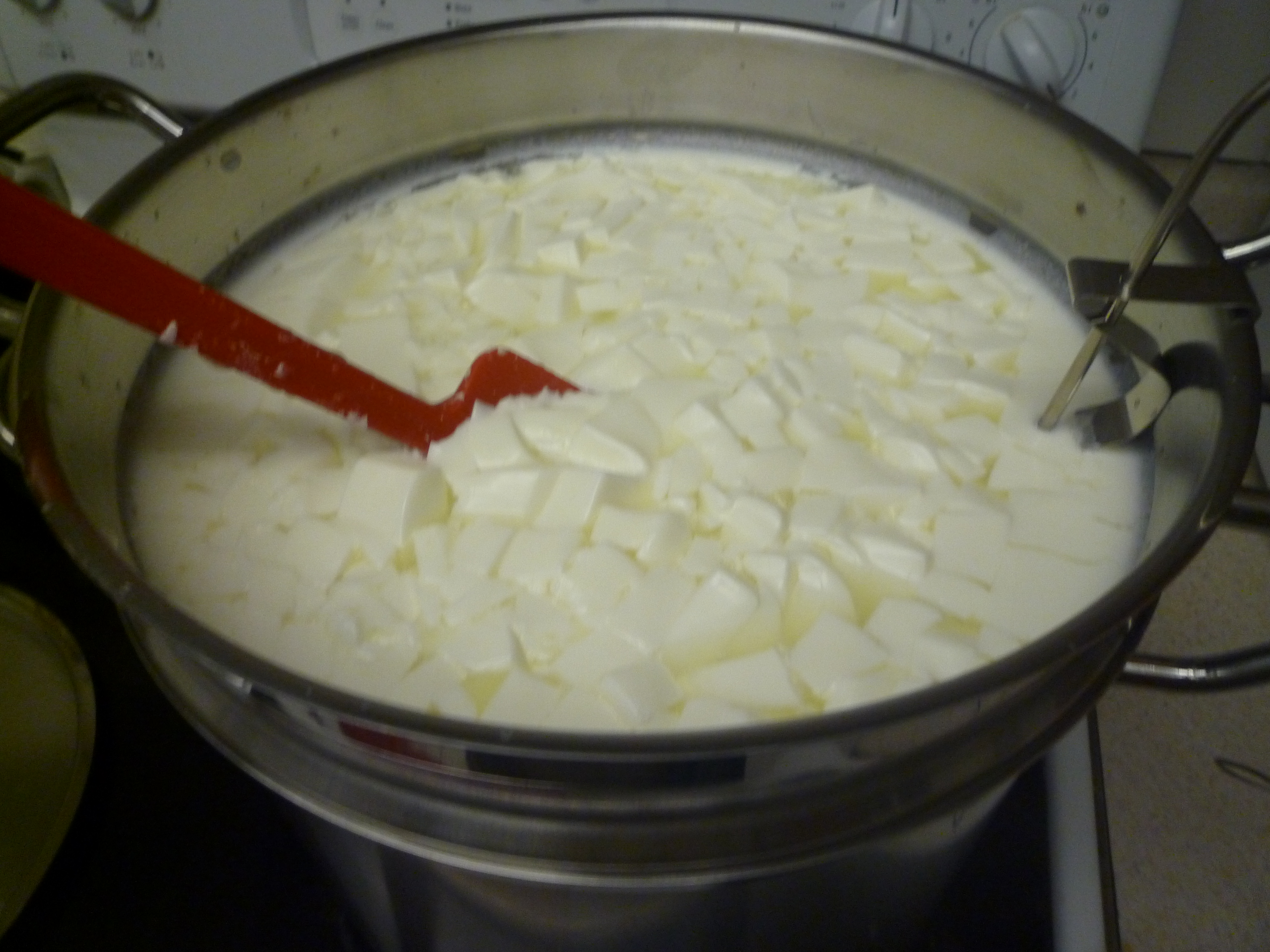
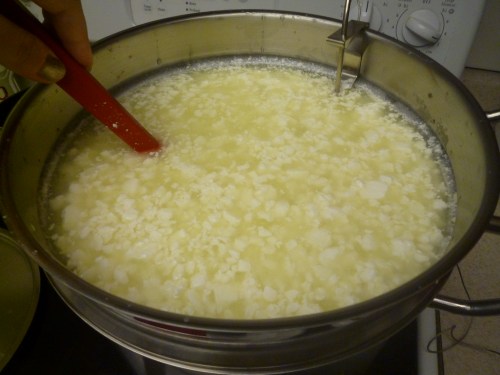
Over low heat, slowly bring the temperature of the curds to 102 degrees F over a period of about 40 minutes. Stir continuously throughout heating to prevent the curds from matting together. The curds will release a lot of whey and shrink to the size of peanuts. When 102 degrees F is reached, turn off the heat and rest for 30 minutes while maintaining the temperature. The curds will sink to the bottom of the pot.
Place a strainer lined with a double layer of cheesecloth over a pot or bucket large enough to catch the whey. Gently pour off the whey into the bucket and ladle the curds into the strainer. Let the curds drain for 10 minutes.

Return 1/3 of the reserved whey to the pot on the stove and reheat it to 102 degrees. Place the curds in a colander, set the colander over the pot of whey and cover. Maintaining the 102 degree temperature of the whey, wait 10 minutes and the curds in the colander will have melted into a slab. Flip the slab over and repeat this process every 15 minutes for one hour. After one hour, the slab of curds will look shiny and white.

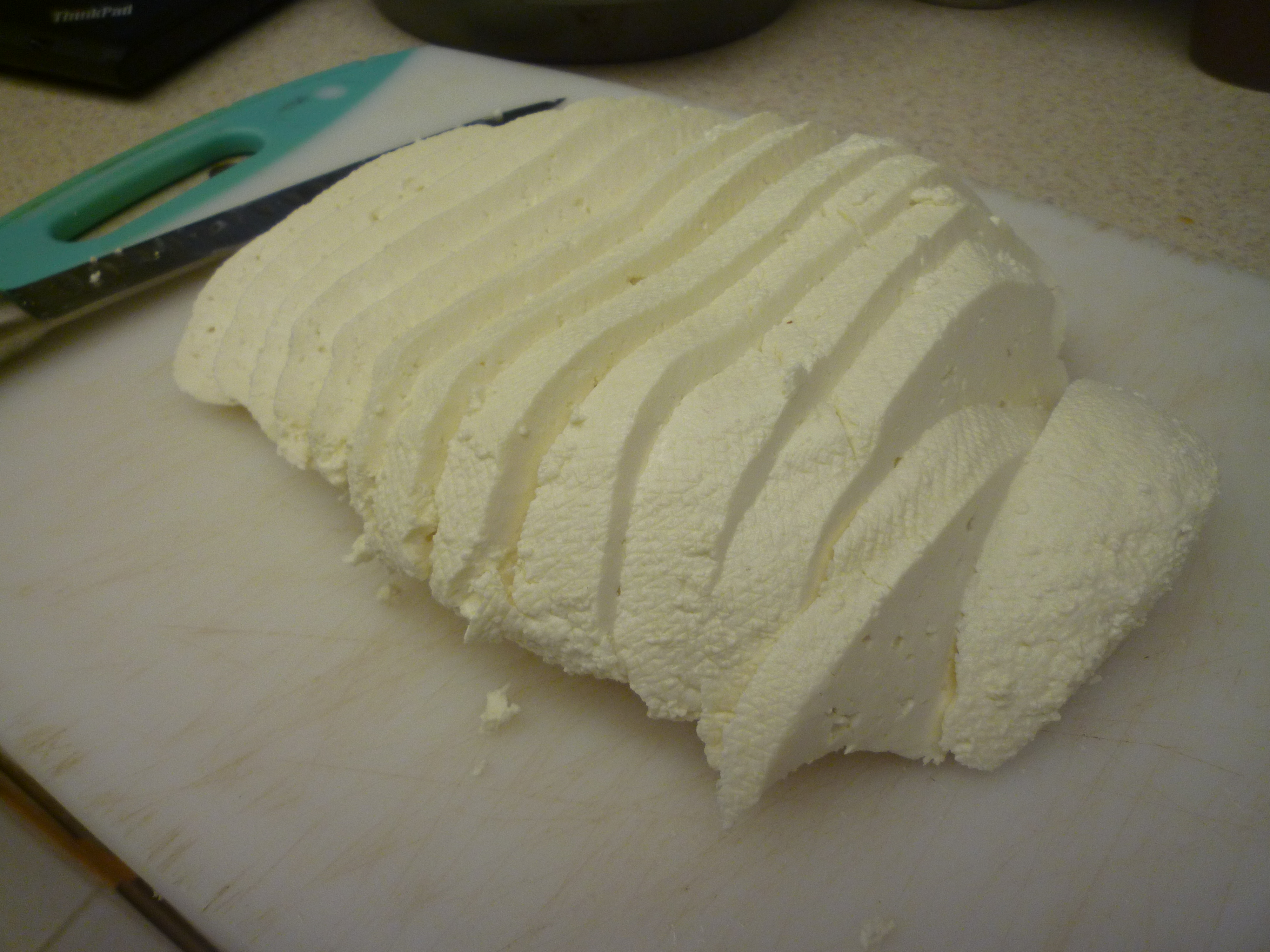
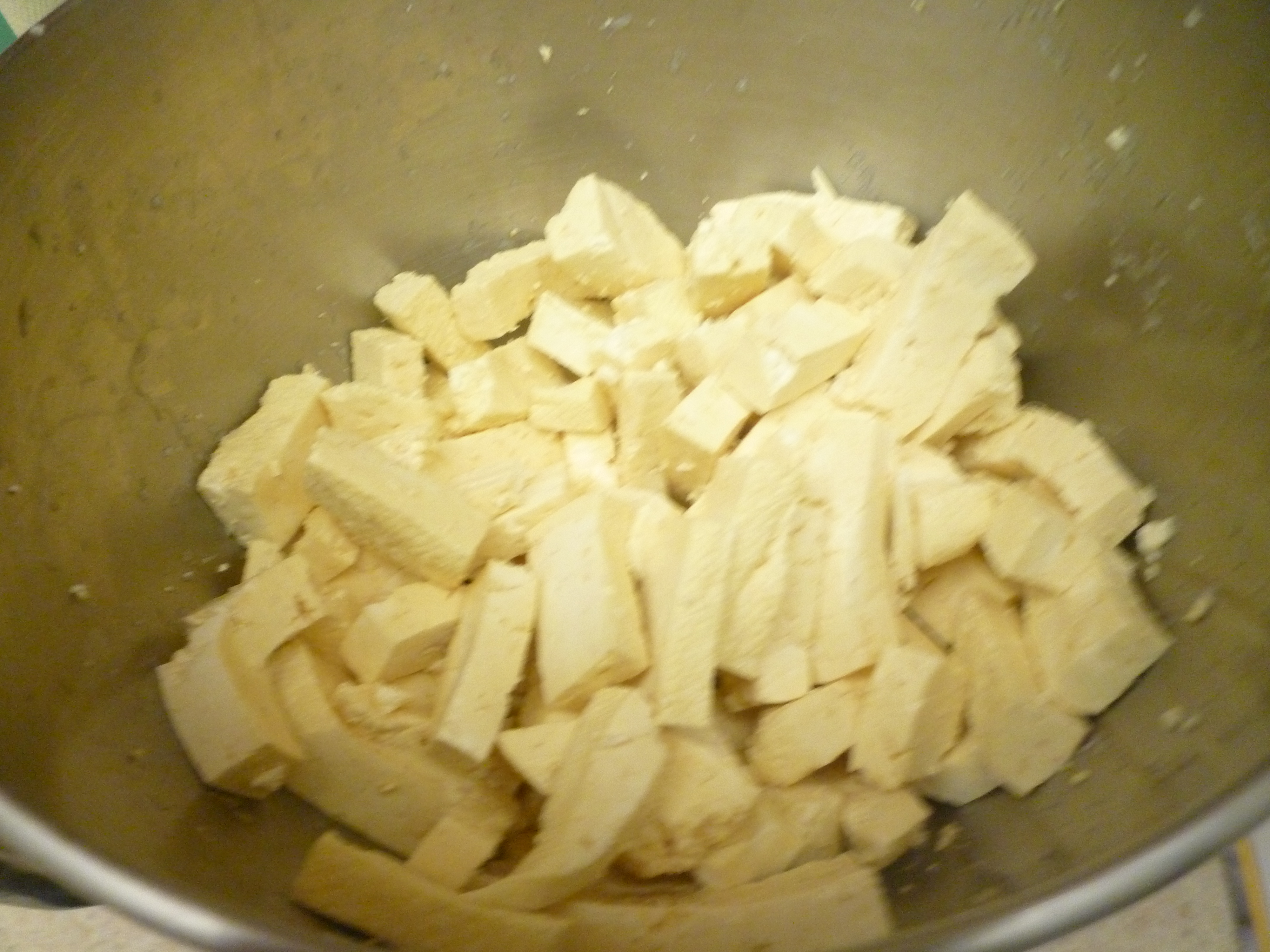
Transfer the slab to a cutting board and cut into ½ in. by 2 in. strips. Place the strips in a bowl and cover completely with the brew of your choice. Soak for 45 minutes.

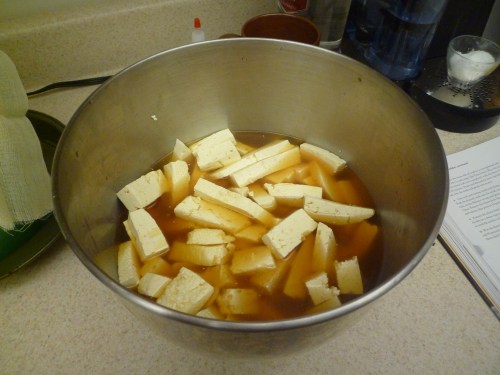
Drain and discard the brew. Sprinkle the salt over the strips and toss to combine.

Line an 8 in. mold with damp cheesecloth and pack the curds into it. (See: Building a cheese press and Using a cheese press). Fold over the cheesecloth and press the curds at 8 lbs. of pressure for one hour. Remove the cheese from the press, flip it over, redress in the cheesecloth and press at 10 lbs. of pressure for 12 hours.

Remove the cheese from the mold and unwrap the cheesecloth. Pat the cheese dry and set on a rack to air dry 1-2 days at room temperature or until the surface is dry to the touch.

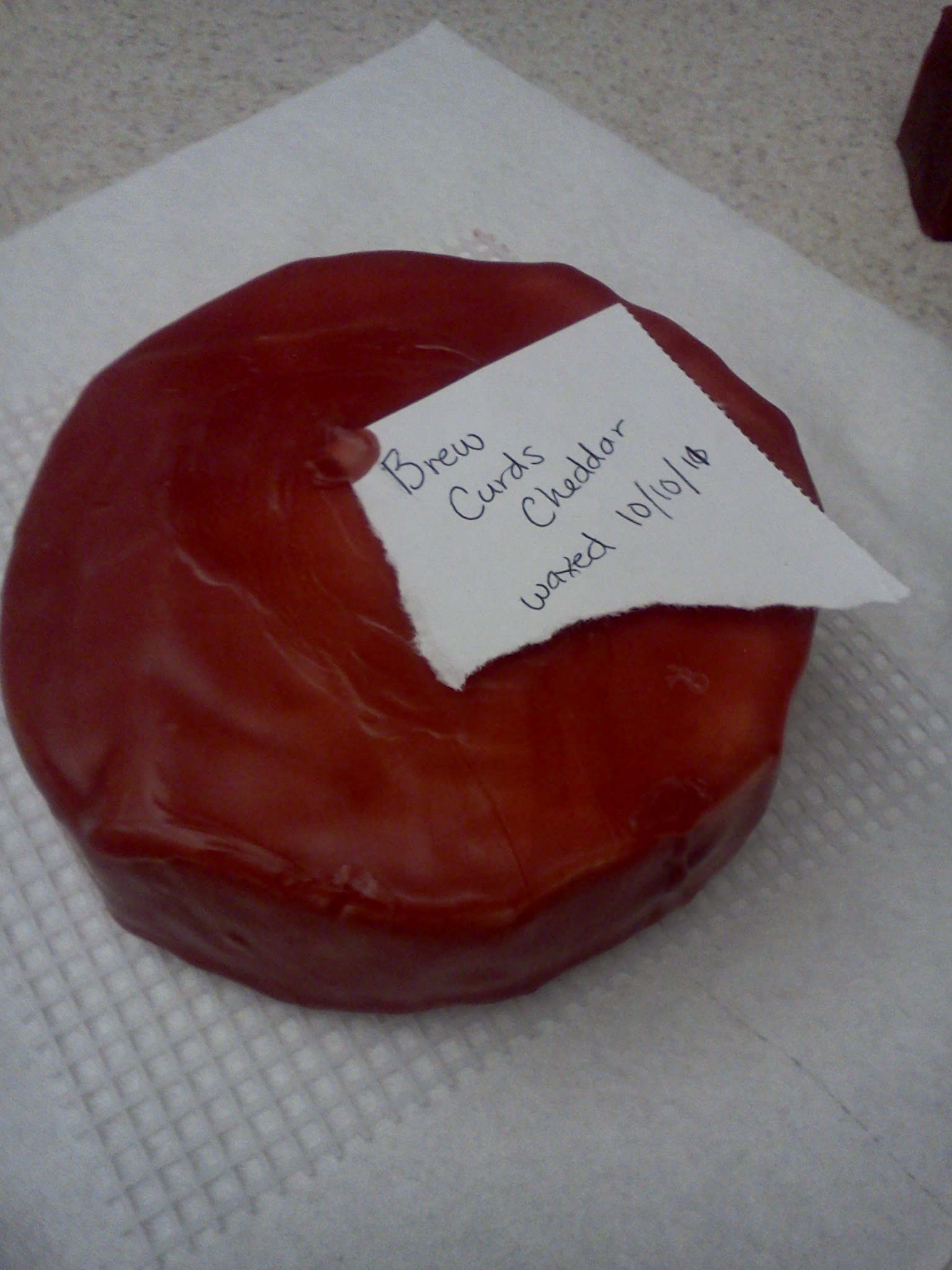
Coat with wax (See this post for how to wax cheese), and then age at 50-55 degrees F and (ideally) 85% humidity for 4-6 weeks. Flip the wheel of cheese daily to encourage even ripening.

See you in six weeks (the cheese, not you my dear readers)!

This is a really great project for a rainy weekend when you just don’t feel like going outside and would rather huddle in the warmth of a cozy kitchen. Chart out the time you’ll need on paper and you’ll know exactly when certain steps will be ready. Breaking the process down that way really helps first-time cheese makers who might feel a little overwhelmed. As always, feel free to comment below with any questions you might have. I am more than happy to help others who want to take a stab at making their very own cheese.

Ciao for now,

Neen
DIY Charcuterie Returns: Duck Prosciutto

21 Sep

First, a bit of shameless self-promotion:

The Choral Arts Society of Washington (of which I am a member) is performing Carl Orff’s Carmina Burana with the National Symphony Orchestra, conducted by Rafael Frübeck de Burgos and featuring soloists Nicholas Phan (tenor), Laura Claycomb (soprano), and Hugh Russell (baritone). The performances will take place at the Kennedy Center Concert Hall on the evenings of September 29th, 30th, and October 1st. Also on the program is Beethoven’s Symphony No. 8.

Please come hear what is going to be a really spectacular show! Tickets are available through the Kennedy Center’s website here: http://www.kennedy-center.org/events/?event=NLCSV#blurb

Secondly, football season is at last in full swing, which is awesome, and also means the return of fantasy football. Let me tell you, team Merchant of Menace is looking pretty good so far (fingers crossed) aside from an injury or two. Here’s this year’s lineup so that I can look back at the end of the season and go “What was I thinking?” But hopefully not. The starters are in boldface:

  • QBs: Matt Ryan, Kyle Orton
  • WRs: Roddy White, Mike Wallace, Kenny Britt, Pierre Garcon, Hines Ward
  • RBs: LeSean McCoy, Tim Hightower, Ryan Mathews, LaDanian Tomlinson
  • TEs: Owen Daniels, Aaron Hernandez
  • K: Sebastian Janikowski
  • DEF: New England

I’ve been luckier than most the first few weeks. My only major downer is Aaron Hernandez going down with a sprained MCL. It could be anywhere from 2-6 weeks before he returns, but I’ll keep him on the bench until I absolutely need the roster spot. It’s a shame; he started off the season really strong.

Now let’s switch gears entirely and talk about duck. How is it that in all of my charcuterie posts from earlier this year that I never got around to sharing the delightful creation known as duck prosciutto? You can even see it hanging in the pictures of the pancetta and soppressata!

But honestly, it’s a good thing that I waited. Really. I’ve made the duck prosciutto from Charcuterie a few times now with my own little changes and have discovered a few things along the way that I think will make your first time trying it more successful. This is definitely the easiest charcuterie project to take on, so if you’re looking for a place to start, you’ve found it.

Duck Prosciutto, adapted from Charcuterie, by Michael Ruhlman and Brian Polcyn

  • One duck breast (I normally use a moulard duck breast weighing in around 20 oz.)
  • 2 cups kosher salt
  • Fresh sage and orange zest
  • Cheesecloth and butcher’s twine

First, find a lidded container that will snugly fit your duck breast. I use a small rectangular Ziploc tub, but a 1 qt. oval baking dish covered with plastic wrap would work well too.

Pat the duck breast dry and set aside.

Combine the 2 cups of salt with the herbs and zest to make a cure. You can use other flavors too. Some people like to add crushed juniper berries, herbs de provence, or a combination of hot pepper and brown sugar to their cure. Think about the kind of flavors you like. For my preference, nothing brightens up duck like orange zest and a few torn sage leaves.

Pour one cup of the salt cure into the storage tub or baking dish and place the duck breast on top of it. Pack enough of the remaining cure around and on top of it to just cover the surface on all sides. Cover the container and refrigerate for 24 hours.

Remove the duck breast from the cure and rinse it under cool water. Pat it dry once again and weigh it.

Wrap the duck breast in a layer of cheesecloth and hang it in a cool, dark, and mildly humid place to dry. Ideal conditions are around 60 degrees F. and 60-70% humidity.

Hang for 1-2 weeks, or until it has lost 1/3rd of its original weight. Store wrapped in butcher paper in the refrigerator or vacuum seal for longer-term storage. Serve very thinly sliced with peppery greens like arugula, and fresh tomatoes.

On slicing: To make it easier to slice thin, you can put the duck breast in the freezer for a half-hour or so prior to slicing to make it firmer. And just look at the beautiful color:

Happy Autumn to you all. I assure you that after the Carmina Burana performances, I’ll be back with more fall (football!) recipes.

Ciao for now,

Neen