Archive | Intermediate RSS feed for this section

Recipe Megapost: Joe’s Birthday Party

19 Mar

Yesterday was a perfectly beautiful spring day, the first we’ve had here in DC thus far. How appropriate that the warm weather decided to show up on Joe’s birthday! We had some friends over for a celebration and spent the evening enjoying wonderful company and (if I don’t say so myself) some pretty tasty food.

Since this bash fell on a Friday, I did a lot of prep in advance so that I wouldn’t have much to do when I got home from work (and so I could enjoy the party). On to the deliciousness…

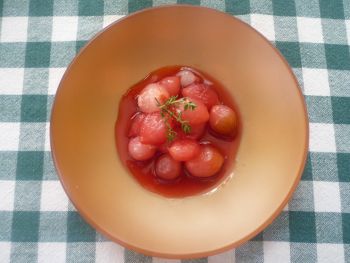
Amuse-bouche: Caramelized Pearl Onions with Queso Blanco

  • 32 pearl onions, blanched and peeled
  • 1 dried cayenne pepper
  • ½ cup dry sherry
  • 2 tbsp. sugar
  • A few spoonfuls of liquid from canned beets
  • Sprig of fresh thyme

*Okay, here’s the thing. The recipes I referenced for this all called for red pearl onions. I can’t find them anywhere. I don’t know why. So, I cheated and dyed them red with some of the liquid from my home-canned beets. It added bonus flavor and made them an awesome color.

Put all of the ingredients into a pot and add water just to cover the onions. Bring the mixture to a boil and then reduce to a simmer, swirling the pan every so often to keep the onions from scorching.

Reduce until there is about ¼ cup of syrupy liquid left in the pan. Remove the onions with a slotted spoon and reserve syrup.

Queso Blanco

  • 1 gallon whole milk
  • ¼ cup white vinegar

Heat the milk, stirring frequently to keep from scorching. When it reaches 185 degrees, add the vinegar in 3 separate additions, stirring between each one. Remove the pot from the heat and let it sit for five minutes, then stir for another five or until the curds have firmed up a little bit. Strain into a colander lined with cheesecloth and then hang the curds to drain for an hour.
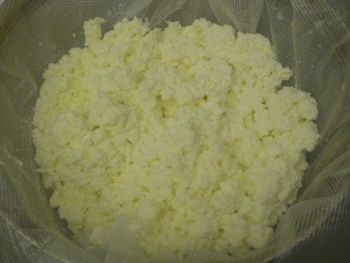
You can salt to taste and use this as is, but I really wanted it to be firm so that I could cut it into cubes. So, if you have a cheese press, line a mold with cheesecloth and press the curds at 10 lbs. for 10 minutes, redress the cheese and then press at 25 lbs. for 3 hours.

Put it all together: Thread one onion and one cube of queso blanco onto a skewer and drizzle with the reserved syrup.

Appetizer: Crostini Duo

  • 2 baguettes, bias sliced and toasted

For Spinach, Artichoke and Caramelized Onion Crostini

  • 1/3 cup low-fat plain yogurt or Greek yogurt
  • 1/3 cup low-fat sour cream
  • 3 oz. Neufchatel cheese or cream cheese
  • 1 can of artichoke hearts, drained
  • 10 oz. fresh spinach
  • 1 onion, diced
  • 1 clove garlic, minced
  • 1 tsp. dried thyme
  • 1 tbsp. Dijon mustard
  • ½ tsp. dried cayenne pepper
  • Salt and pepper to taste

In a wide pan, sweat the diced onions in olive oil until soft, translucent and sweet. Add the garlic and cook for another minute. Add the spinach and cook just until it has wilted. Set the pan aside.
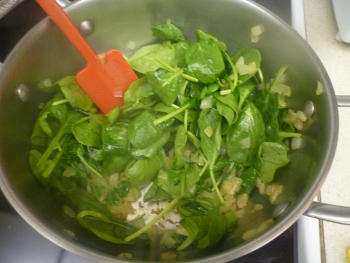
In the bowl of a food processor, combine the yogurt, cheese, sour cream, artichoke hearts, thyme, mustard, pepper, and a few pinches of salt. Pulse to combine. Add the spinach, onion and garlic to the food processor and pulse until it has a spreadable consistency.

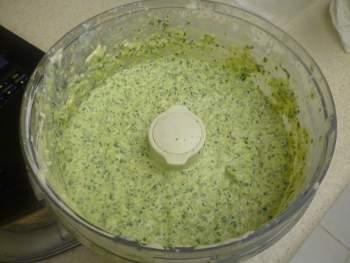
Top each toasted baguette slice with the spread and serve at room temperature.

For Fromage Blanc, Basil and Roasted Red Pepper Crostini:

  • Roasted red peppers
  • Fromage blanc
  • Basil, chiffonade cut

To make the fromage blanc, heat 1 gallon of milk to 85 degrees and add a packet of fromage blanc starter. Stir vigorously for a minute or two and then cover the pot and allow the milk to ripen at room temperature for 12 hours. Scoop the curds into a colander lined with cheesecloth, and then hang them to drain for 6 hours. It should have the consistency of cream cheese. Salt to taste.

Top each toasted baguette slice with a layer of fromage blanc, diced roasted red peppers, and chiffonade basil.

Appetizer: Mushroom Strudel (adapted from Smitten Kitchen)

I am sorry that I didn’t get more pictures of this process, but my hands were covered with butter most of the time and photography got the shaft. These are so good and you can make them in advance, freeze, and then bake as needed. Handy.

  • 1 package phyllo dough (40 sheets)
  • 1/2 cup butter, melted
  • 1 pound cremini mushrooms
  • 1 medium onion, minced
  • 3 tablespoons butter
  • Freshly grated nutmeg
  • 1 tablespoon dry sherry
  • 1 tablespoon all-purpose flour
  • 1 sprig thyme
  • 4 to 6 tablespoons freshly grated Parmesan
  • Salt and pepper to taste

Preheat the oven to 400°F and line baking sheet with parchment paper.

Cook the onion in the butter until translucent and then add the mushrooms and nutmeg. Saute for 5 to 7 minutes, until liquid has been released and has partially evaporated. Add the sherry and evaporate the alcohol by cooking over low heat for 2 to 3 minutes. Stir in the flour, herbs, and some salt and pepper, and let cool. The mixture will be moist.

Take one sheet of phyllo at a time from their package; cover the remaining sheets with plastic and then a damp towel to keep them from drying out. Brush one half of the sheet lengthwise with butter. Fold the unbuttered side over the buttered side, carefully, smoothing out as best you can. Again, brush one half of this lengthwise with butter, and fold the unbuttered side over it again. You’ll end up with one long column.

Place spoonful of the mushroom filling near the end and sprinkle a teaspoon of parmesan over it. Begin folding one bottom corner of the phyllo strip over the filling until it meets the opposite edge, forming a triangle, as if you were folding a flag. Place the triangle seam side down on the baking sheet, brush lightly with egg wash and sprinkle with parmesan.

Bake for 15 minutes and serve warm or at room temperature.

Main Course: Porchetta

Normally, this is seared and roasted, but oven-space was at a premium and so I went the crock pot route.

  • 2 tbsp. canola oil
  • 4 lb pork loin roast
  • 1/2 cup chicken broth

Herb rub:

  • 5 cloves garlic
  • 2 tbsp. fresh rosemary
  • 1/2 cup fresh parsley
  • 1 tbsp. kosher salt
  • 1/2 tbsp. lemon pepper
  • 1 tbsp. dried oregano
  • 1 tbsp. dried fennel seed
  • 1/2 tbsp. onion powder
  • 1/4 tsp red pepper flakes
  • 2 tbsp. olive oil

Combine all of the ingredients for the rub in a food processor and pulse until they form a paste.
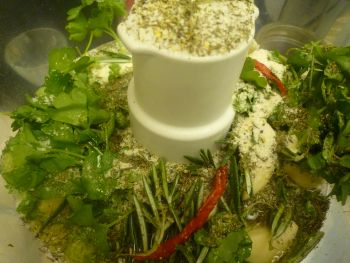
Cut several inch-deep slits in the roast and stuff some of the rub inside of them. Slather the roast with the remaining rub.

At this point, I vacuum sealed mine to let it marinate for a few days.

In a large pan, sear the roast on all sides and then move it to the crock pot. Dioji was hypnotized by the smell of meaty goodness:

Add the broth to the pan to deglaze (scrape the bottom to get all of the bits of herby piggy goodness) and bring the mixture to a boil. Simmer for 5 minutes and then pour the liquid onto the roast in the crock pot.

Cook on high for 5-6 hours or on low for 7-8 hours. The roast ended up so tender that I shredded it and served it with the reduced cooking liquid.

Main Course: Cheese Manicotti with Zucchini Cayenne Marinara Sauce

I made the ricotta and mozzarella for these and you can find photo tutorials for them here.

Manicotti:

  • 3 eggs
  • 3 cups flour
  • 6 tbsp. olive oil
  • 5 tbsp. water

Filling:

  • 1 lb. ricotta cheese
  • ½ lb. mozzarella cheese, grated
  • A handful of grated parmesan
  • 1 egg
  • Fresh thyme and parsley to taste
  • Salt and pepper to taste

Sauce:

  • 2 zucchini, ¼ in. dice
  • 4 cans crushed tomatoes
  • 3 cloves garlic
  • 1 onion, minced
  • 4 dried cayenne peppers, diced
  • Dried thyme
  • Fresh parsley

To make the pasta dough, beat together the eggs, oil and water and then stir them into the flour. Get your hand in the bowl and begin to knead the dough together.Knead until it is smooth and then flatten into a disc, wrap in plastic wrap and rest at room temperature for 30 min.

Roll the pasta into sheets, and then cut into 5 in. squares.

Boil the squares in salted water for 1-2 minutes. Drain and leave these to rest on damp towels.

Combine all of the ingredients for the filling and taste for seasoning.

Spoon a row of filling along one end of a pasta square and then carefully roll up into a tube shape. Place this, seam side down on a baking sheet while you prepare the others. If you are freezing them as I did, freeze them individually on a baking sheet before moving to a bag.

To make the sauce, sweat the onion in a few tablespoons of olive oil until translucent. Add the zucchini and garlic and sauté until everything is soft and fragrant. Add the tomatoes, peppers and spices and simmer for a few hours or until the consistency is to your liking. Add seasonings as needed.

Preheat the oven to 350 degrees. Spoon a thin layer of sauce onto the bottom of a 9×13 in. baking dish. Arrange the manicotti in rows and then top with the remaining sauce (and some extra cheese if you like).

Bake for 40 minutes or until cooked through. Cover with foil and rest for at least 15 minutes before serving.

Bread: No-Knead Bread (from Splendid Table)

I like this because you can make the dough, throw it in a bucket in the fridge and forget about it for several days before baking.

  • 1-1/2 tbsp. granulated yeast
  • 1 tbsp. kosher salt
  • 6-1/2 cups unbleached flour, plus extra for dusting dough
  • Cornmeal

In a large plastic resealable container, mix yeast and salt into 3 cups lukewarm water. Using a large spoon, stir in flour, mixing until mixture is uniformly moist with no dry patches. Do not knead. Dough will be wet and loose enough to conform to shape of plastic container. Cover, but not with an airtight lid.

Let dough rise at room temperature, until dough begins to flatten on top or collapse, at least 2 hours and up to 5 hours. (At this point, dough can be refrigerated up to 2 weeks; refrigerated dough is easier to work with than room-temperature dough, so the authors recommend that first-time bakers refrigerate dough overnight or at least 3 hours.)

Place a broiler pan on bottom rack of oven. Place baking pan on middle rack and preheat oven to 450 degrees.

Sprinkle a little flour on dough and on your hands. Pull dough up and, using a serrated knife, cut off a grapefruit-size piece (about 1 pound). Working for 30 to 60 seconds (and adding flour as needed to prevent dough from sticking to hands; most dusting flour will fall off, it’s not intended to be incorporated into dough), turn dough in hands, gently stretching surface of dough, rotating ball a quarter-turn as you go, creating a rounded top and a bunched bottom.

Place shaped dough on a piece of parchment and let rest, uncovered, for 40 minutes. Dust dough with flour.

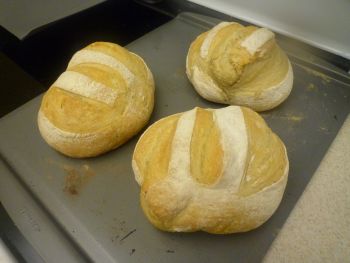
Using a serrated knife, slash top of dough in three parallel, 1/4-inch deep cuts. Slide dough onto preheated baking sheet. Pour 1 cup hot tap water into broiler pan and quickly close oven door to trap steam. Bake until crust is well-browned and firm to the touch, about 30 minutes. Remove from oven to a wire rack and cool completely.

Dessert: Cookies and Cream Ice Cream Layer Cake

The guest of honor requested an ice cream cake with vanilla cake layers and Oreo ice cream.

  • Two layers of vanilla cake, cooled completely, wrapped in plastic wrap and frozen. I used this recipe.
  • Two layers of ice cream
  • Whipped cream

To make the ice cream layers, line two 9 in. pans with plastic wrap and scoop softened ice cream into each. Flatten out the ice cream by pressing another pan on top of it. Cover with plastic wrap and place in the freezer to harden.

Stack the layers as such (from bottom to top): Cake, ice cream, cake, ice cream. Again, cover this in plastic wrap tightly and freeze. Before icing your cake, trim the sides as needed to make them even and neat. Frost the cake with whipped cream and return to the freezer. I decorated this one by piping tempered chocolate designs onto wax paper, letting them cool, and then applying them to the cake.

Dessert: Strawberry Jam Tart

  • 1 1/2 cups all-purpose flour
  • 1/2 cup dry cornmeal / polenta
  • 2 teaspoons baking powder
  • 1/2 teaspoon salt
  • 9 tablespoons unsalted butter, room temp.
  • 1/2 cup sugar
  • 1 large egg
  • 1 large egg, separated
  • ½ tsp. vanilla bean paste
  • 1 1/3 cup jam (I used strawberry, but anything will do)
  • 2 tbsp. coarse sugar

Whisk together the flour, cornmeal, baking powder and salt.

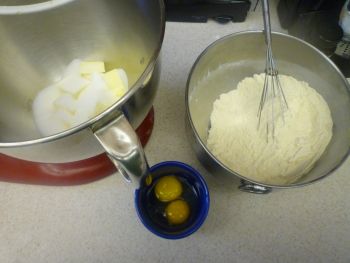
In a stand mixer, mix the butter and 1/2 cup sugar together until smooth. Add the egg, egg yolk, and vanilla bean paste and beat until combined. Gradually add the flour mixture and mix until the dough just comes together.

Transfer about one-third of the dough to a lightly floured counter and shape it into a log about 2 in. diameter. Wrap it in plastic wrap freeze for an hour.

Transfer the remaining dough to a buttered 9-inch spring form pan. Press the dough evenly into the bottom, going about 3/4-inch (2-cm) up the sides of the pan. Freeze the dough-lined pan until firm, about 30 minutes.

Preheat the oven to 375°F. Spread the jam or marmalade evenly over the dough in the pan. Cut the chilled dough log into very thin discs with a sharp paring knife. Arrange them in overlapping concentric circles over the jam to form a top crust.
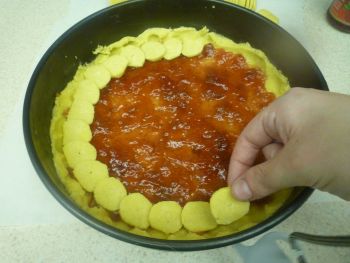
Whisk the remaining egg white with a teaspoon of water until frothy; brush evenly over the tart lid and then sprinkle with the coarse sugar. Bake until the top crust is golden brown, about 25 minutes. Let cool completely before unmolding.

This holds up well and can be made up to 3 days in advance. Keep wrapped in plastic at room temperature.

The Final Treat: Pecan-Walnut Caramels

  • 2 cups sugar
  • 1 cup light corn syrup
  • 12 tbsp. butter
  • 1 can sweetened condensed milk
  • ½ cup water
  • 1 tsp. salt
  • 1 tsp. vanilla bean paste, vanilla extract, or one vanilla bean, split and scraped
  • 12 oz. nuts (I used half pecans and half walnuts), toasted and chopped

Generously butter a 9×13 in. pan.

In a large saucepan over medium heat, combine the sugar, corn syrup, butter, sweetened condensed milk, water, and vanilla bean paste. Stirring often, cook this mixture until it reaches 245 degrees F.

Remove the pan from the heat and stir in the salt and chopped nuts. Pour the caramel into the buttered pan and cool completely (about 2 hours).

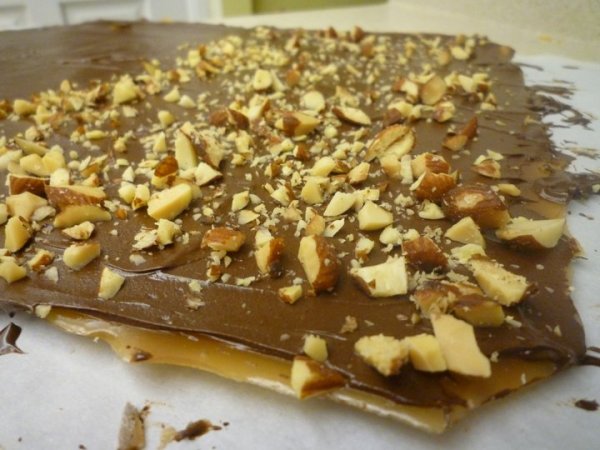
Turn the slab of caramel out onto a cutting board and use a pizza wheel to cut into squares. I usually get 128 pieces of candy from this recipe. Wrap the candies in pieces of wax paper and store in a cool, dark place.

Hope you enjoyed checking out the menu. Thank you to everyone who joined us and made the party so much fun.

Ciao for now,

Neen

Press Your Luck: Farmhouse Cheddar

2 Mar

My dad is pretty handy. Proof? Take a look at what he built in my parents’ backyard last year:

When I decided that I really wanted to try making hard cheeses, I quickly realized that cheese presses weren’t exactly the most affordable pieces of equipment in the world. But the mechanism didn’t seem particularly complicated, and I was able to find simple plans on several websites (type “cheese press plans” into a search engine). Dad worked his magic and last weekend, I brought my press home to Arlington. (Thanks, dad!)

I decided to start with one of the simpler recipes in Ricki’s book, a farmhouse cheddar that would be ready to taste in about a month. The main reason I selected this recipe is that it offered the chance to practice many of the techniques involved in cheese making. Much like confectionery, the process is all about timing and chemistry. So, let’s cut to the cheese, err, chase:

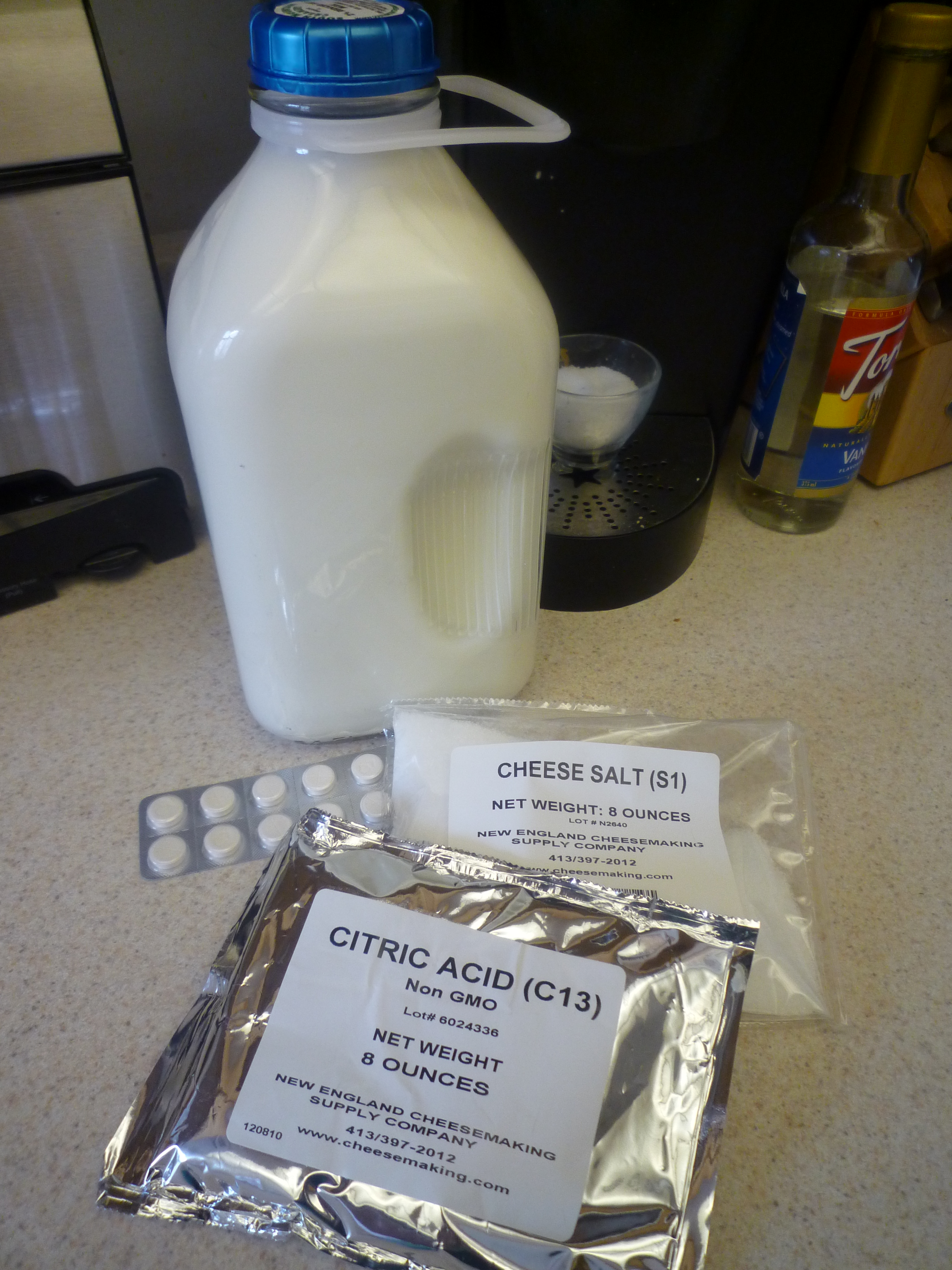
First a note about these ingredients. The original recipe calls for double what you see here. I realized upon filling my pot with milk that two gallons weren’t going to fit and cut the recipe in half.

Click on any of the pictures to see larger versions.

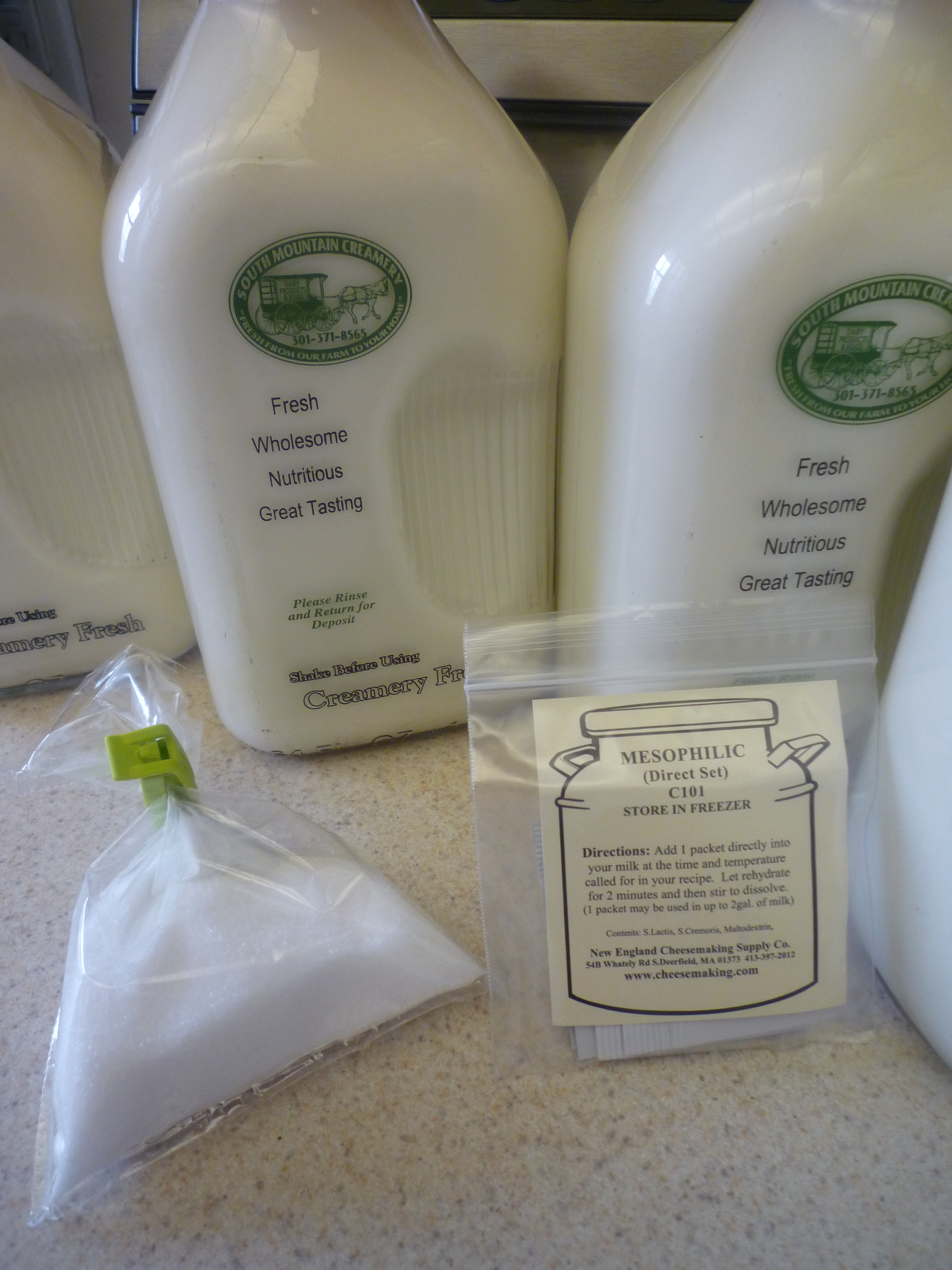
  • -1 gallon whole milk
  • -One package of direct set mesophilic starter
  • -½ tbsp. cheese salt (non-iodized salt)
  • -¼ tablet rennet or ¼ tsp. rennet, dissolved in ¼ cup water. (I used double-strength rennet and needed only 1/8 tsp.)

Pour the milk into a large pot and place it in a sink of warm water. Gradually increase the temperature of the water bath, either by running more hot water from the tap or adding small amounts of boiling water, until the milk reaches 90 degrees F. Add the mesophilic starter and mix well for about a minute. Cover the pot and allow the milk to ripen for 45 minutes. Check the temperature every so often, you want to keep it as close to 90 degrees as possible. I left my pot in the warm water bath and added small amounts of hot water every 10 minutes or so to do this.

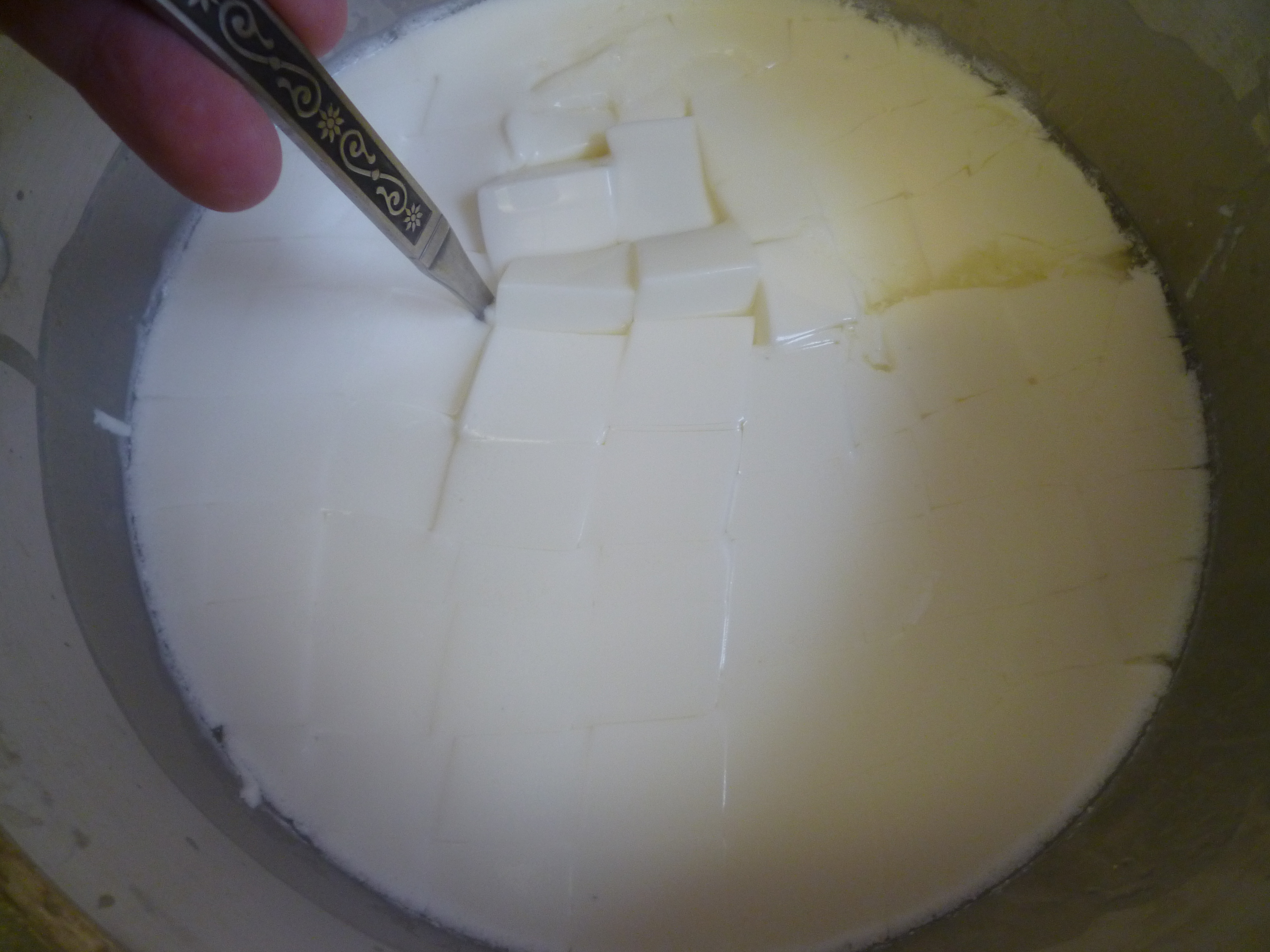
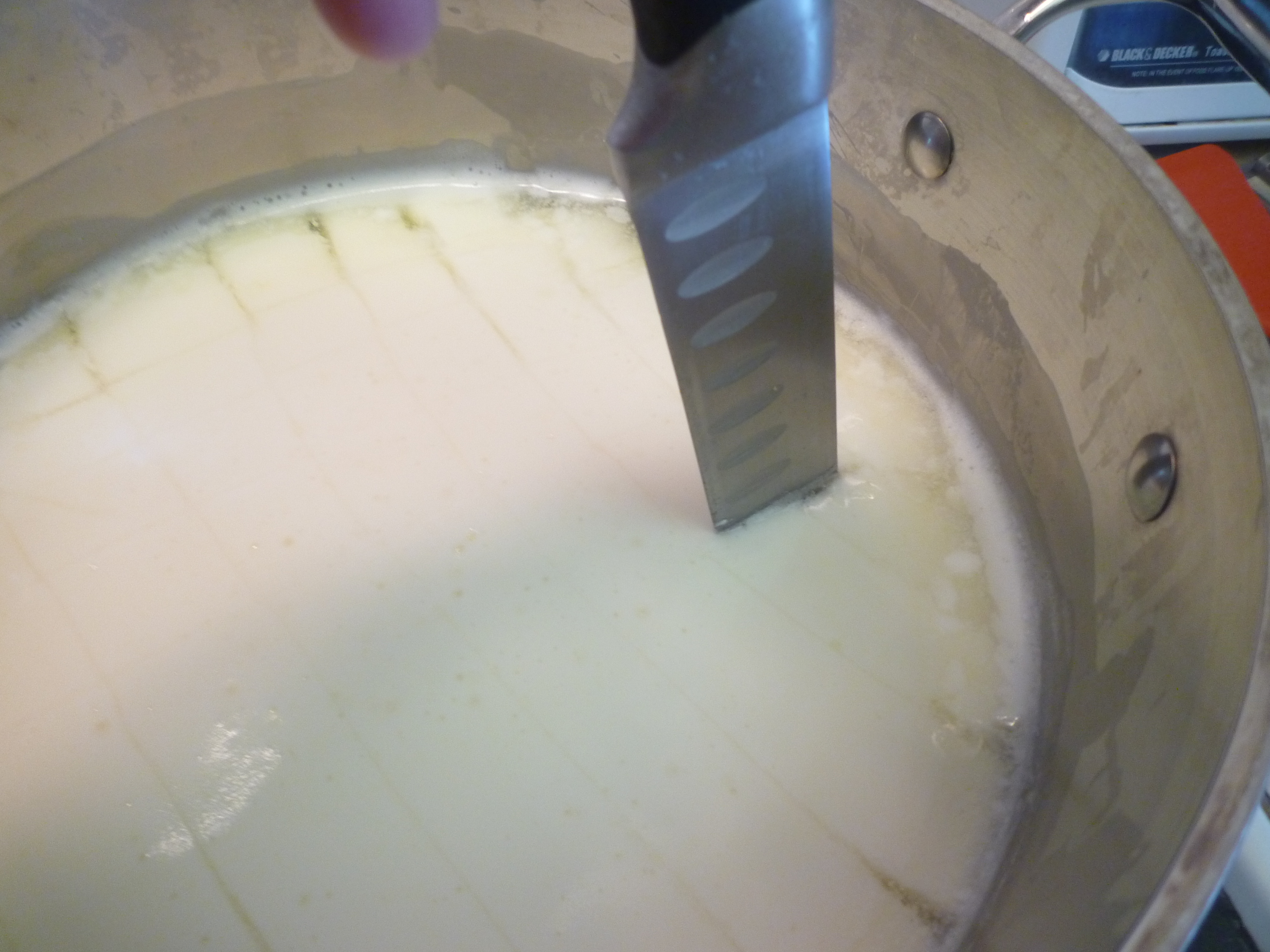
After 45 minutes, add the diluted rennet and stir, using a gentle up-and-down motion, for about a minute. Cover the pot and let it sit at 90 degrees F for 45 minutes or until the curd breaks cleanly. Cut the curd into a checkerboard pattern of ½ in. squares.

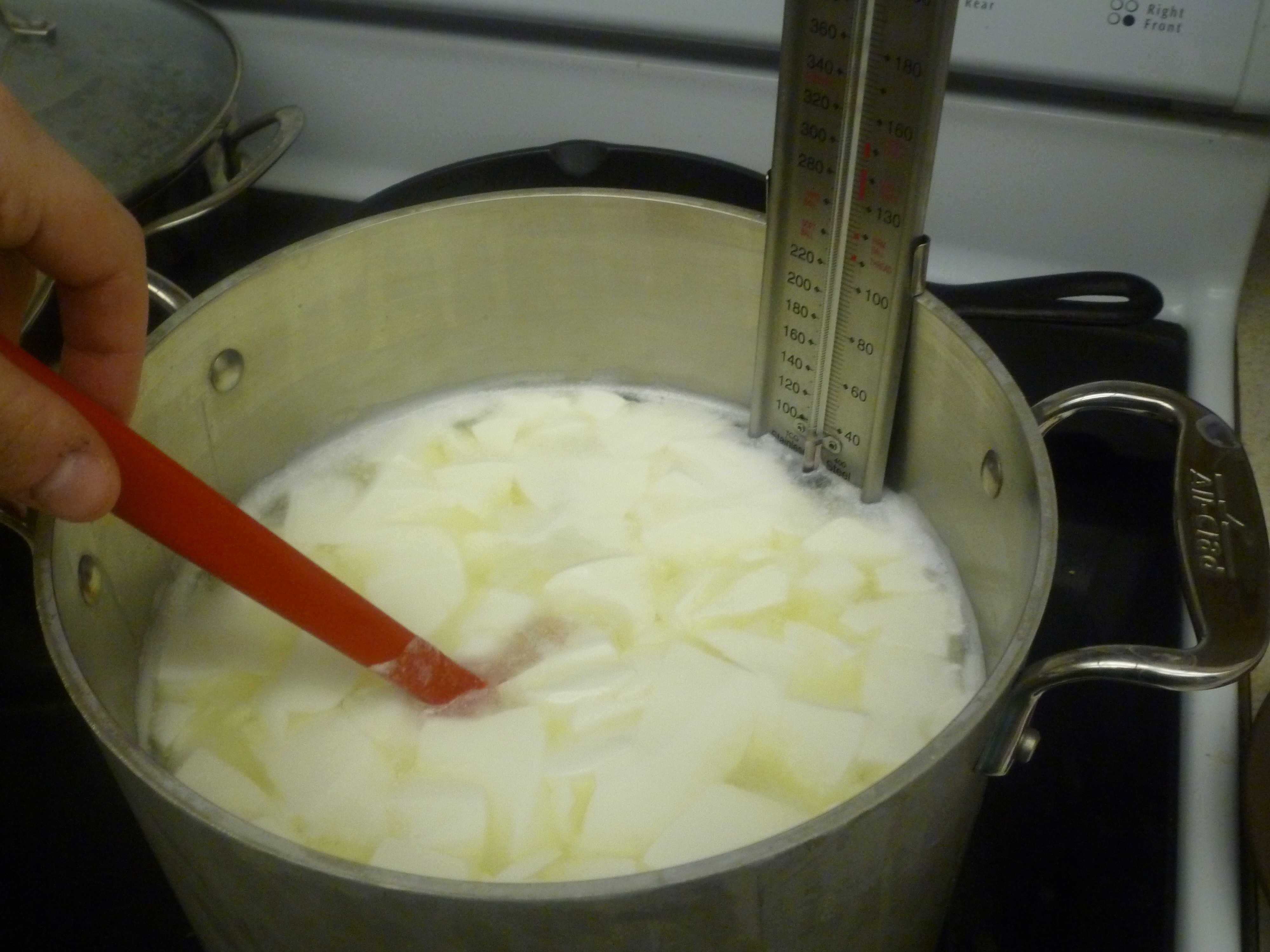
Again using the water bath method, slowly increase the temperature of the curd to 100 degrees. This can be a little tricky at first, since you don’t want to increase the temperature by more than 2 degrees every five minutes. Err on the slow side. Stir gently to keep the curds from matting together as they heat up. You’ll notice that they shrink a lot.

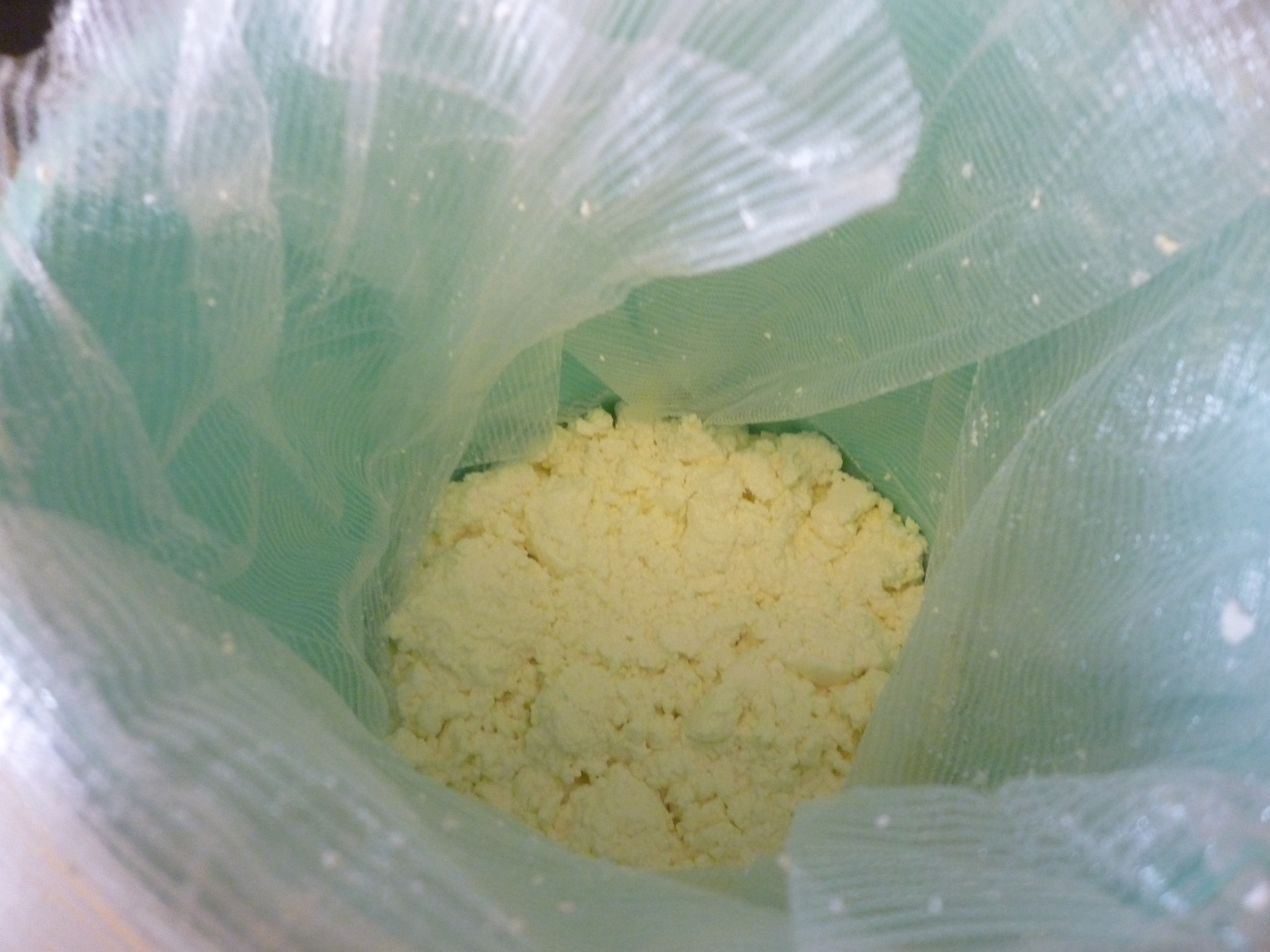
Once the curds reach 100 degrees, pour them into a colander lined with cheesecloth. Tie up the corners of the cheesecloth and hang the curds to drain in a non-drafty spot for an hour. You want to keep them fairly warm, so I hung them over the pot I used for heating.

After an hour, move the drained curd to a bowl and gently break into walnut sized pieces. Add the salt to the curds and toss lightly with your fingers to distribute evenly.

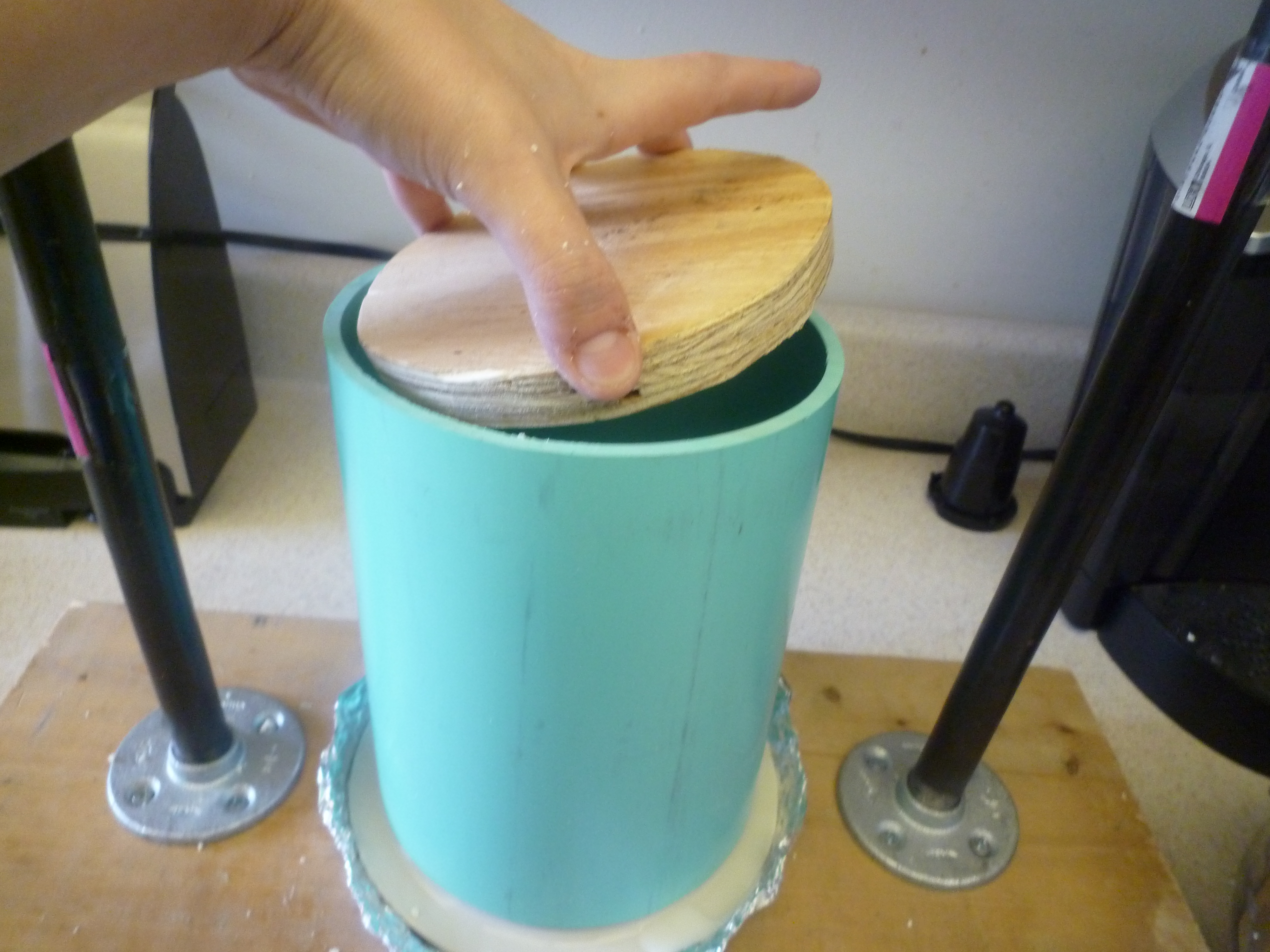
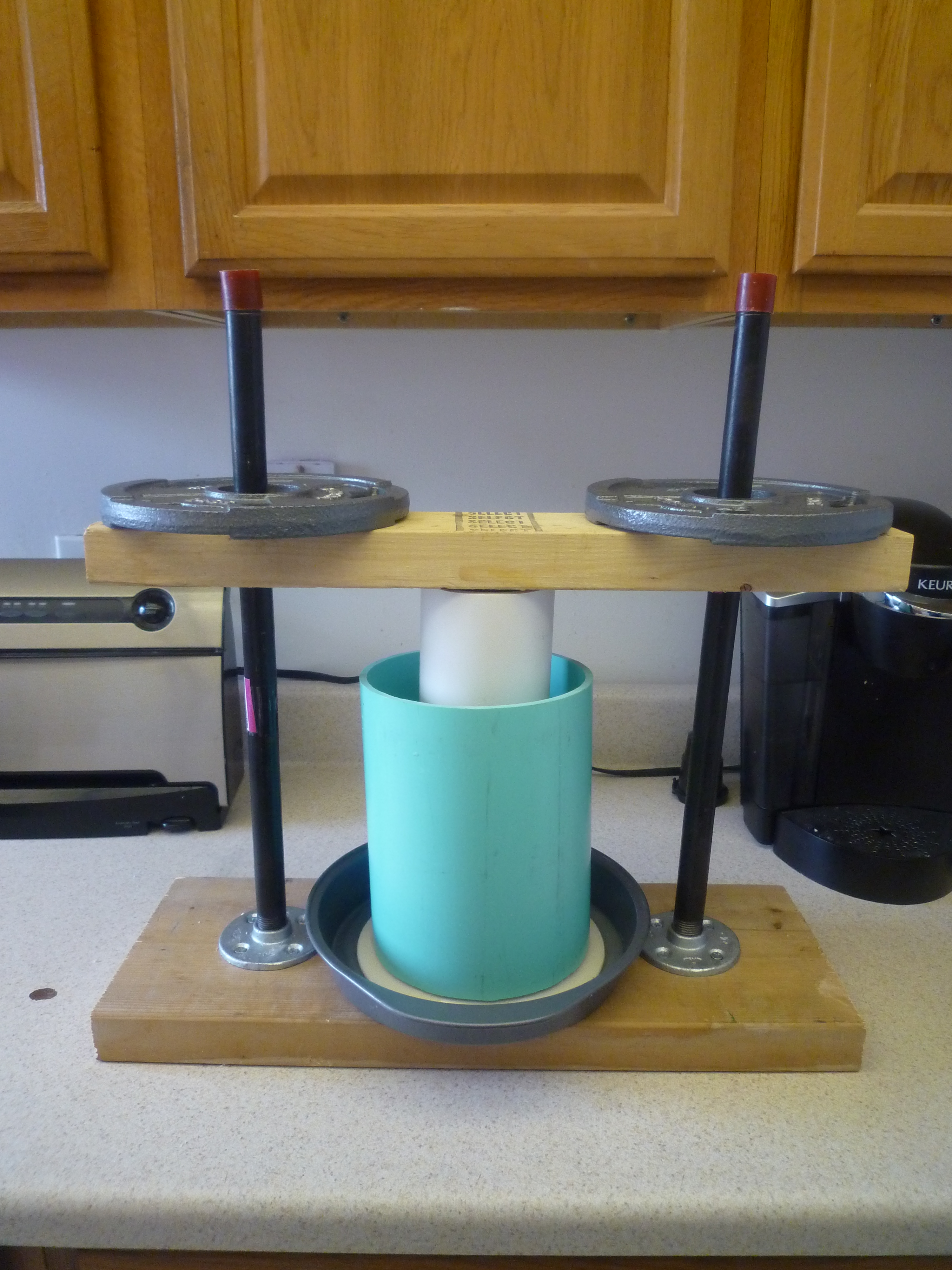
Firmly pack the curds into a mold (the teal pvc pipe pictured) lined with cheesecloth. Put the mold on top of an inverted plate over a pie pan. This allows the excess liquid to drain away from the cheese.

Fold the cheesecloth over the curds and place a snug fitting follower on top of them. Then add the pusher (the thinner, white piece of pvc pipe). Finally, place the board on top of the pusher and add weights as necessary.

For farmhouse cheddar, press at 10lbs. of pressure for 10 minutes, then remove, flip the cheese over and redress it in the cheesecloth…

Then 20lbs. of pressure for 10 minutes, flip, and redress…

And finally at 50lbs. of pressure (Fact: The Joy of Cooking and On Cooking weigh 10lbs.) for 12 hours. Don’t do what I did and neglect to think about how this would time out; I had to get up at 3 a.m. to take the 50lb. weights off. D’oh.

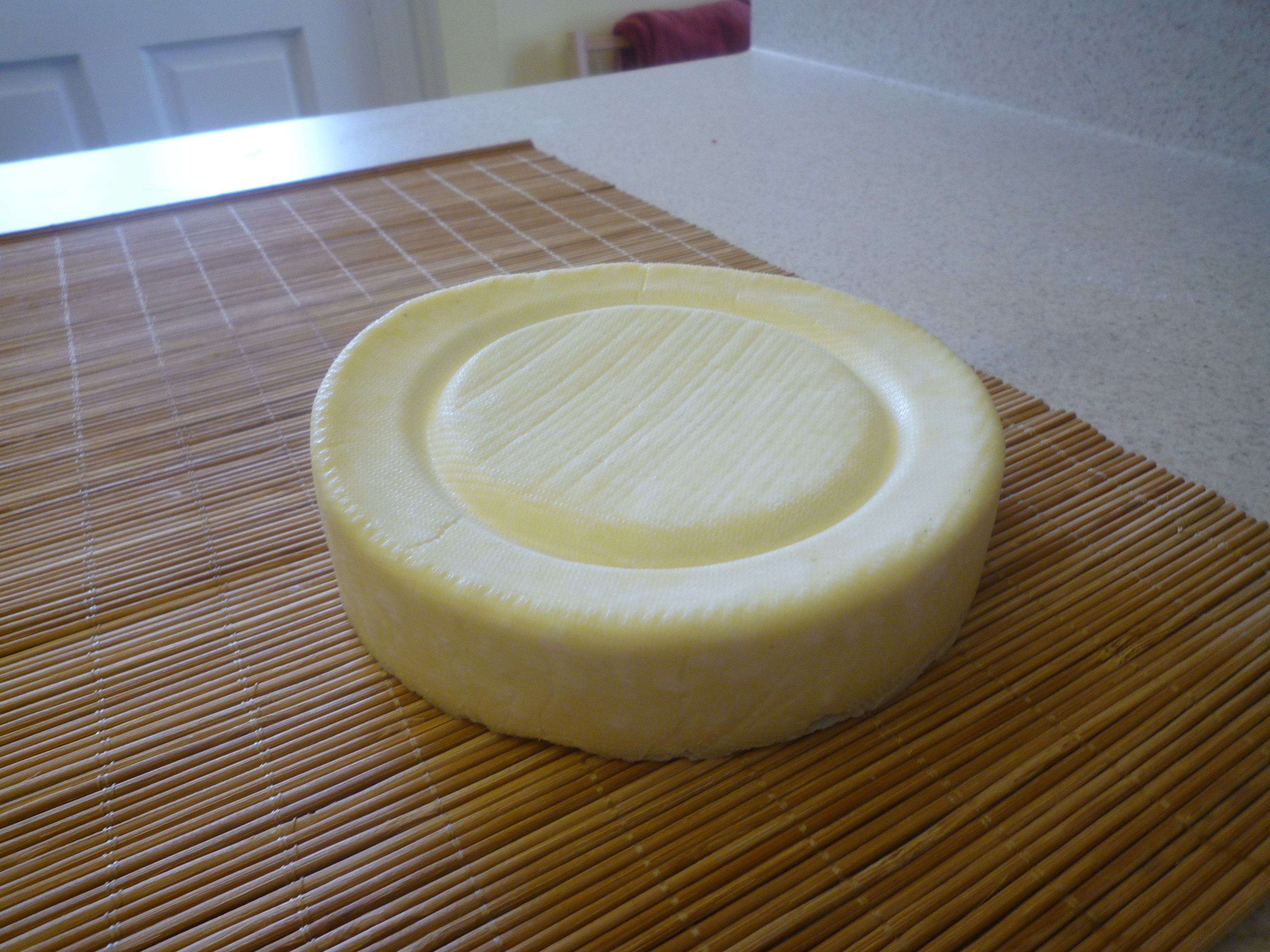
After 12 hours, you should have something that looks like this. Personally, I like the rather attractive dent left on one side from the inverted plate:

Put your cheese on a wooden board and allow it to air-dry at room temperature for 2-4 days. Turn it every so often to keep moisture from collecting on one side. Once the cheese has dulled in appearance and is no longer moist to the touch, you are ready to wax it.

Prior to waxing, refrigerate the cheese for several hours. You may also wipe it down with a paper towel dampened with vinegar to discourage mold growth.

Melt the cheese wax in a double-boiler until it reaches 210 degrees. Gently paint it on the cheese using a natural bristle or silicone brush, one side at a time.

Cover the wheel in two thin coats. My wax job was a little bit messy for a first rodeo, but I’m not really in a beauty contest here. You can always remove the wax and redo it (particularly useful if you decide to age it longer after cutting into it the first time), but we’ll see how things look in a month.

Age in a cool (below 68 degrees) environment for at least one month. Since the aging process began yesterday, I’ll be reporting back on 4-1-11 to let you know how it tastes. Hopefully it will not be a cruel April Fool’s joke.

Ciao for now,

Neen

My Cheesy Valentine

14 Feb

A few weeks ago, I decided to try my hand at cheese making. It’s something I’ve always wanted to give a go, but wanted to do a little bit of research before trying. (With graduate school out of the way, I’m now working through the backlog of cookbooks and recipes I neglected.) For someone who loves cheese as much as I do, the prospect of making my own was very exciting. Since I’d planned to make Joe a special meal for Valentine’s day, I saw it as an opportunity to get something extra-special on our plates.

I started with ricotta, the easiest cheese to make. If you have milk (whole and 2% yield the best consistency), buttermilk, and some cheesecloth, you can make ricotta in under a half-hour. Line a colander with a few layers of cheesecloth and set aside. Combine a half-gallon of milk with 2 cups of buttermilk in a large pot over medium high heat. Stir every so often to keep the mixture from scorching, but once it is hot and steaming, stop stirring. When the mixture reaches about 175 degrees F, the curds will separate from the whey. Gently ladle the curds into the cheesecloth, tie up the corners, and hang the cheese to drain for about 20 minutes. Voila! You’ve made ricotta. Store in an airtight container in the refrigerator for up to a week.

Next up was another favorite: Mozzarella. This required a bit more special equipment, but I was able to order anything I needed from New England Cheese making Supply Co. I must recommend Ricki Carroll’s book, Home Cheese Making if you’re interested in learning all about the history and science behind cheese.

So here’s what you’ll need for mozzarella:

Ingredients

  • One gallon of milk*
  • 1 ½ tsp. citric acid dissolved in one cup of cold water
  • ¼ rennet tablet diluted in ¼ cup of cold water
  • 1/4 cup of cheese salt

*Note: Do not use milk that is labeled “ultra-pasteurized.” Pasteurized / homogenized milk will work just fine, but UP milk has been treated at such high temperatures that it is not suitable for most cheese making. (It will work for ricotta.)

Hardware

  • A large pot
  • A small colander that can fit inside the pot and a pair of tongs (or a spider if you have one)
  • A thermometer that will clip onto the pot
  • A board for kneading
  • Heat resistant gloves (I used these—I bought them for when I use my mandoline because the hand guard on it is flimsy.)

Okay, here we go!

Combine the milk and citric acid/water mixture in a pot over medium-high heat while stirring vigorously, then stir gently while the milk heats to 90 degrees F.

Take the pot off of the heat and add the rennet, mixing in a gentle up and down motion for 30 seconds. Put a lid on the pot and leave it undisturbed for 5 minutes. When you remove the lid, the curd should look like custard and should show a clear separation between the curd and whey. Test by putting two fingers between the curd and the side of the pot. If you see a clean break, the curd is ready to cut. If it is too soft, wait another five minutes and test again. It took a total of 15 minutes in my kitchen.

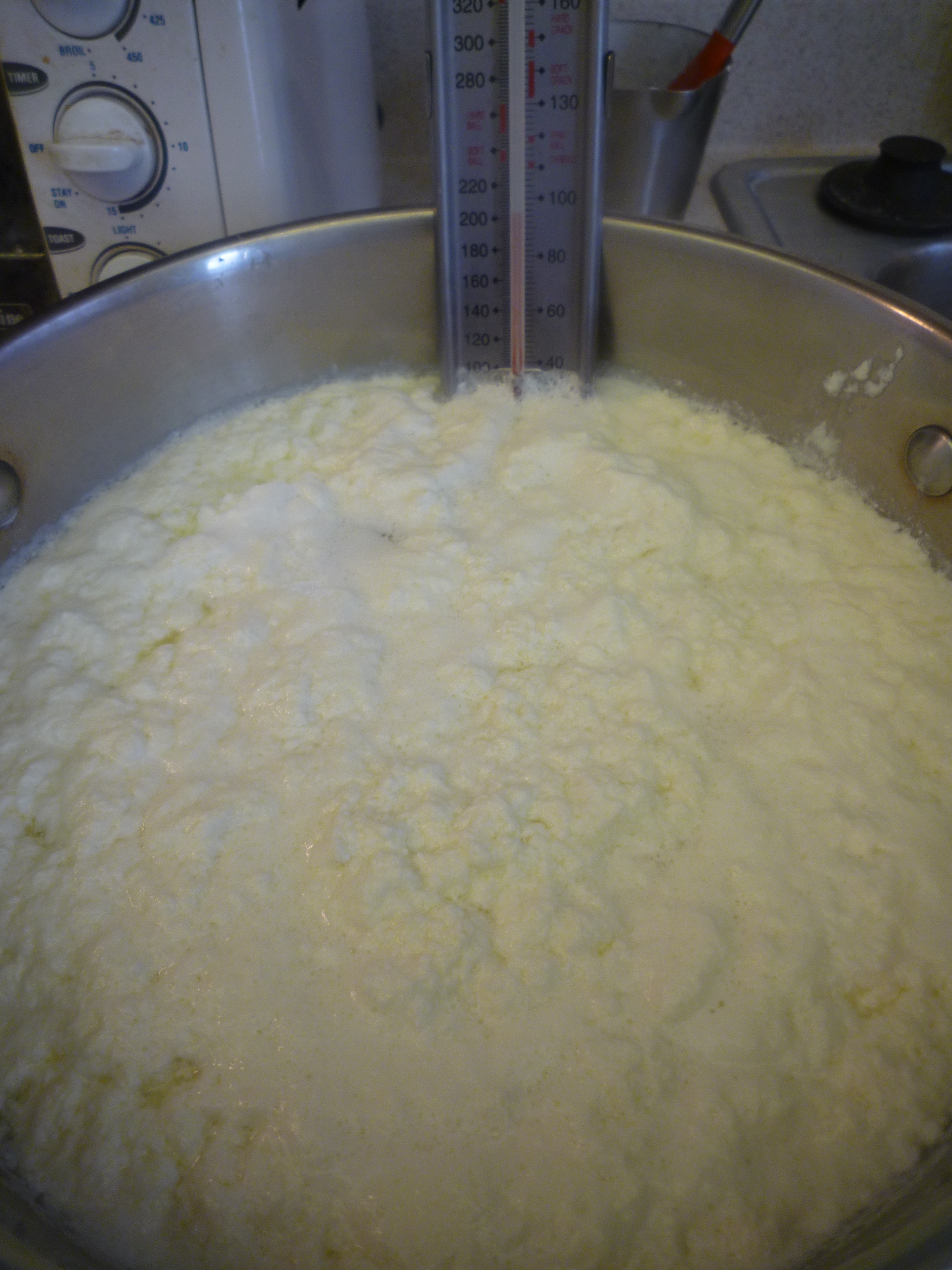
Cut the curds into a checkerboard pattern and put the pot back over medium-high heat. Cook, stirring the curds gently until they reach 110 degrees F. Take the pot off of the heat and continue stirring gently for 3-4 minutes.

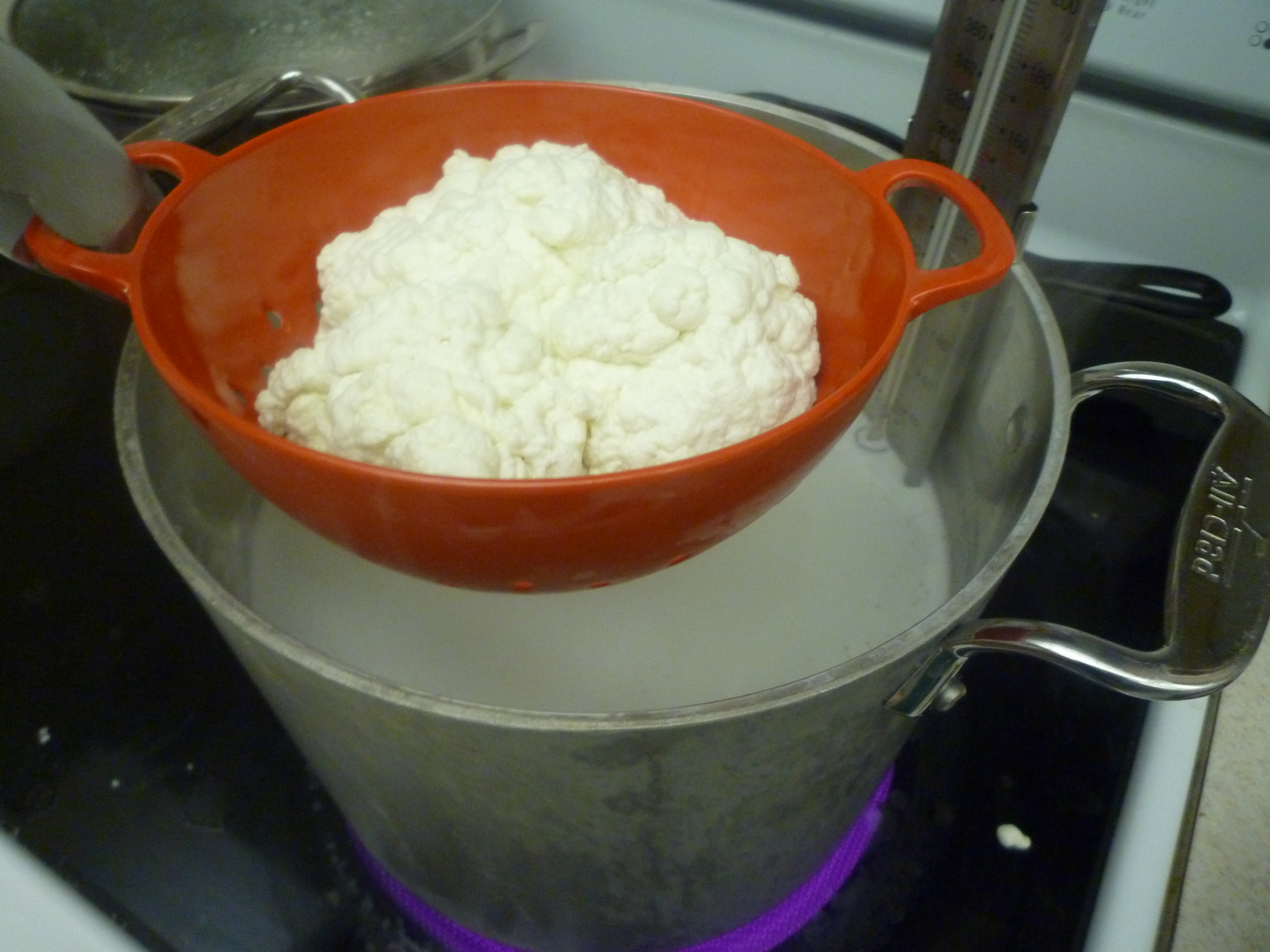
Gently ladle the curds into the colander over a bowl so that you can reserve the whey that drains off of them. Press them gently to remove as much whey as possible and so that they begin to form a cohesive unit.

Pour the whey that has collected in the bowl back into the pot, add the ¼ cup of salt, and allow it to heat to at least 175 degrees. (Put on your gloves!)

Dip the curds in the colander into the hot whey for several seconds.

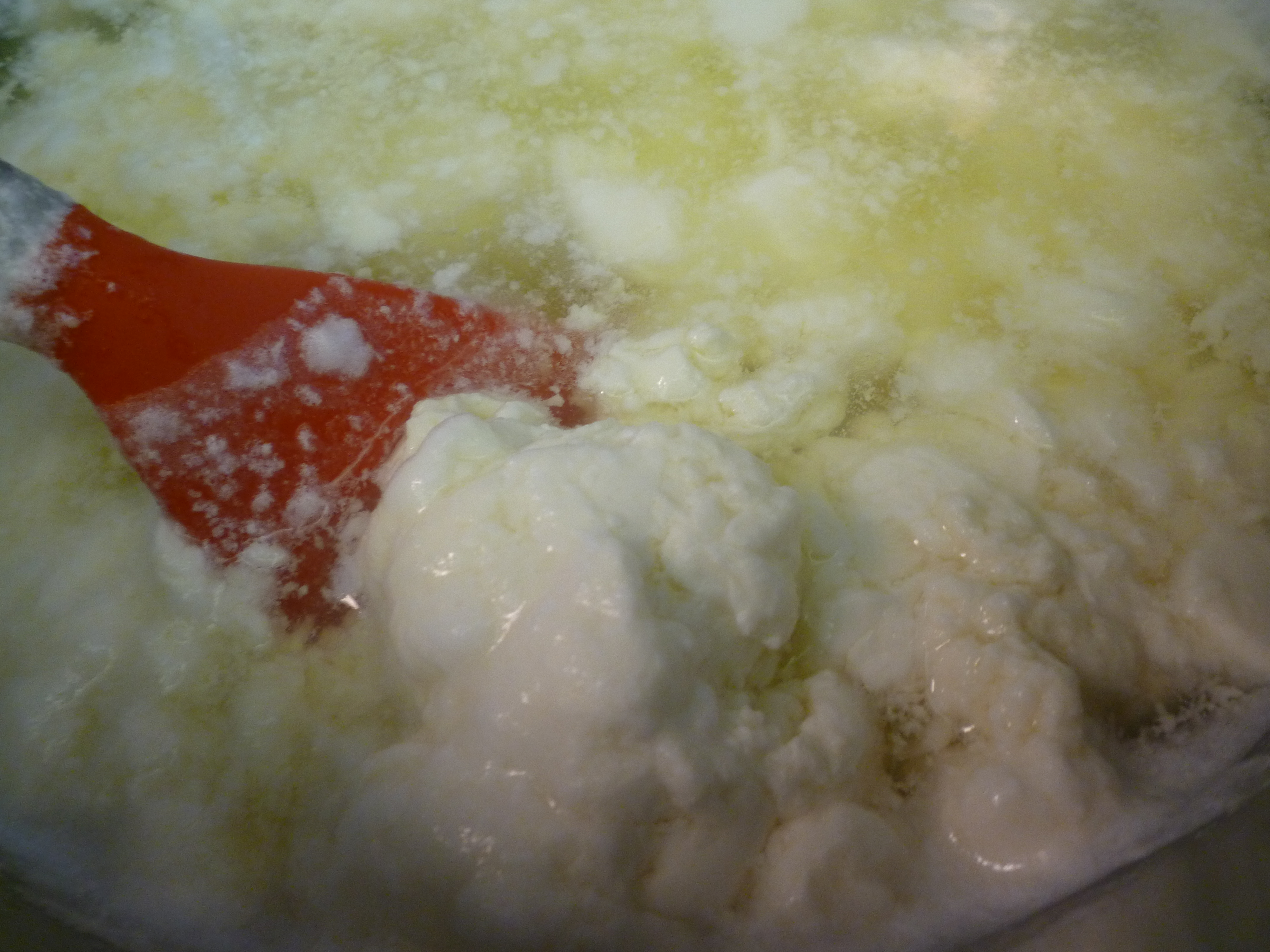
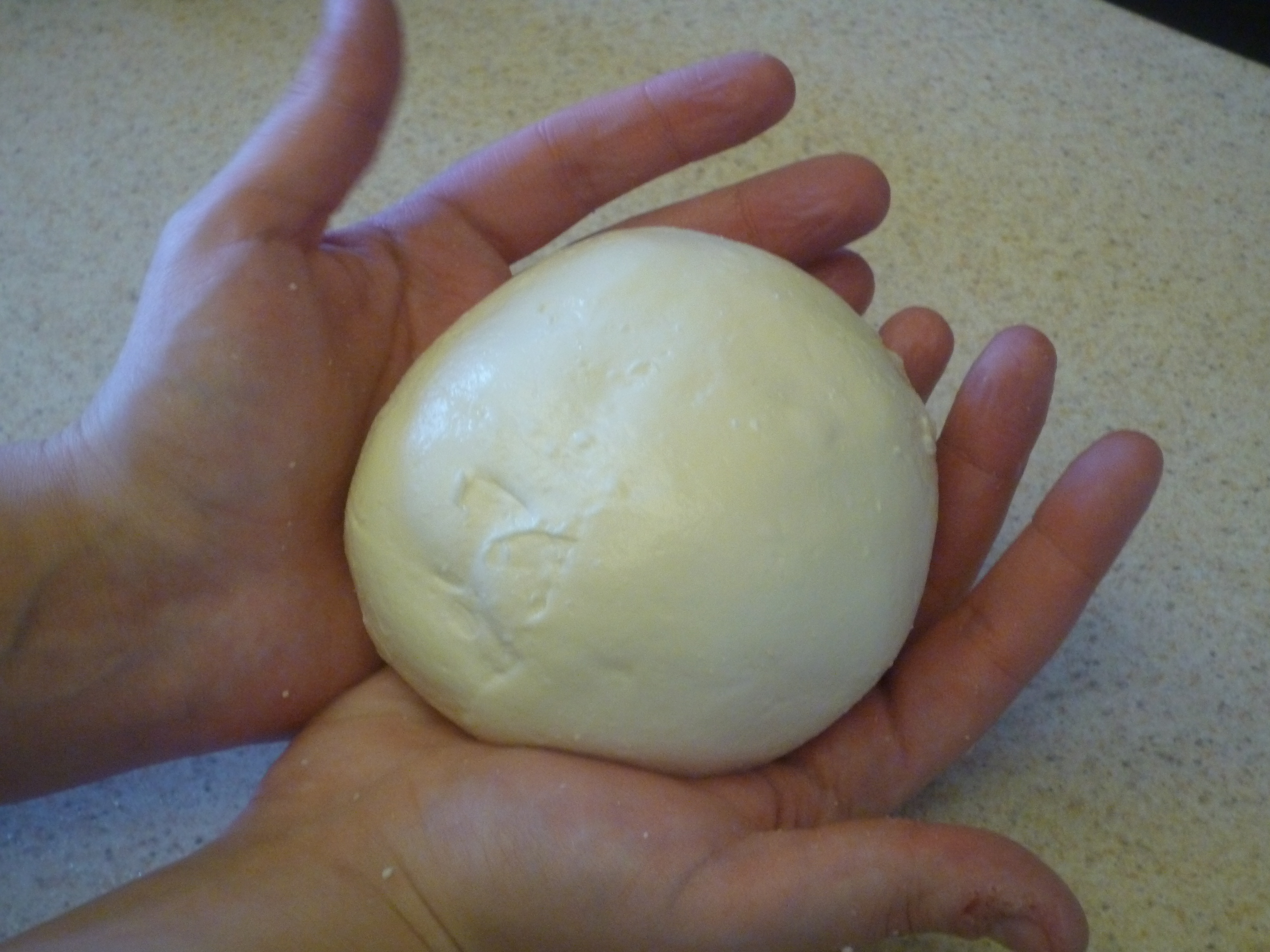
Remove, and then knead the curds like bread dough. Repeat this process several times until the cheese is cohesive and stretchable. The cheese is ready when it is shiny and has a consistency similar to pulled taffy. Roll into a ball and place immediately in a bowl of cold water for ½ hour. This will improve the texture of the cheese.

From there you can slice, grate, or melt it however you like.

So what did I make for my Valentine?

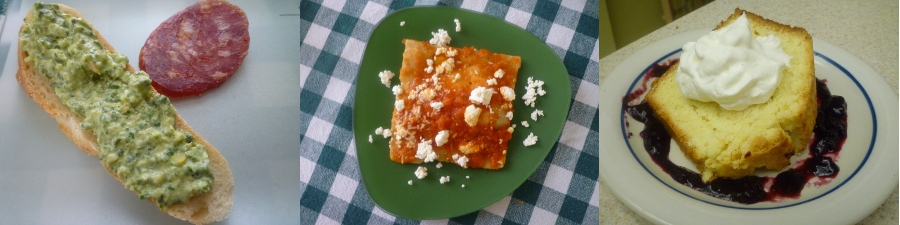
I made a batch of homemade pasta (hail Lidia Bastianich’s recipe) and filled ravioli full of fresh cheese and spices. Topped it all off with a touch of tomato & sweet pepper sauce and sprinkled on a little extra ricotta for good measure. Simple, but with ingredients so lovely I wanted to let them speak.

We also had some spinach, artichoke and caramelized onion crostini with hot sopressata, and finished the meal with a decadent little pound cake with vanilla bean whipped cream and blueberry-lime coulis for dessert. Don’t worry, recipes for the apps and dessert are forthcoming!

For now, have a happy (and cheesy) Valentine’s day. Share it with the ones you love and remind them just how special they are to you.

Ciao for now,

Neen
Ms. MLIS and the 114 Dozen Treats

6 Jan

Happy New Year from Neen’s Notes!

I took a hiatus from blogging in December for a multitude of reasons. The first was to focus on completing my final projects for graduate school. You may recall such posts where I defeated the Great Perl Dragon and other beasts along the way, but this was (to put it in super-nerd terms) the true Boss Battle. And yes, I won the game of graduate school. I’m now a bonafide library and information scientist.

And then came the baking and candy making. Once the final papers were off to my instructors, I suddenly had…time. It’s not as though I never had free time while I was in school, but I always had a lingering, “I really should be working on (blank)” feeling whenever I tried to take some down time. Last December, when I was only a little more than half-way through school I made 65 dozen cookies for friends and family. I did not anticipate ever coming close to breaking that record. After all, I only have two cookie sheets and two 9×13 in. pans.

Armed with my favorite recipes from last year and a brand new confectionery book, I warned my family not to bake and that I’d bring more than enough home for Christmas. I’m not sure they anticipated quite how excited I was to be back in the kitchen.

Here’s the final tally:

7 dozen peanut butter cups
3 dozen Nutella cups
6 dozen orange chocolate truffles
6 dozen gingersnaps
4 dozen thumbprints
6 dozen peanut butter blossoms
3 dozen chocolate almond coconut biscotti
4 dozen chocolate cherry walnut biscotti
4 dozen cranberry orange pecan biscotti
8 dozen Russian tea cakes
10 dozen coconut joys
17 dozen walnut caramels
7 dozen torrone
10 dozen chocolate marshmallows (for Folger party)
12 dozen vanilla-almond spritz cookies
3 dozen walnut-coconut patties
4 cups sweet and spicy pecans
4 cups sweet and spicy peanuts

Total? Not counting the candied nuts, 114 dozen. I should go into business! If you have a request for any of the recipes above, let me know. There may be photo-tutorials for some of them in the coming weeks. Candy is so temperamental that it can be hard to get pictures of the process, but I’m getting better at setting the timer/one-handed photography.

My final reason for a blogging hiatus? Pittsburgh, of course! I can’t believe that I somehow didn’t write about the fact that (back in October) Joe got us tickets to the Steelers’ last home game of the season as an anniversary gift. The game was 2 days before Christmas and so we decided to spend the first week of our holiday up in PA.

Joe has taken me to a few Steelers games when they’ve played down here at Fedex Field, but I had never been to a home game at Heinz Field. In fact, the only home game I had ever gone to was a game at Three Rivers Stadium when I was…12ish? Needless to say, my anticipation was building for a very long time.

Thursday, December 23, 2010 I watched the Pittsburgh Steelers beat the Carolina Panthers 27-3 from Section 223, Row K, and it was incredible. My favorite part of the stadium was the Great Hall, where memorabilia (including all of the Lombardi trophies!) from Steelers and Pitt Panther stand-outs are on display for all fans to see. A live band, members dressed in black and gold and donning Polamalu wigs, blasted rock music to get the crowd milling around excited and ready to go. Fans wore jerseys from every era emblazoned with names like Lambert, Greene, Harris, Bettis, Stallworth, Bleier, and Swann. Of course, current players were heavily represented as well, and even some…interesting throwbacks like Kordell Stewart. I did not, however, witness any Neil O’Donnell jerseys and do not believe I ever will. 

And everyone, I mean everyone carried a Terrible Towel. Even before the announcer could start naming the players who ran onto the field, the crowd looked like a sea of Vegas-gold waves. The experience of being in a place where 60,000 people are excited and proud of the same thing was unbelievable. The players on the sidelines too, waved their Terrible Towels to liven up the crowd during crucial moments. (The glorious noise forced 2 Carolina time outs and contributed to 3 false starts. Hope we helped, boys!)

I don’t think I stopped smiling the entire evening. Thank you again, Joe, for making yet another one of my dreams come true!

Yet, that was only the very beginning of our vacation. You’d think it couldn’t get any better but it did. We spent the next 4 days celebrating with family we don’t see nearly enough. There are few things that make me happier than just having time to spend with my parents, brother and sister-in-law, and Joe. We had some wonderful meals together, wandered the Strip District, and just caught up on life over wine and board games. Cigars, too. Oh, and cookies…days and days of cookies. I feel like we should install a fire-extinguisher type case in each family member’s house that contains a tray of cookies: “Break glass in case of celebration.”

I hope your holiday held wonderful memories as well. My hope for this year is that I may continue learning how to have more compassion for both others and myself, to remove the ego and respect what my body and mind can do on each day that I am alive, and to live with a sense of respect for all that this amazing planet provides each day.

Happy 2011—Ciao for now!

-Neen

Truffle Shuffle

23 Nov

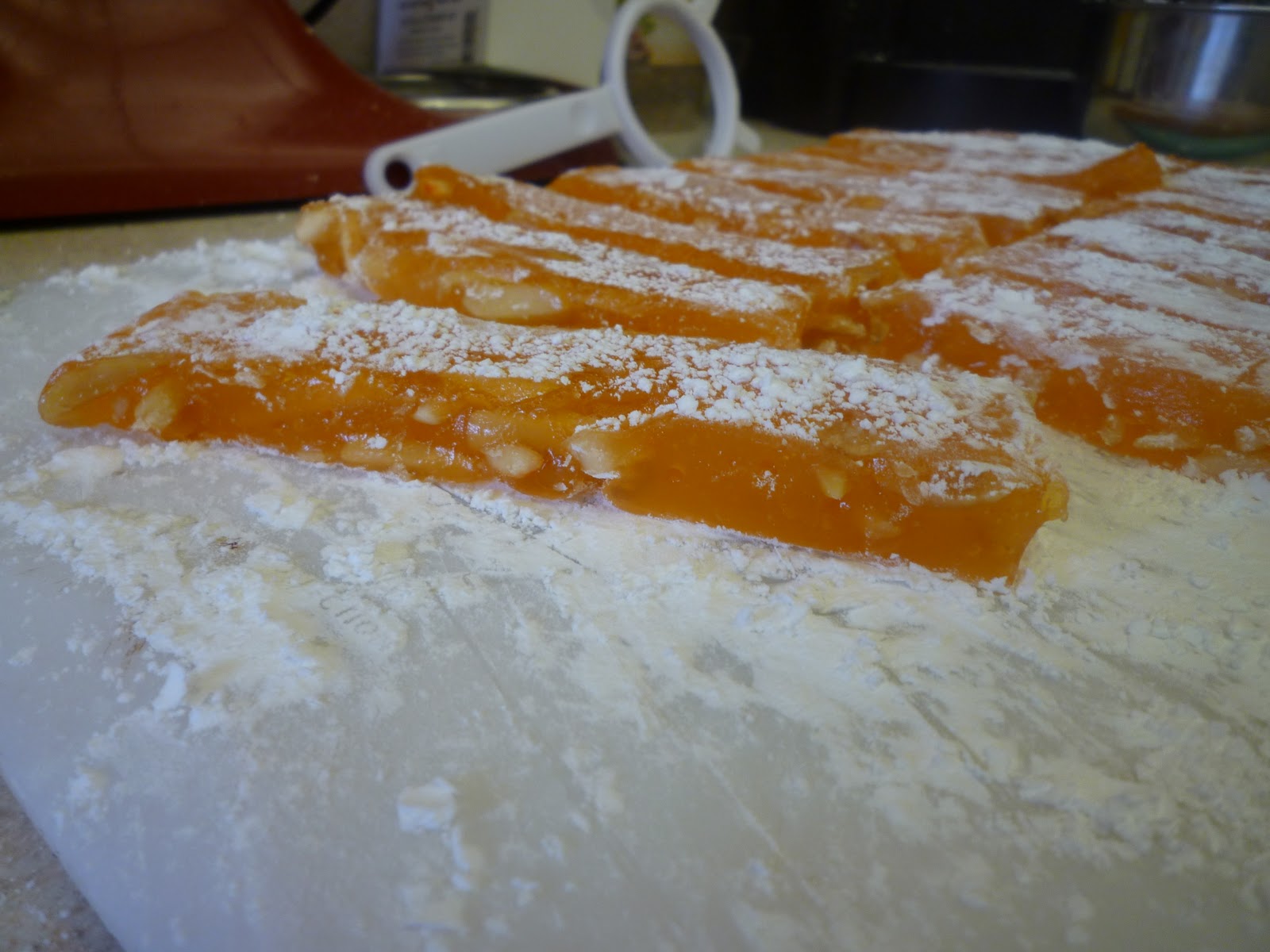
I recently gifted myself Chocolates and Confections at Home with the Culinary Institute of America written by Peter Greweling, an instructor at the CIA. I’ve been in the kitchen nearly every free moment since receiving it. Each chapter begins with a discussion of the theory and techniques (with photographs!) for the recipes found therein. Even if you’re not interested in making your own candy, it’s a really fascinating book for learning about what goes into some of the treats we love. Like most food, candies have cultural, social and regional ties that can bring a sense of nostalgia just from seeing them.  For instance, you C.S. Lewis and/or Charles Dickens fans may be interested to know that there is a recipe in Greweling’s book for irresistible Turkish Delight (I made mine orange and almond):

The main reason I went after this book was for the chocolate. There’s a whole chapter devoted to the treatment of chocolate and avoiding pitfalls like blooming or streaking in finished candies. Tempered chocolate and I have in the past, had a tenuous relationship. I chocolate-dip torrone or marshmallows, but they never look particularly pretty. How do I make molded chocolates with caramel or peanut butter inside? And candy bars? And cordial cherries? And..and…and…well the list goes on.

After reading the chocolate-chapter, I practiced tempering chocolate for some pecan and walnut turtles. While disastrously messy, it helped me learn how to arrange everything on my limited counter space and gave me a sense of the pace at which I needed to work. It reminded me so much of making marshmallows for the first time: Accept that you will make a mess, learn from it, and know that in the future you will know how to avoid it.

I was right. So before you all head off to dive head-first into your Thanksgiving cooking, here is a simple truffle recipe that makes an elegant addition to a holiday candy dish.

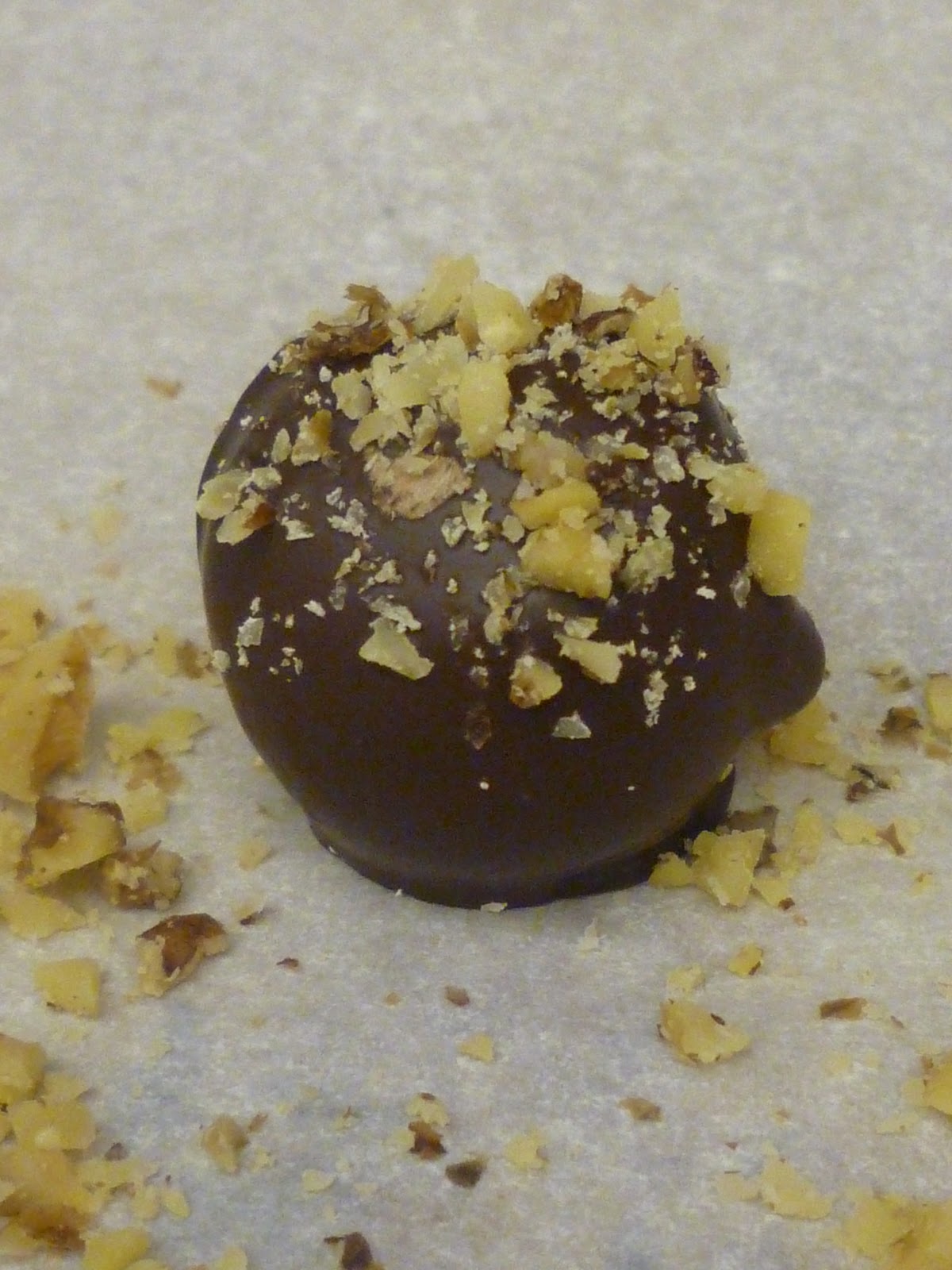
Marzipan-Walnut Truffles

Ingredients
Marzipan:
-3 oz. almond paste (I found it in the baking aisle at my local grocery store.)
-¾ cup powdered sugar
-2 oz. walnuts, chopped
-1-2 tbsp. brandy or other liquor (can use corn syrup for alcohol-free)

Coating:
-8 oz. dark chocolate, chopped
-2oz. walnuts, finely chopped

Method
-Cut the almond paste into small pieces and place in a mixing bowl.
-Sift the powdered sugar over the almond paste and knead into a cohesive ball, adding liquor or corn syrup as needed.
-Knead the chopped walnuts into the marzipan.
-Scoop teaspoon-size portions of the walnut marzipan and roll into balls to create the truffle centers.
-Prepare the coating by melting 6 oz. of the chocolate in a heat-safe bowl that fits snugly over a pot of barely simmering water (the bottom of the bowl should not touch the simmering water), stirring frequently until it reaches 120 degrees F. Remove from the heat, add the remaining 2 oz. chocolate and stir frequently until the chocolate is melted and reaches 85 degrees F.
-To maintain the temperature, place the bowl of melted chocolate on a heating pad set to medium. Alternatively, leave the small pot of water at a bare simmer on the stove and stir your chocolate over it if the temperature starts to drop.
-Use a fork to gently press each center in the melted chocolate and then turn once to coat evenly, -Scoop the truffle back onto the fork and tap the bottom of the fork on top of the melted chocolate a few times.
-Tap the fork on the edge of the bowl to remove the rest of the excess chocolate before gently setting the truffle on a baking sheet lined with parchment paper. Tapping the fork on top of the melted chocolate and then on the side of the bowl helps to keep a little chocolate puddle or “foot” from forming on the bottom of the truffle.
-Sprinkle the remaining chopped nuts over the truffles before the chocolate sets and then leave at room temperature until dry.

Makes about 20 truffles. Stored in an airtight container, they will keep at room temperature for several weeks.

Have a wonderful week. Happy Thanksgiving!

Ciao for now,

Neen

Flourless Chocolate Cake with Italian Meringue

15 Nov

Another birthday weekend! We celebrated Lynn’s (Joe’s mom) birthday this weekend with dinner on Friday night and brunch on Sunday. Who doesn’t love an multi-day birthday celebration?

Of course this meant more cake baking (Yay!). But this time, I had to take into consideration that Lynn is avoiding eating a lot of excess sugar these days. She was certainly not adverse to a little something extra-special and loves chocolate, so I thought that the occasion called for something dark, rich and only slightly sinful: The Flourless Chocolate Cake.

It has its sweetness, but the chocolate is the star. I played around with a few recipes, not wanting to tromp all over the chocolate flavor with a lot of butter and eggs. This version came out fudgy, dark, and rich. For the icing, I chose a light and fluffy Italian meringue. You don’t need very much (I used a little more than half of the recipe) for a one layer cake.

Flourless Chocolate Cake with Italian Meringue and Strawberries

Cake ingredients
-4 oz. dark chocolate
-1/2 cup butter
-3/4 cup sugar or sucanat (I used half and half—the latter has a lower glycemic impact)
-1/2 cup cocoa powder
-3 eggs, separated
-1 tsp. vanilla extract
-Pinch of salt

Method
-Grease and dust an 8 in. spring form pan with cocoa.
-Preheat the oven to 350 degrees F.
-In a saucepan over low heat, melt together the butter and chocolate and whisk until smooth.
-Remove the chocolate/butter mixture from the heat and whisk in the sugar, vanilla, salt and then the egg yolks (one at a time) until smooth.
-Sift the cocoa powder on top of the mixture and mix just until combined.
-Beat the egg whites to stiff peaks and then gently fold into the cake batter.
-Pour the batter into the spring form pan and bake for 25-30 minutes or until just set. Cool completely on a wire rack.

Italian meringue ingredients
-2/3 cup and 2 tbsp. sugar, divided.
-¼ cup water
-Pinch of salt
-3 egg whites
-1/4 tsp. cream of tartar

Method
-Combine the 2/3 cup of sugar, water, and pinch of salt in a saucepan over medium heat. Swirl the pan gently until the sugar dissolves and then cook without stirring until the mixture reaches 230 degrees F.
-While the sugar syrup is heating up, beat the egg whites and cream of tartar until foamy and then slowly add the 2 tbsp. sugar. Beat until medium peaks form.
-Once the sugar syrup has reached 230 degrees, remove it from the heat and allow the bubbles to dissipate. With the mixer on low speed, slowly add the sugar syrup to the egg whites and then increase the speed, add the vanilla, and beat until stiff peaks form.

Normally meringue does not store well, but the addition of the cream of tartar meant that I was able to keep this in a sealed container in the refrigerator for a day without it beginning to weep or shrink. Place a layer of wax paper directly on top of the meringue to avoid condensation from getting into it.

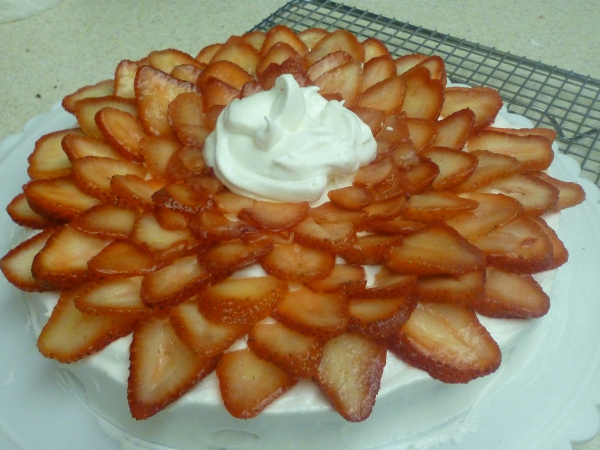
Spread an even layer of the meringue over the top and sides of the cake and then arrange sliced strawberries in overlapping circles. I wouldn’t recommend glazing them with anything as it will likely cause the icing to melt and spread.

Enjoy—and happy birthday again, Lynn!

Ciao for now,

Neen