An Apology

28 Apr

It took me a little while to find you. As we drifted apart, I let the pictures of you fade away too. One by one. The ones I kept accessible were only to remind me that I was better off without you.

For a long time, I regarded you with pity and dismay, then contempt for everything you did to spite and hurt me, and at long last indifference. A numb acceptance that you existed as a part of my history.

But I never loved you. Maybe in brief, fleeting moments I remembered something funny you said, or the way that you didn’t pay much attention to what anyone thought of your sense of style.

If I let you in, even for a second, I might think you weren’t so bad. I might feel loss.

I might remember that there were good times. And that you fought courageous battles that would have brought others to their knees. I might see the dark circles under your eyes the day after you stayed on the phone with a friend through the whole night, because she told you she wanted to kill herself.

You wrote every day, religiously, fiendishly. Filling up notebooks and journals without worrying about deadlines, word counts, style manuals, opinions, or critics. You paid none of it any mind and allowed that creativity to energize you, even at the darkest moment. Even the worst day of your life (almost a decade and a half ago), you wrote in that notebook until three pens were dry and your hand was so cramped you wore a wrist brace to school for two days.

I missed that drive.

And that is all it took. I felt you seeping into my heart, wheedling your way in and begging for my attention. Every time you have come to me like this in the past, pushing into the corners of my heart, I rejected you with anger, indifference, pride…anything to show you that I didn’t need you.

This time I just heaved a sigh and asked, “What do you WANT?”

You were silent. You looked down and I knew everything you felt. You were telling yourself all the reasons that you shouldn’t have come, you’re not worth anything, you’re not good enough….

That’s my script. I wrote that.

All of the things others told you, I reiterated a thousand times, branded them into your heart and left deep, painful scars.

And I realized suddenly that of all the tormentors you had, I was the worst. All this time I rejected and cast you aside for hurting me, letting me down, making me lonely. Meanwhile I shouted at you, struck you, and shackled you. Every day, I reiterated the world’s message that you simply were

Not. Good. Enough.

Finally I looked at you through tears. “I’m sorry. I’m so sorry. I love you. I love you as you are. You are important. You matter.”

And so today on this eleventh anniversary of my gastric bypass, I celebrate YOU.
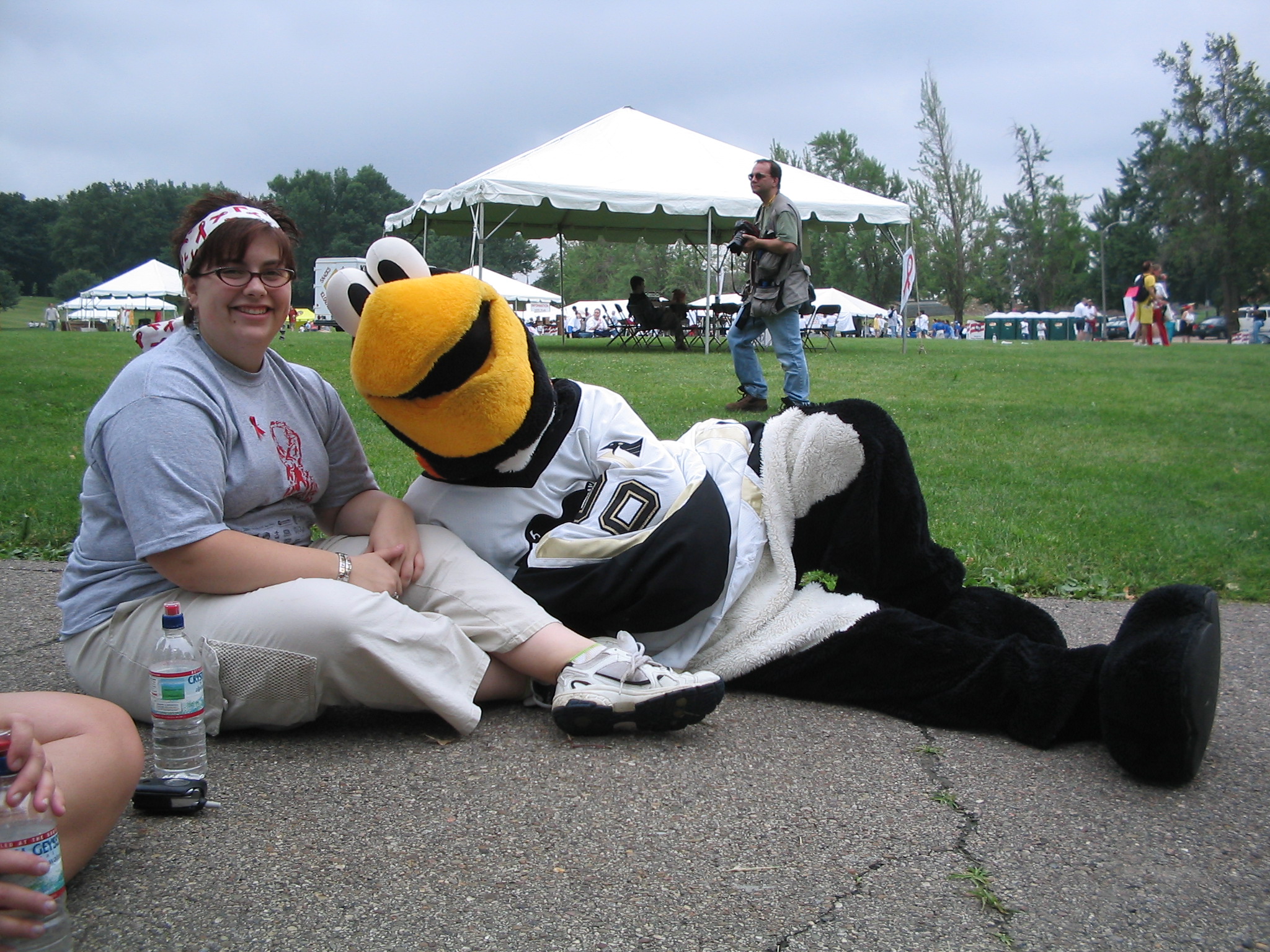
aidswalk 012

AIDS Walk Pittsburgh 2004

Every time this anniversary comes around, I focus on how far I have come and been so proud of how I’ve pushed you into the past. And I owe you an apology. Because even though I made that decision to give this vessel a better shot at carrying me around for more years of life on earth, you never deserved the hate I threw at you. You didn’t need one more person to remind you that your round shape was unwelcome.

And so here I stand. I am not at the lowest weight I’ve ever been. In fact, I didn’t want to remember my anniversary today. Because maybe I’m scared that I’ll never really feel “victorious” over the weight problems we’ve had.

But I never stood in a Bikram class in a bra top and shorts at that lowest weight—the confidence wasn’t there, and I do it now with great pride. (I can demo a mighty fine kapalabathi breath because you can see that whole belly move.) A student told me he felt welcome in class with me because I explained things practically and used anatomy cues. Another told me that she felt relaxed because I moved “like a graceful yoga swan” but I looked like “a real person.” Granted, we are all real people, but if you look at publications like Yoga Journal, you might recognize the mold that pop culture has tried to create for the Western yoga practitioner. My personal favorite was the student who said to me, “Oh my god, no one has ever told me I could reach and move my belly flesh out of the way in a seated twist. I actually twisted!” Those were all things I learned from you. I remembered what you felt like in that first yoga class as an obese woman.

I’ve come home and cried to Joe on occasion, “What do I have to offer that someone else can’t do a thousand times better?” Even I fall into that trap of thinking that I’m not worthy to be in the seat of the teacher because I can’t float up into arm balances gracefully or fold my legs into lotus. And again I have to go back to all of those words I say in class. “This is not about how many postures you do, how deeply you go into them, or how strong you are. It is about finding a ‘steady, comfortable seat’ in any shape you take. All you need to do to figure out what that means is listen to your breath. If it’s even and calm, you’re just as deep in the posture as anyone else. What is a steady comfortable seat for you at this present moment?”

Sometimes when I feel unsure of myself as a teacher, I imagine you standing there, proud and tall. All of the weight hanging off of your bones, and you don’t care because this place is safe. This room is sacred. This yoga is for everyone. And I would say to you, dearest 18 year-old Neen…

Welcome home.

Listening to music in Faneuil Hall - April 2004

Listening to music in Faneuil Hall – April 2004

Quick Re-Heats: Potato Crusted Mini Quiche

23 Apr

One of the most in-my-face changes since becoming a self-employed person with odd “office hours,” has been figuring out when and what to eat. Sometimes there are evenings where I teach from 6 until 9:30. I personally don’t like to eat less than 2 hours before I teach a hot class, and sometimes afterward my brain kicks into “I just want to relax” mode before I have time to consider dinner. The problem is that thinking leads to grabbing something easy or fast on my way home. And while Alexandria has a decent variety of quick, healthy food options, let’s be honest that buying a $10-15 salad/pizza/sandwich that I could make at home for a fraction of the cost is not the best idea.

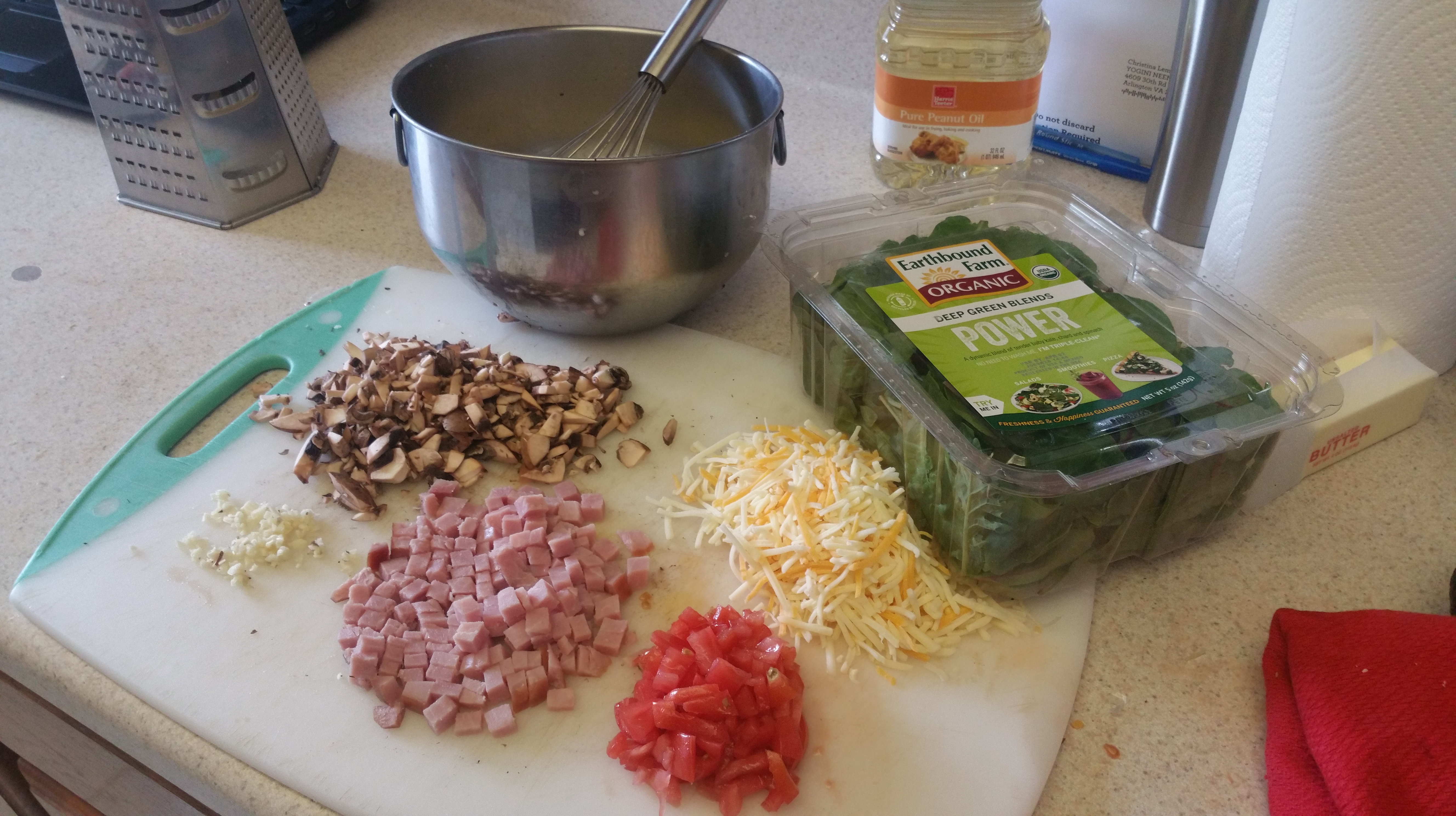
So I’ve been leaning on foods that are easily re-heated and those that can be made for the sole purpose of using up odds and ends at the end of the week. Soup, lasagna, chili, and pot roast are all pretty good examples. Still, for simplicity, nothing beats quiche. And this version negates the need to make pastry, which is a good bonus. I make these on Sunday and refrigerate them in individual containers. The key here is to not think too hard about specific ingredients. Use what you have. In this instance, I made this right after Easter, so I had leftover ham, potatoes, a lone tomato, a half package of mushrooms, and some half-wilted salad greens. I also only had 5 eggs, and I assure you it was not the end of the world.

Potato Crusted Mini Quiche

  • 1 russet potato, sliced thin on a mandoline
  • 6 eggs, well beaten
  • 2/3 cup milk
  • 1/2-3/4 cup of shredded or diced cheese (I used a cheddar-jack blend)
  • 1 roma tomato, diced
  • A few handfuls of greens (I used kale/spinach/chard salad blend)
  • 5-6 oz. of ham, diced
  • 1 clove garlic, minced
  • 6-8 oz. white or cremini mushrooms, diced
  • 1/4 tsp. grated nutmeg
  • Salt and pepper to taste

Prep the potato crust first. Preheat the oven to 450 degrees F and lightly grease a baking sheet. Lay the sliced potatoes out—they can overlap a bit.

20150330_114239
Bake for 9-10 minutes or until just lightly golden. This isn’t to cook the potatoes through, but to make them pliable.

Grease a muffin tin. Let the potatoes cool slightly and then lay slices in each cup, pressing them against the bottom and sides. Make sure they overlap slightly. Five slices usually does the trick if you’re working with a large potato.

20150330_120911
Set the pan aside while you prepare the filling.

20150330_120150

Lower the oven temperature to 375 degrees F.

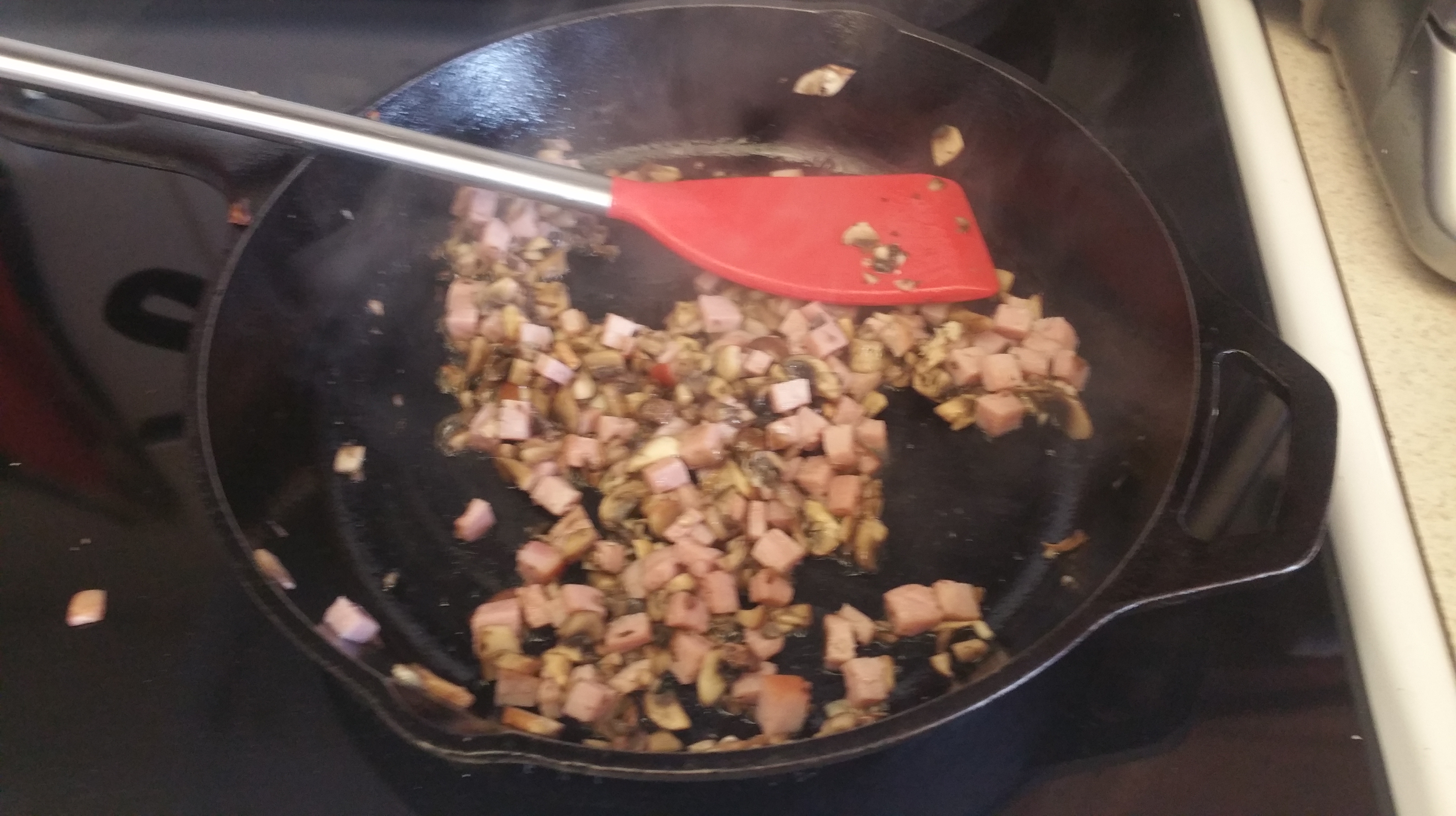
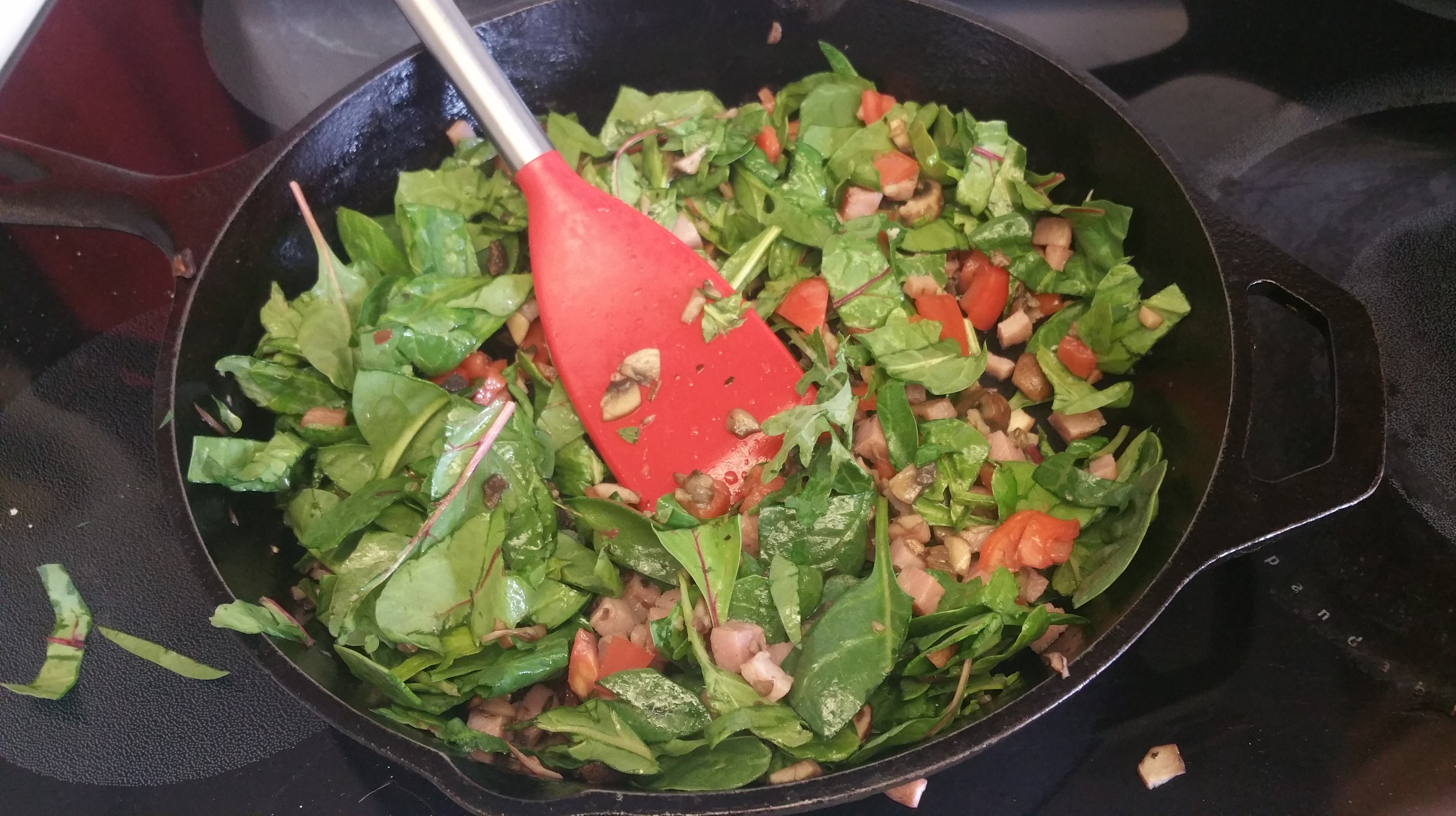
Place a skillet over medium heat and add some olive oil or butter to the pan. Gently saute the mushrooms until they start to give up some liquid, and then add the ham and garlic. Cook one minute more, and finally add the tomato and greens to the pan. Cook until the greens wilt slightly, and then remove the pan from the heat. Season the filling with salt and pepper to taste.

20150330_120443 20150330_120607

Beat the eggs with the milk, nutmeg, and some salt and pepper.

To assemble the quiches, place a generous amount of the vegetable/ham filling into each crust, top each with shredded cheese, and then very slowly add egg custard to each one until ¾ full.

20150330_121236 20150330_121408 20150330_121406 20150330_121729

Carefully move the muffin tin to the oven and bake the quiches for 12-15 minutes. They will puff up and be golden brown on top when ready. Let them sit in the pan for 5-10 minutes, then run a knife around the edge of each, and lift the quiche out with a wide spoon or small spatula.

20150330_132210

I like to have quiche with some greens in spicy vinaigrette to offset the rich custard. Yum.

To reheat from cold, just pop into a toaster oven or conventional oven set to 350 degrees F and cook for 5-8 minutes. Nearly instant breakfast, lunch, or dinner! This recipe usually makes about 8-10 quiches depending on how large the potato is and how many odds and ends you’re throwing into the custard.

Ciao for now,

Neen

Sunday Morning Sweets: Old Fashioned Cake Doughnuts

26 Mar

If you were snowed in, work was cancelled, and you had all of the necessary ingredients, tell me…

Why wouldn’t you make doughnuts?

Sure it takes a little time to do it properly, but it wasn’t like I was going anywhere on that February morning.

A lot of people don’t like frying, because they’ve had bad experiences with poorly-fried food. I get it. Believe me, greasy food makes me queasy too. If you keep a thermometer in the pot, fry in small batches, monitor the temperature between batches, and drain food properly, you will end up with almost as much oil in the pot as you started with. Less oil leaching into the food, no greasy texture.

I am always a fan of peanut oil for deep frying as I think it has the most neutral flavor, but you can use anything with a high smoke point.

Since I was snowed in at the last minute on this occasion, I decided to make cake doughnuts. I prefer to allow yeast doughs to rise overnight and we didn’t have that kind of time.

Old Fashioned Cake Doughnuts

  • 3/4 cup sugar
  • 4 teaspoons baking powder
  • ½ tbsp salt
  • 1⁄4 teaspoon freshly grated nutmeg
  • 1 teaspon cinnamon
  • 2 eggs
  • 1⁄4 cup unsalted butter, melted
  • 1 cup whole or 2% milk
  • 4 cups flour
  • Oil for frying

In a large bowl, combine the flour, baking powder, salt, and spices.

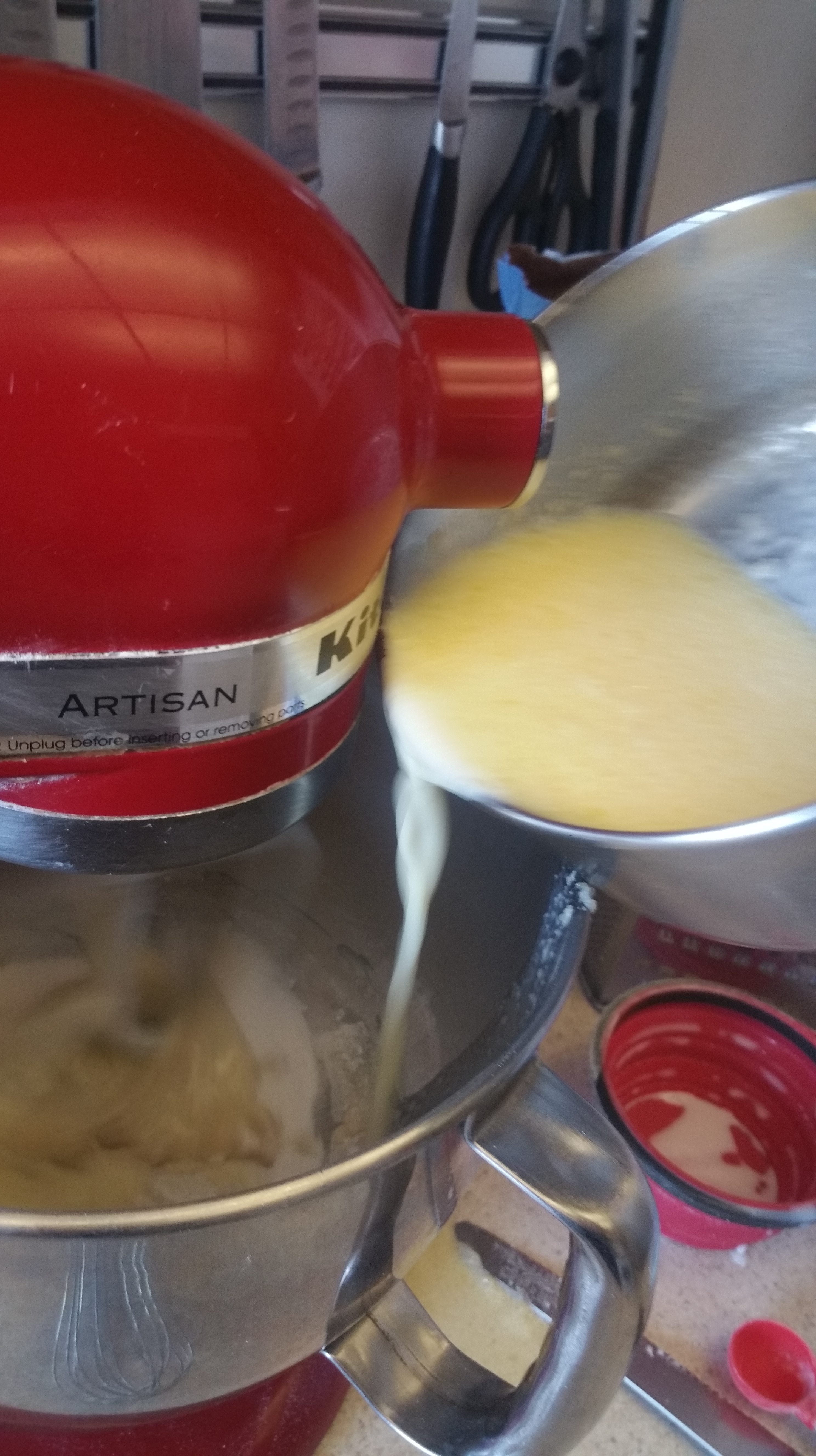
20150222_114358In another bowl, Combine the sugar with the melted butter, milk, and eggs, and blend well.

20150222_114605Slowly add the wet ingredients to the flour mixture and beat until you have a batter that comes together, but is very soft and sticky.

20150222_114623Cover the dough with plastic wrap and chill for one hour.

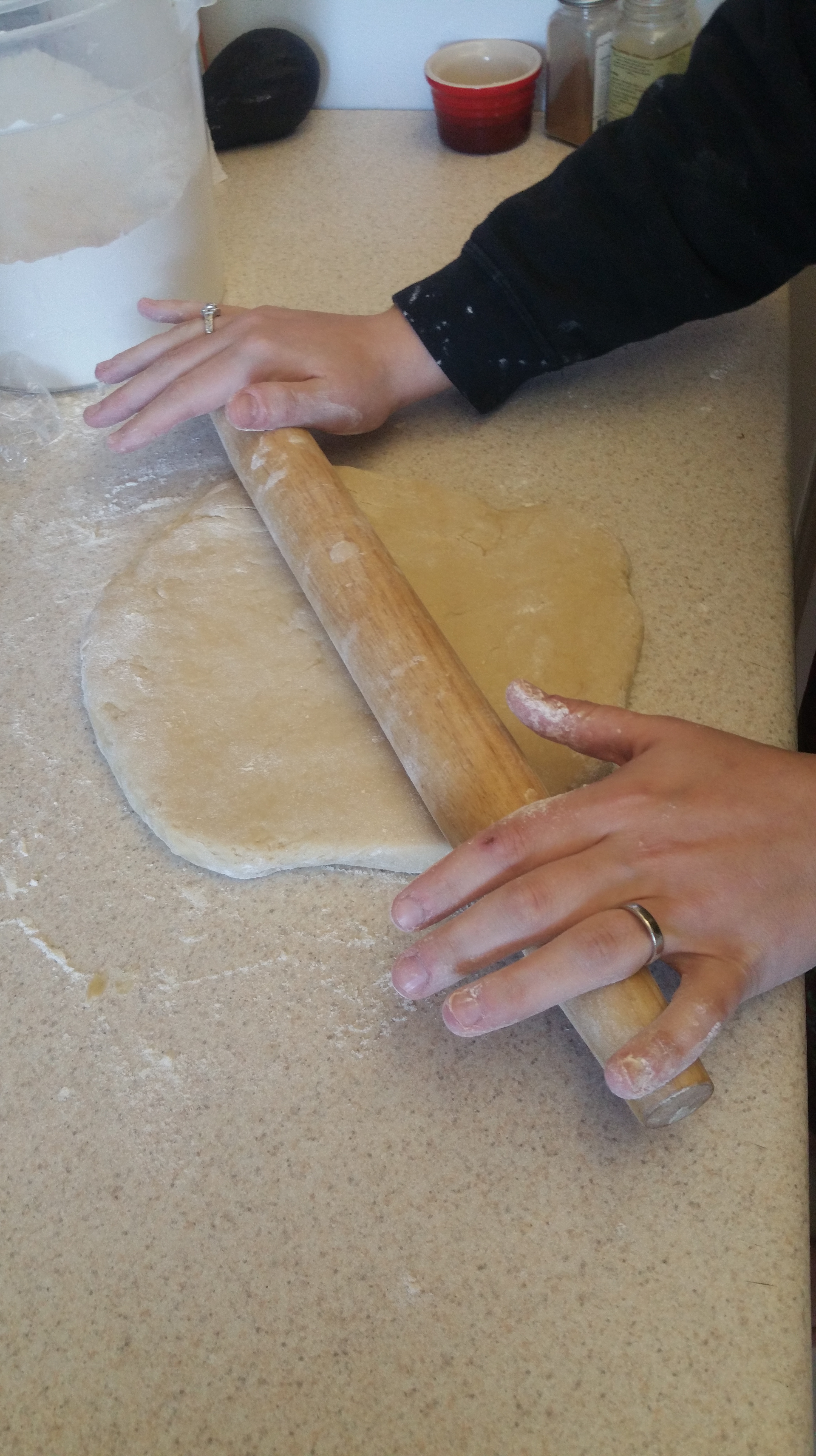
After chilling, roll the dough out until it is about ½ in. thick.
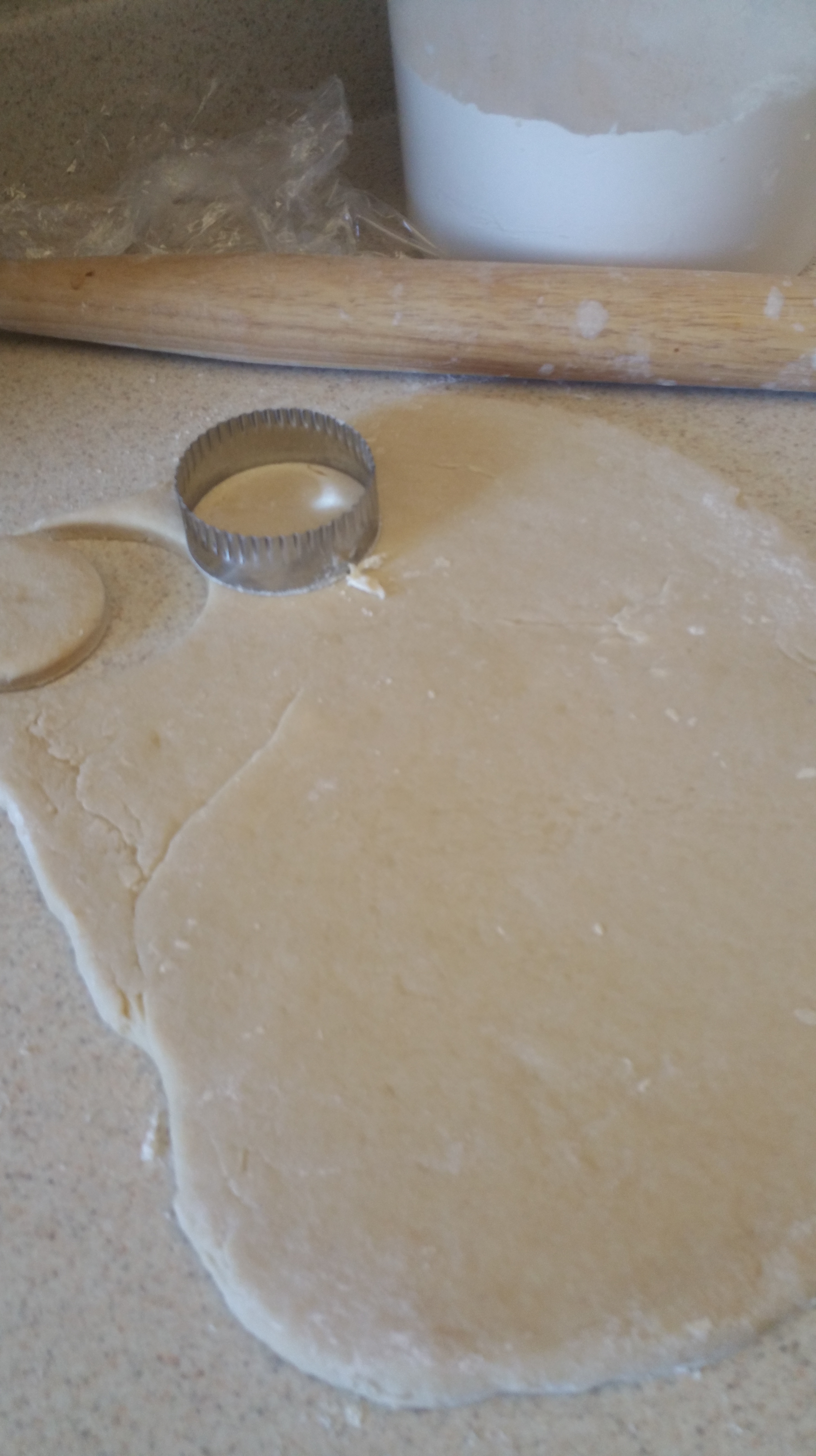
20150222_122147Cut out doughnuts with a pint glass or biscuit cutter, and then cut out center holes with a small cookie cutter or shot glass.

20150222_122235
20150222_122554Fill a deep skillet with about 1 ½ in. of vegetable or peanut oil, and heat the pan until the oil is about 360 degrees.

Add doughnuts gently to the hot oil, cooking a few at a time so that the oil temperature stays between 360-375 degrees. Once you see golden brown around the edges, flip the doughnuts so that they cook on both sides. Total cooking time is about 2-3 minutes for doughnuts and about a minute for doughnut holes.
20150222_124221Remove the doughnuts using a spider and drain on a cooling rack inverted over a layer of paper towels.

While warm, glaze or sugar as desired. For this batch, I dipped some in cinnamon sugar and others are topped with a simple powdered sugar, milk, lemon zest, and vanilla glaze and sprinkles. I love crazy flavor combinations, but sometimes simplicity is perfect.

20150222_12375520150222_12545720150222_125746

And I have to say that toasty coffee, pajamas, and doughnuts is a pretty fantastic way to spend a Sunday morning with your sweetie, snowed in or otherwise.

Ciao for now!

Neen

A Note on Norman Scribner

23 Mar

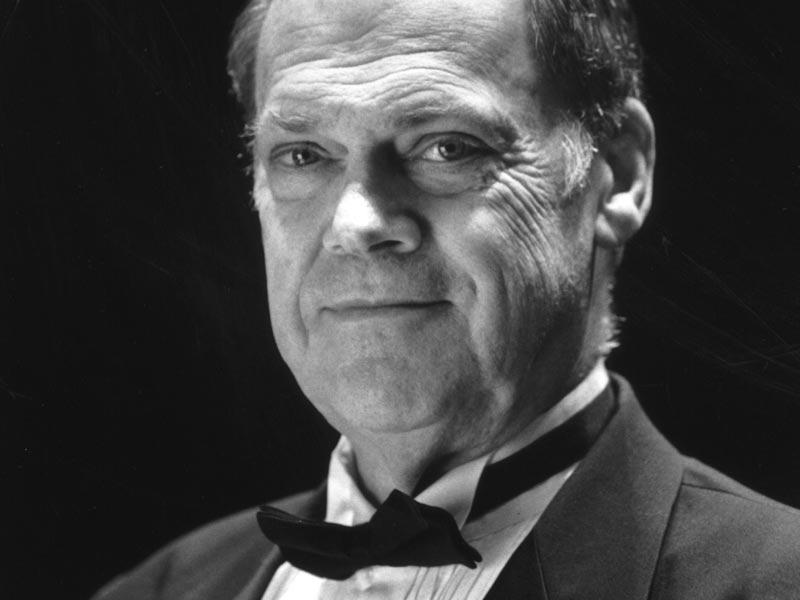
The “Tuba Mirum” section from Mozart’s Requiem begins with a series of solos, with tenor and alto solos back-to-back. A little too timidly, I explained that I wanted to audition for both vocal parts. Norman Scribner raised his eyebrow at me looking unconvinced, but prepared to play the passage I’d marked.

Norman at the piano.

Norman at the piano.

I was in the hall at St. Alban’s Episcopal Church in Washington, DC, auditioning for the Choral Arts Society of Washington. After finishing grad school, I finally had some free time in the evenings after work, and wanted to get back to singing in some way. I missed singing with other people. I hadn’t auditioned for anything since college and felt completely out of practice. I’d torn our townhouse apart looking for sheet music and cursed myself for having no idea where any of it had gone. The Requiem was the only appropriate piece of music I even had in my possession to use for a choral audition.

Maestro Scribner gave me a few bars to get a sense of the pace he was playing, and offered another lift of his eyebrow to cue me in. Fortunately the tenor solo came first, giving me a chance to ease into my voice and calm my heart rate. I made a quick jump at the end of the tenor solo into the alto part, and I knew I’d won him over as a rather sly grin made its way across his face.

He laughed when I finished. “Well that’s just fantastic,” he said. We did some scales and rhythm exercises (the latter I totally bombed), then he told me there were still several weeks of auditions, so I probably wouldn’t hear anything for a few weeks. I thanked him for the opportunity and went on my way.

A few days later, I headed to Pittsburgh to visit my family. I got a phone call, and when I picked up, it was Norman. “Is this Christina?”

“Yes,”

“Hi, Norman Scribner from Choral Arts. Is this a good time?”

“Sure.”

“I keep thinking about your audition. I just think, I think you have something really special. You have a really unique voice. I’ve never heard anything like it. I don’t need any altos right now, but would you join Choral Arts as a tenor? I’d really like to have you.”

All I know is that I said yes, and that he thanked me. My brain almost went blank for the rest of the conversation. He was so utterly confident in my voice and that I’d be a good fit for the sound of the choir. It was beautifully humbling.

019

Suited up for my first concert. The whole “being a tenor” thing helped me dodge buying a long blue choir dress and jacket.

Over the next ten months, I spent a great deal of time working with, and learning from Norman. He guided us through rehearsals for Orff’s Carmina Burana, an “Homage to Modern Classics” concert featuring Bernstein’s Chichester Psalms, Stravinsky’s Symphony of Psalms, Prokofiev’s Alexander Nevsky, and Lauridsen’s Lux Aeterna, a Christmas concert full of Russian carols, the annual “Living the Dream…Singing the Dream” Martin Luther King, Jr. tribute concert, and finally Brahms’ Ein Deutches Requiem.

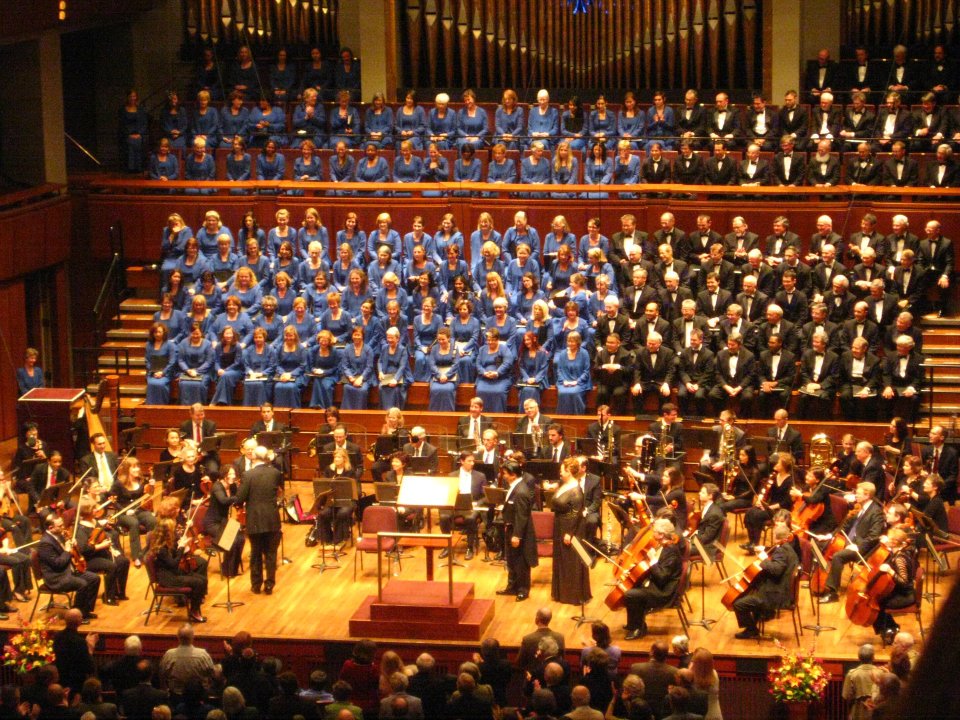
A photo of the choir, orchestra, and Maestro Scribner at Brahms "Ein Deutches Requiem."

A photo of the choir, orchestra, and Maestro Scribner at Brahms “Ein Deutches Requiem.”

He guided a smaller group of us who volunteered through rehearsals to sing with Andrea Bocelli as his back-up choir when he came to perform at the Verizon Center in DC. Oh, how patient he was as we attempted to not mangle the “Triumphal March” from Aida, which seemed to split into about a million parts.

Orchestra/choir backstage pass at the Verizon Center! SO COOL.

Orchestra/choir backstage pass at the Verizon Center! SO COOL.

There were also the numerous “Tenor and Bass Only” rehearsals during Carmina Burana where we’d fly through “In Taberna” over and over and over again until we stopped tripping over our tongues. Norman always had a moment to laugh with us during what could have been a redundant chore, but just as quickly, it was back to business.

I introduced him to my parents when they came to see one of our concerts and he repeated to my mother what a “unique treasure” of a voice I had. Every time he stood before us in The Kennedy Center and waited patiently for us to calm the chatter (oh come on, over 100 singers on one stage fidgeting around at dress rehearsal is a haven for good conversation), I felt the presence of something very special.

He drew sound out of us with his baton, and launched it across the walls of the Kennedy Center like a brilliant painter. He brought confidence and joy back into my voice when I wasn’t so sure I still “had it” anymore.

norman 1

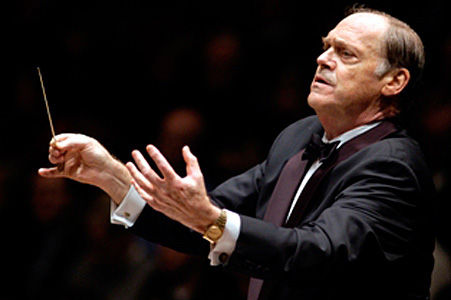
Norman guiding his choir magnificently.

I am so utterly grateful to have known Norman Scribner. When I heard of his passing today, I could only hug my husband close to me, and cry for the loss of this heart and soul full of song. I feel blessed to have known him, blessed to remember that phone call, and in awe of his service to Choral Arts and music as a whole.

This article was published shortly before the last concert Norman conducted as Choral Arts’ director. It says more about his legacy in Washington, nationally, and abroad than I can possibly say. I know his spirit will live on in the lives of every person he shared time and music with, and am glad to be counted as one of his students.

norman 3

Norman Scribner, founder and Artistic Director Emeritus of the Choral Arts Society of Washington. February 25, 1936 – March 22, 2015

May you be at peace, Norman. Alleluia. May flights of angels sing thee to thy rest.

The Gayatri Mantra

19 Feb

There are many ways beyond asana to practice yoga in daily life. Asana is done to strengthen the body, make it more pliable, facilitate better circulation and improve cognitive function, but in a more classical sense, yoga postures are preparation for seated meditation. When your body is properly stretched and strengthened, sitting in meditation becomes more comfortable. The more ease you have in your seat, the less of a distraction the body will be while you are trying to meditate.

But there are times when a vigorous asana practice is entirely inappropriate. If the body is ill, or you have an injury, or you are simply listening to your own inner wisdom’s craving for peace, it may be enough to find a comfortable seat.

Another way to practice yoga is by chanting a mantra. Mantra is a Sanskrit word that has two parts: The root, “man,” which means “mind,” and the suffix “tra,” which can be translated as tool or instrument. If you put the two together you have an “instrument of thought” or “tool of the mind.”

If you, like me, find yourself very challenged by the concept of “turning down your thoughts” in meditation, mantras can be an exceptionally good tool to have in your kit. There are many, many mantras out there, the most simple of which is “Om.”  “Om” is considered the primordial utterance, the sound which all life grew from. Pretty spectacular, right? And so beautiful to feel and hear the way it vibrates your whole chest.

The "Om" symbol represents the all-encompassing vibration of the cosmic universe. (Woah.)

The “Om” symbol represents the all-encompassing vibration of the cosmic universe. (Woah.)

Try chanting “Om” three times when you wake up in the morning. It’s like shaking the cobwebs off of your respiratory system and vocal chords.

A mantra does not have to be audible. The spiritual power of a mantra is awakened when it is seen, heard, or thought. Yoga is a very personal thing—some people are far more affected by writing a mantra repeatedly or meditating on it rather than chanting. Experiment with it without judgment. You may find that some mantras are more powerful to you as a visual reminder, while others are more useful as a vocal exercise. Others may be quite private, and exist only in your thoughts.

What I’d most like to share with you is the mantra I personally greet the day with, and sing to students frequently during savasana. It is called the Gayatri Mantra.  There are many translations of it, but the one I like best is “We meditate on the divine light that is the source of life in all worlds, and pray for that light to illuminate our intellect.” In your personal theology that “divine light” could be the sun, god, science, any number of things. Consider what speaks to you and allow yourself to make this part of your practice an offering. No matter what you believe in, it’s a pretty kind thing to send positive vibrations out into the universe.  So send that out to someone you feel needs your love and assistance.

In this video, I chant the Gayatri Mantra three times and offer both a Sanskrit transliteration and phonetic pronunciation guide in the captions. This healing mantra can bring more steadiness, compassion, and confidence into your day. Try sending your good vibrations out into the world!

Subscribe to my YouTube Channel for more yoga videos!

The Gayatri Mantra

Sanskrit transliteration: Oṃ bhūr bhuvaḥ svaḥ
Phonetic pronunciation: Om bhoor bhu-wah swa-ha

Sanskrit transliteration: tát savitúr váreṇ(i)yaṃ
Phonetic pronunciation: tat savi-tur varen-yam

Sanskrit transliteration: bhárgo devásya dhīmahi
Phonetic pronunciation: bhar-go de-va-sya dheem-a-hi

Sanskrit transliteration: dhíyo yó naḥ prachodáyāt
Phonetic pronunciation: dhiyo yo nah pra-cho-day-at

Translation: We meditate upon the divine light that is the source of life in all worlds, and pray for that light to illuminate our intellect.

Ciao for now,

Neen

Morning Habits

4 Feb

Like many people, I’m a habitual creature when I first wake up. Sometimes I think we need habit to save us from ourselves in those first few groggy moments of the day (or at least until I find where I left my glasses this time). Also like many people, I’m stiff in the morning. Fortunately, I do have a really good tool in my kit for this that I use everyday, call it yoga’s morning coffee: Awareness of Breath and Surya Namaskar (Sun Salutation). If you have 5-7 minutes and a willing heart and mind, it’s yours to use too. Yoga’s nonexclusive like that.

Yoga's other "morning coffee" is a rather silly utkatasana apparently.

Yoga’s other “morning coffee” is a rather silly utkatasana apparently.

The key component as always is the breath. If you’re ever unsure of where to start in yoga, always begin by bringing awareness to your breath. The lips are sealed. What is the temperature? Is the pace fast or slow? Does it feel narrow or very round? Is it restricted? Where do you feel your breath in your body? Don’t judge any of these things as good or bad, and notice where you are at the present moment without any anxiety about what it means.

Next, start to lengthen the inhales and exhales. Try inhaling for 4 counts, and then exhaling for 4 counts—you can expand it more if you wish. Constrict the back of the throat slightly so that you can hear your own breath. Consider this thought: Each time you inhale, your body takes that breath, filters it, breaks it down into the essential components it needs to use, and sends those where needed.  When you exhale it gets rid of all of the junk that is no longer necessary. It does all of this without conscious thought for much of our lives, which is crazy and amazing. In yoga practice, we become conscious of the breath’s power, and every breath you take becomes an opportunity to bring in new possibility and life, and to let go of something that you don’t need anymore.

The more you exhale, the deeper the next inhale can be. And so the more that you are willing to let go, the more possibility there will be.

What a beautiful reality to live in.

So as you allow yourself to melt into the rhythm of breath, it becomes linked with movement in Surya Namaskar where that breath will initiate and guide each and every movement.

Surya Namaskar warms the muscles and links breath to movement, but it is also a way of expressing gratitude for the sun as the source of all life on the planet. This ancient practice exists in many theologies, but also in everyday life. Have you ever lifted your face toward the summer sun to feel its warmth? In taking a moment to appreciate the way it felt on your skin, you performed a kind of sun salutation. In yoga practice, sun salutations can act as a way to prepare the body for asana practice, or be an entire practice as-is. Investing in this time to link your mind, body, and breath improves concentration, focus, and (most importantly for me) patience.

This video will guide you through the breath and movement for a variation of the classical sun salutation. If you have any questions, or are in need of a modification, please feel free to post in the comments and I will do my best to assist you.


Do subscribe to my YouTube channel if you’re interested in seeing more. Teaching is most often guided by questions, so knowing what you’d like to see is important to me as well. Feel free to email me with video demo requests.

Ciao for now,

Neen