Archive | Recipes RSS feed for this section

Oktoberfest Brew-Curds Cheddar

12 Oct

October has definitely arrived. Fortunately, that just means we’ve moved into football/beer season.

And comfort food season! Fall food is my kind of food. This weekend I decided it was finally time to combine cheese making and beer. Ever put beer in a mornay sauce? Do it and tell me if you ever make macaroni and cheese without it again.

Back in March, I made a wheel of Farmhouse Cheddar that came out pretty darn good. Good, but not great. For the last few months, I’ve been having some…issues…with cheese making. My wheel of gouda dried out because the humidity in my cheese fridge kept dropping too low. I pressed a second one over the weekend, but it will be waxed this time since my cheese making cohorts have advised me that the coating will protect it in a slightly less-than-ideal aging environment. Part of the reason it dried out so easily was due to equipment problem number 2: My pot. Because my largest pot (that fit a burner on my electric range) was still too small to fit two gallons of milk, I was halving recipes and making smaller wheels of cheese. I might have gotten away with the thicker rind on a larger wheel of cheese, but on the small ones it just meant the whole thing turned into a little brick.

Undeterred, I scoured the Internet until I found just the ticket: A 12 quart double-boiler. Now I could finally heat 2 gallons of milk evenly over a water bath with greater accuracy and better long-term temperature control. Armed with a new pot, new blocks of shiny red wax, and recently calibrated thermometer, I got back on the horse with a decidedly autumn cheese:

Brew-Curds Cheddar

 Just in time for Oktoberfest, it’s a cheddar wherein the curds are soaked in beer before pressing. Let’s do it.

Ingredients

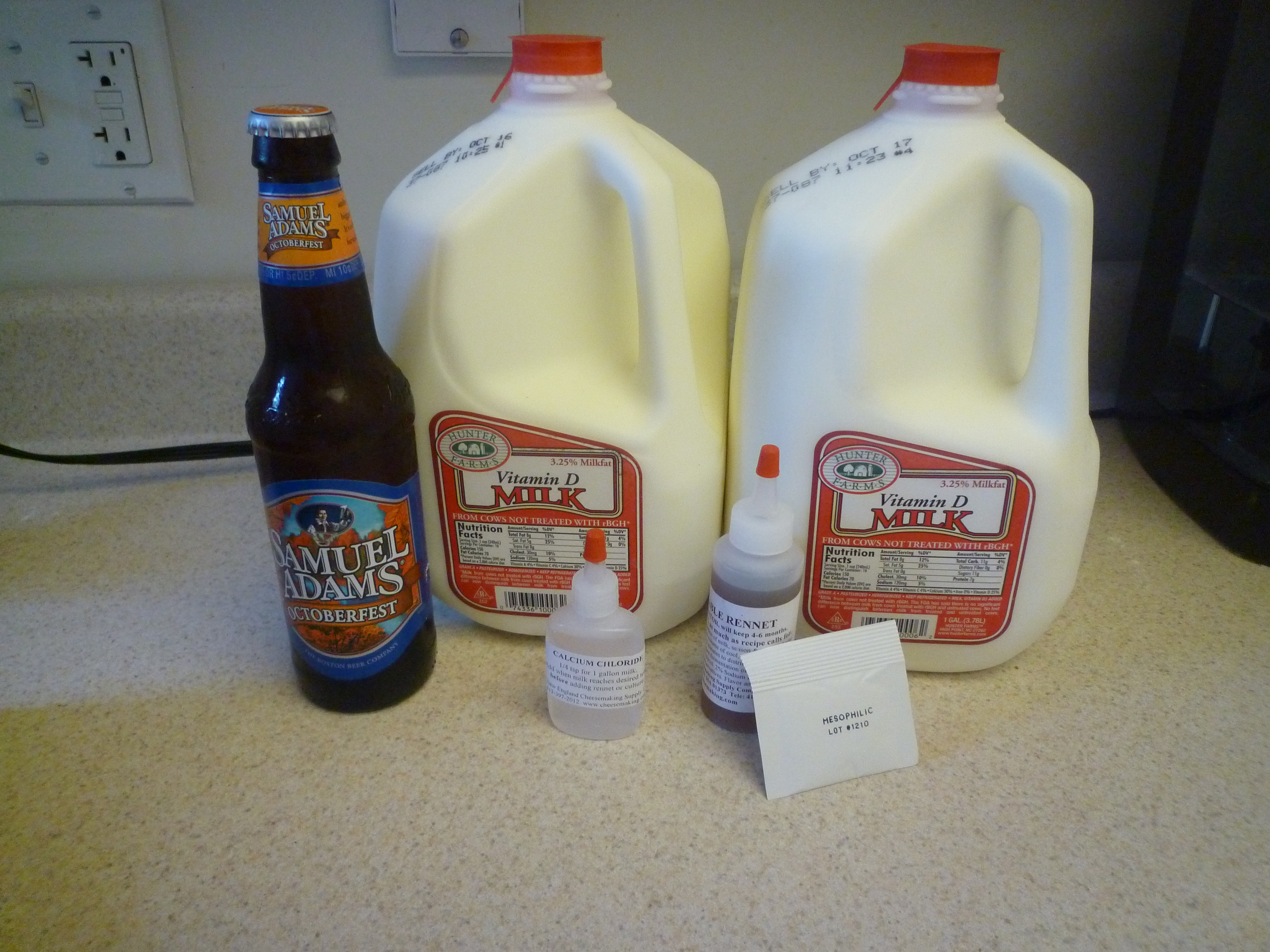
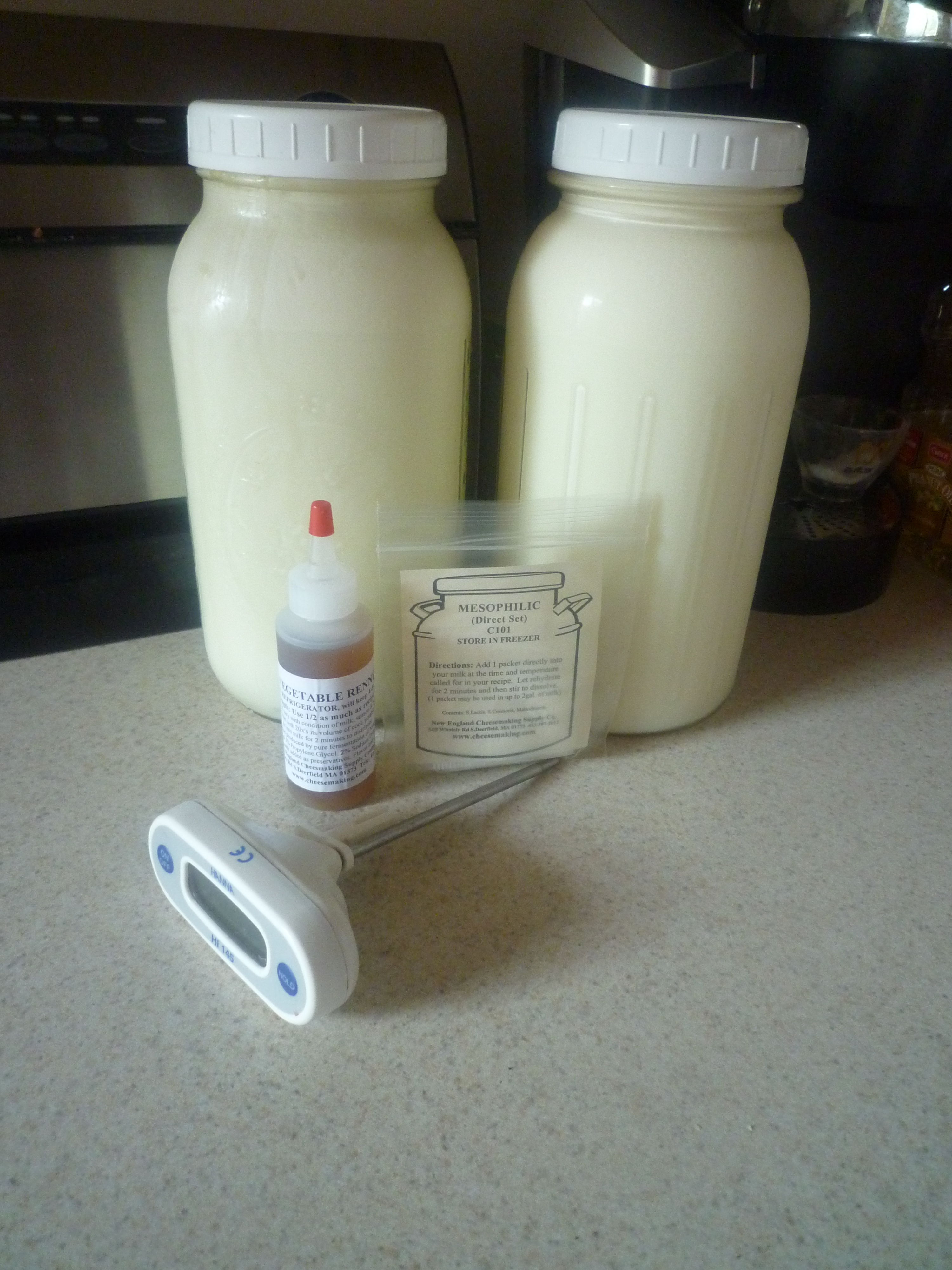
  • 2 gallons whole milk
  • 1 packet mesophilic starter
  • ½ tsp. calcium chloride diluted in ¼ cup cool water
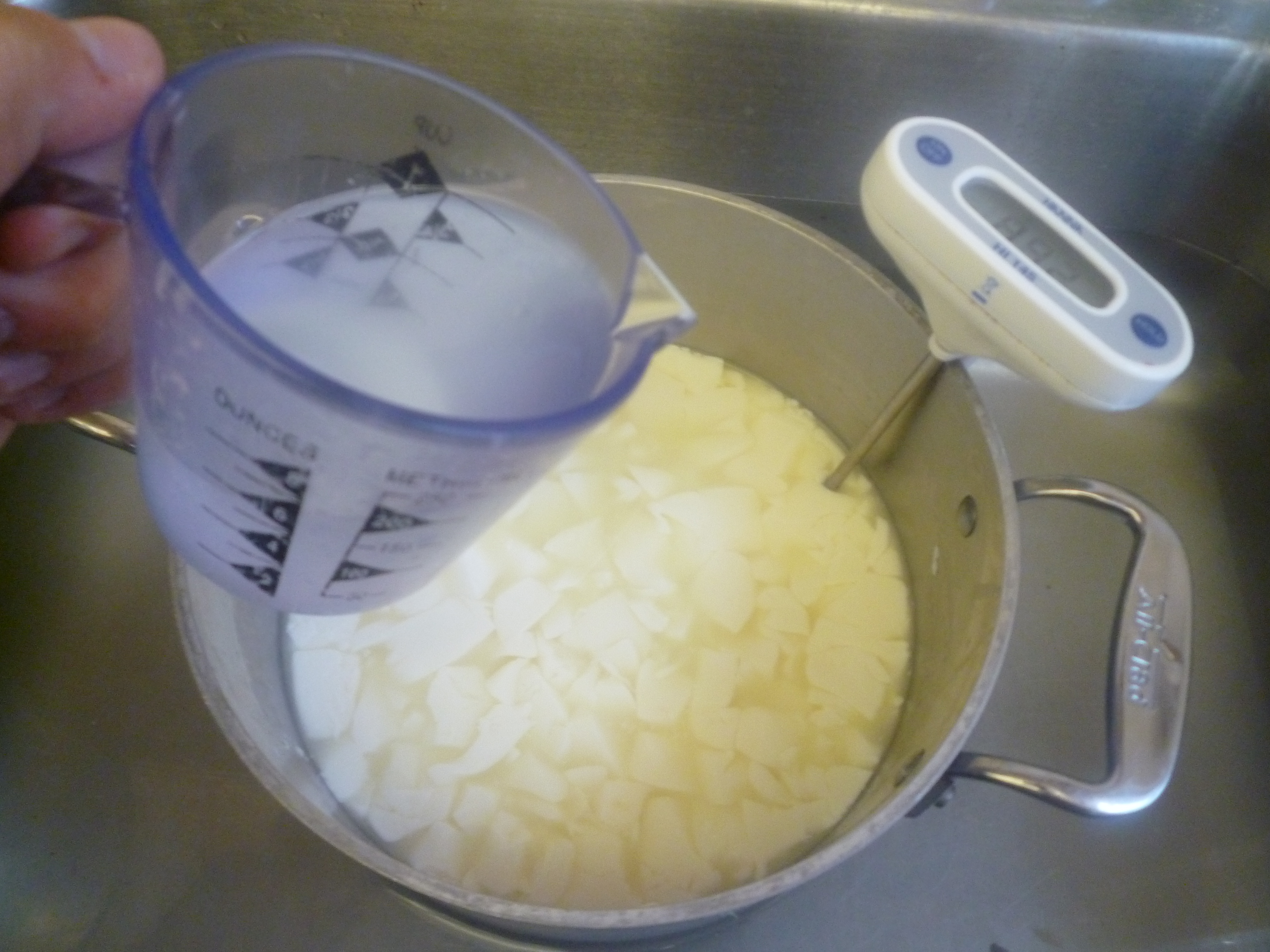
  • ½ tsp. rennet diluted in ¼ cup cool water
  • 1 bottle stout or ale of your choice , at room temperature. Pick something that you enjoy drinking!
  • 1 tbsp. kosher salt
  • Cheesecloth


Method

Slowly heat the milk in a pot set over a water bath to 88 degrees F over a period of about 15 minutes. Turn off the heat. Sprinkle the starter into the milk and allow it to rehydrate for five minutes before stirring it into the milk thoroughly with a whisk using an up and down motion. Maintaining the 88 degree temperature, cover the pot and allow the milk to ripen for 45 minutes.

Add the calcium chloride and mix for one minute, then add the rennet and mix for one minute. Once again, maintaining the 88 degree temperature, cover the pot and allow the mixture to set for 30-45 minutes or until the curd gives a clean break when cut with a knife.

Cut the curd into ½ in. cubes and let them sit for 5 minutes.
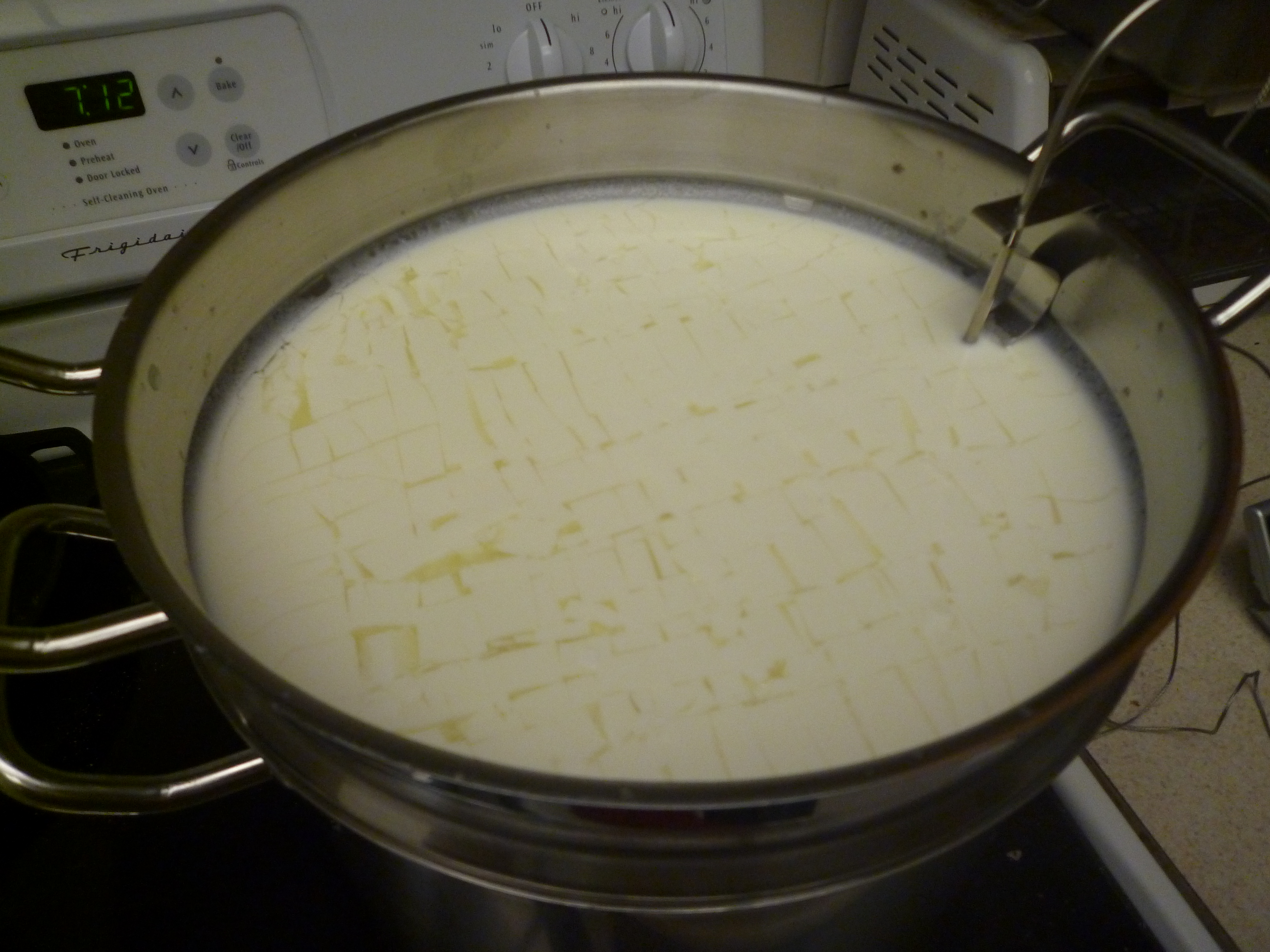
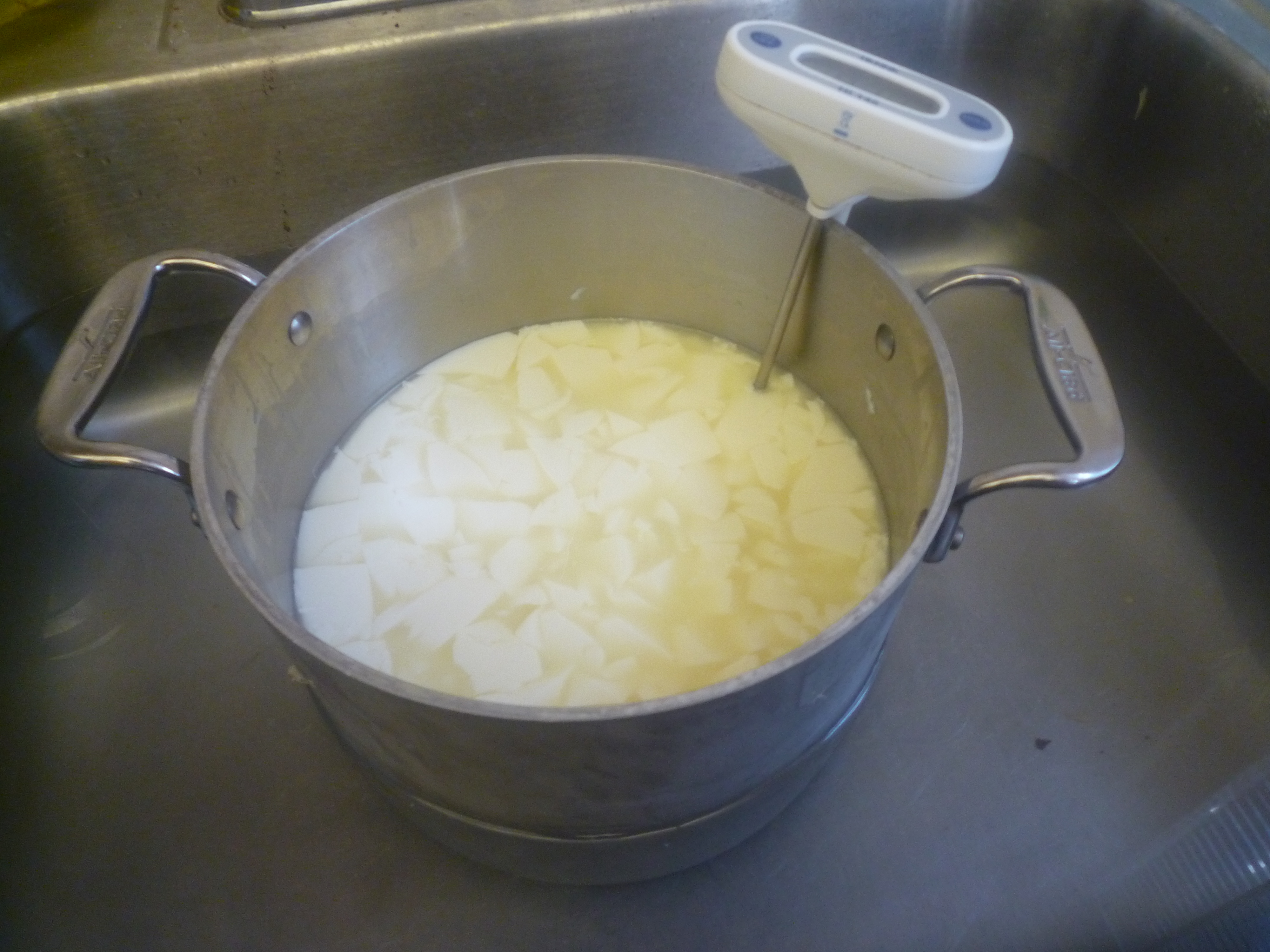
Over low heat, slowly bring the temperature of the curds to 102 degrees F over a period of about 40 minutes. Stir continuously throughout heating to prevent the curds from matting together. The curds will release a lot of whey and shrink to the size of peanuts. When 102 degrees F is reached, turn off the heat and rest for 30 minutes while maintaining the temperature. The curds will sink to the bottom of the pot.
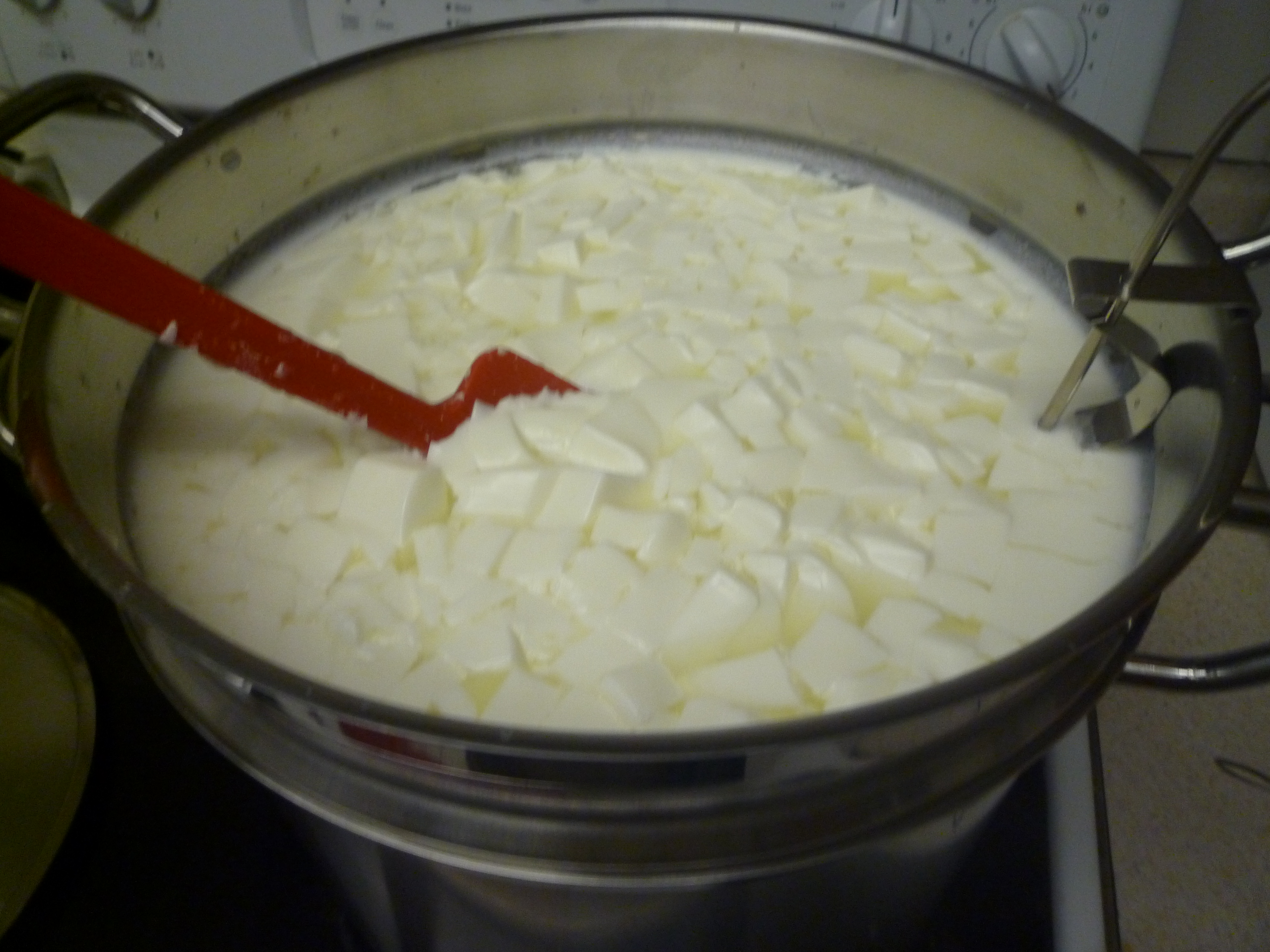
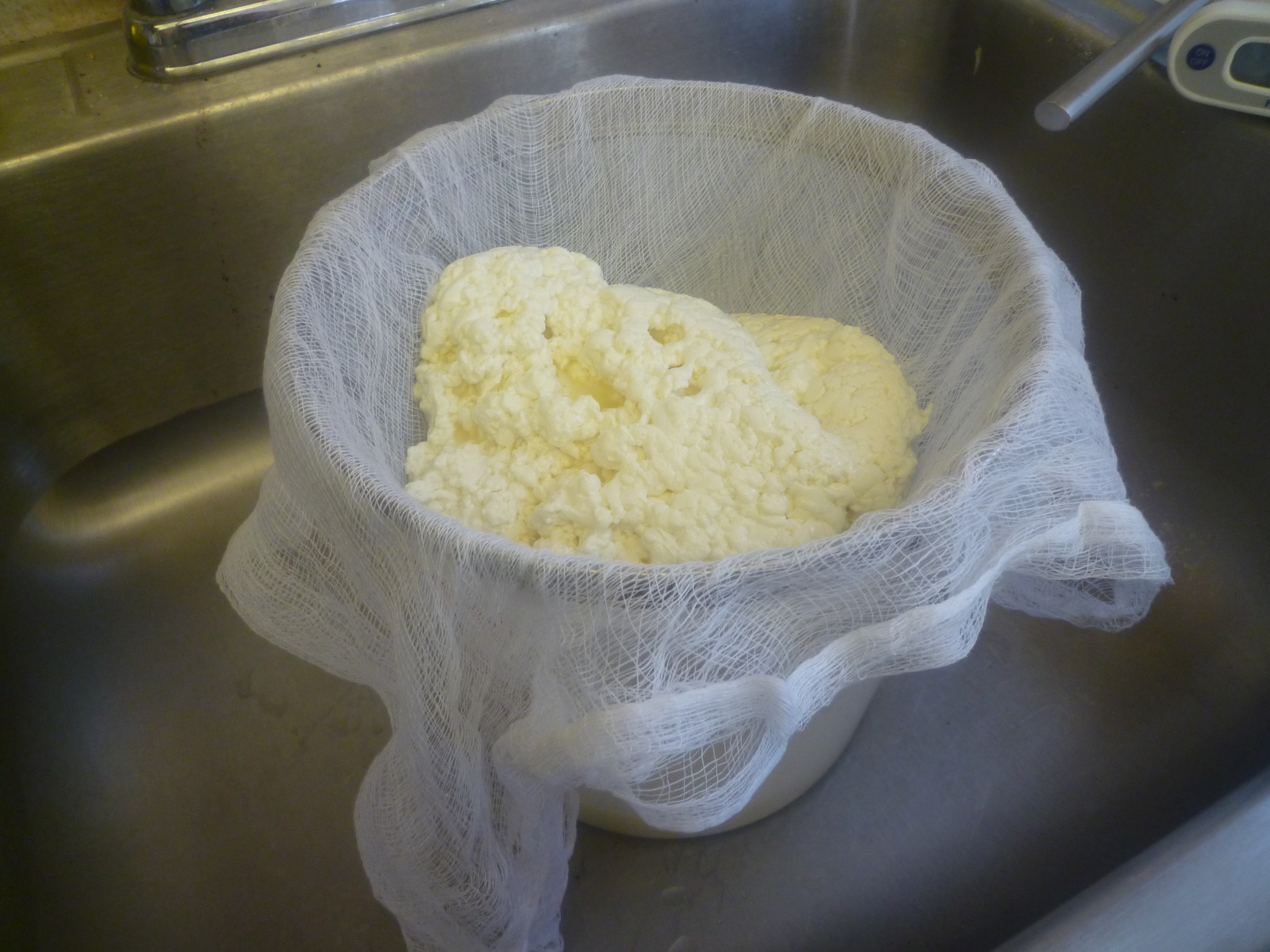
Place a strainer lined with a double layer of cheesecloth over a pot or bucket large enough to catch the whey. Gently pour off the whey into the bucket and ladle the curds into the strainer. Let the curds drain for 10 minutes.

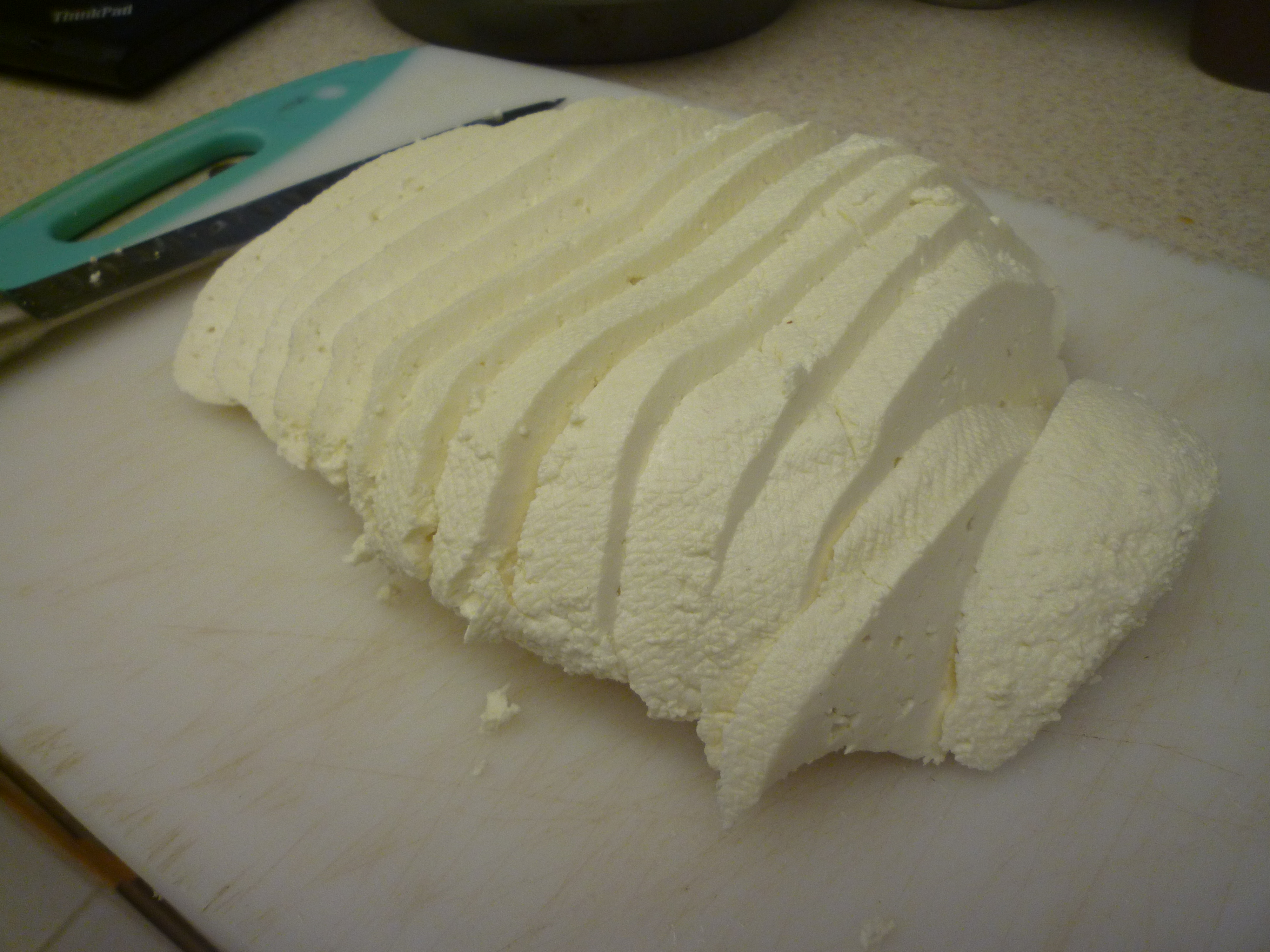
Return 1/3 of the reserved whey to the pot on the stove and reheat it to 102 degrees. Place the curds in a colander, set the colander over the pot of whey and cover. Maintaining the 102 degree temperature of the whey, wait 10 minutes and the curds in the colander will have melted into a slab. Flip the slab over and repeat this process every 15 minutes for one hour. After one hour, the slab of curds will look shiny and white.

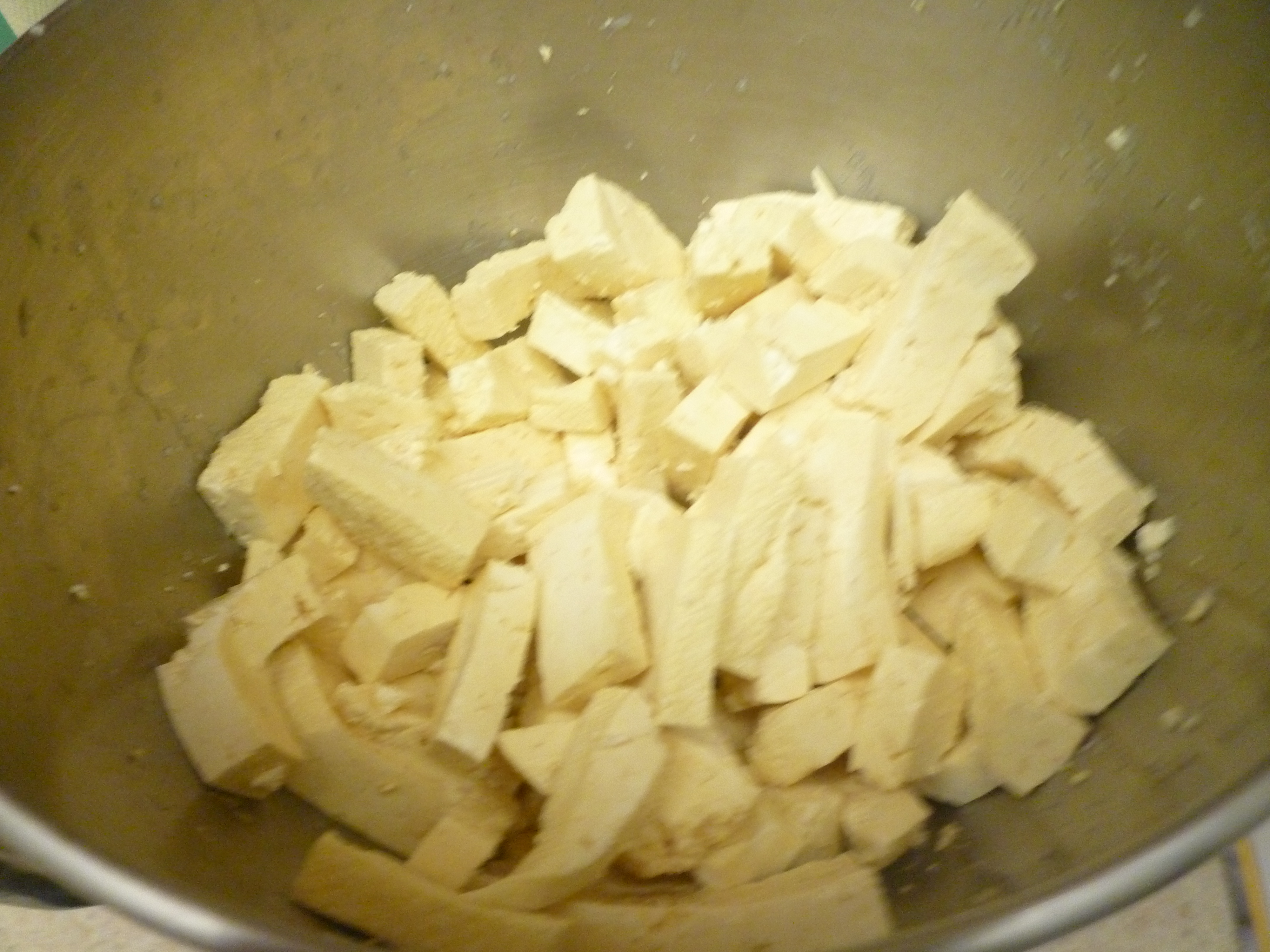
Transfer the slab to a cutting board and cut into ½ in. by 2 in. strips. Place the strips in a bowl and cover completely with the brew of your choice. Soak for 45 minutes.
Drain and discard the brew. Sprinkle the salt over the strips and toss to combine.

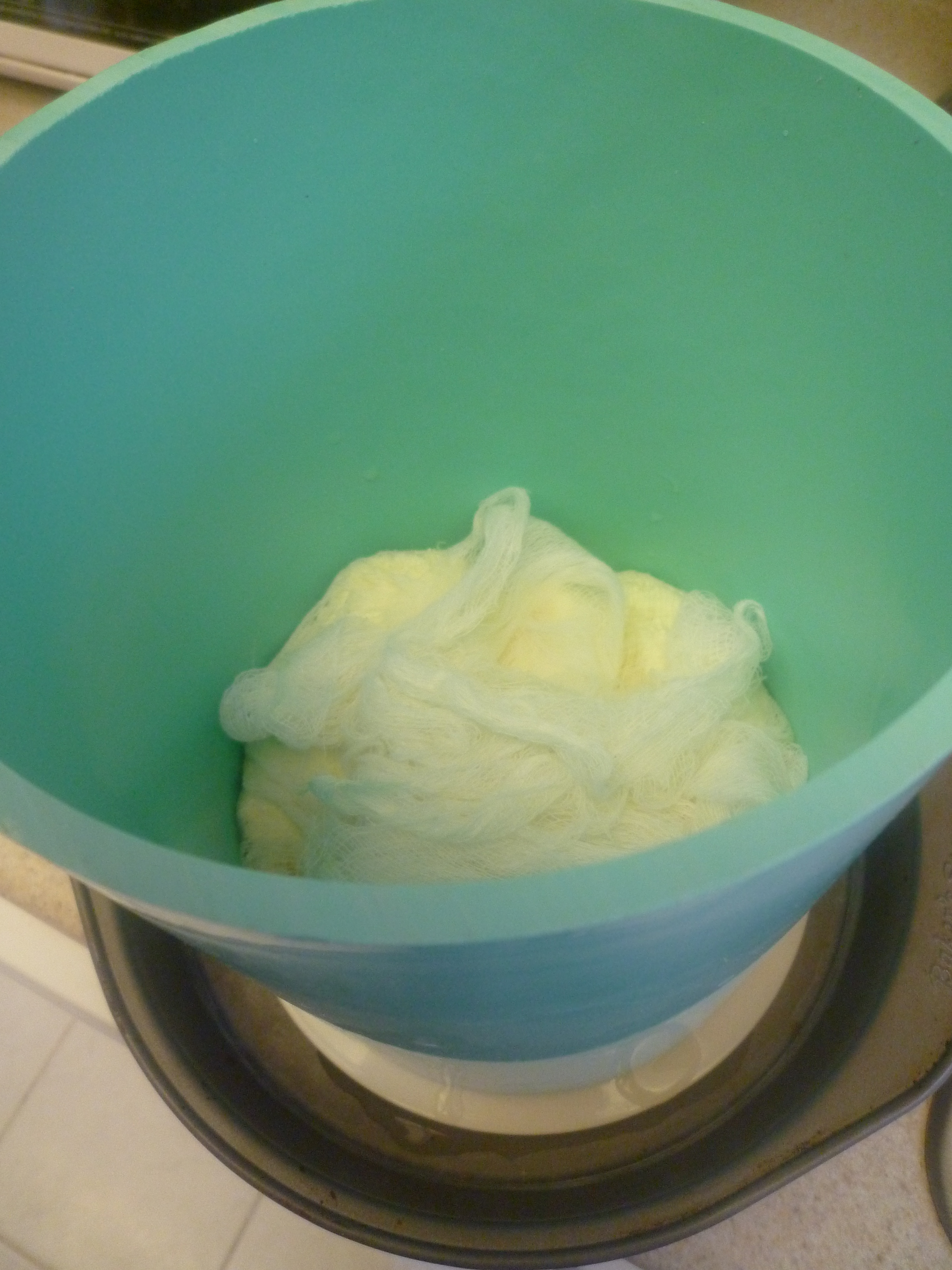
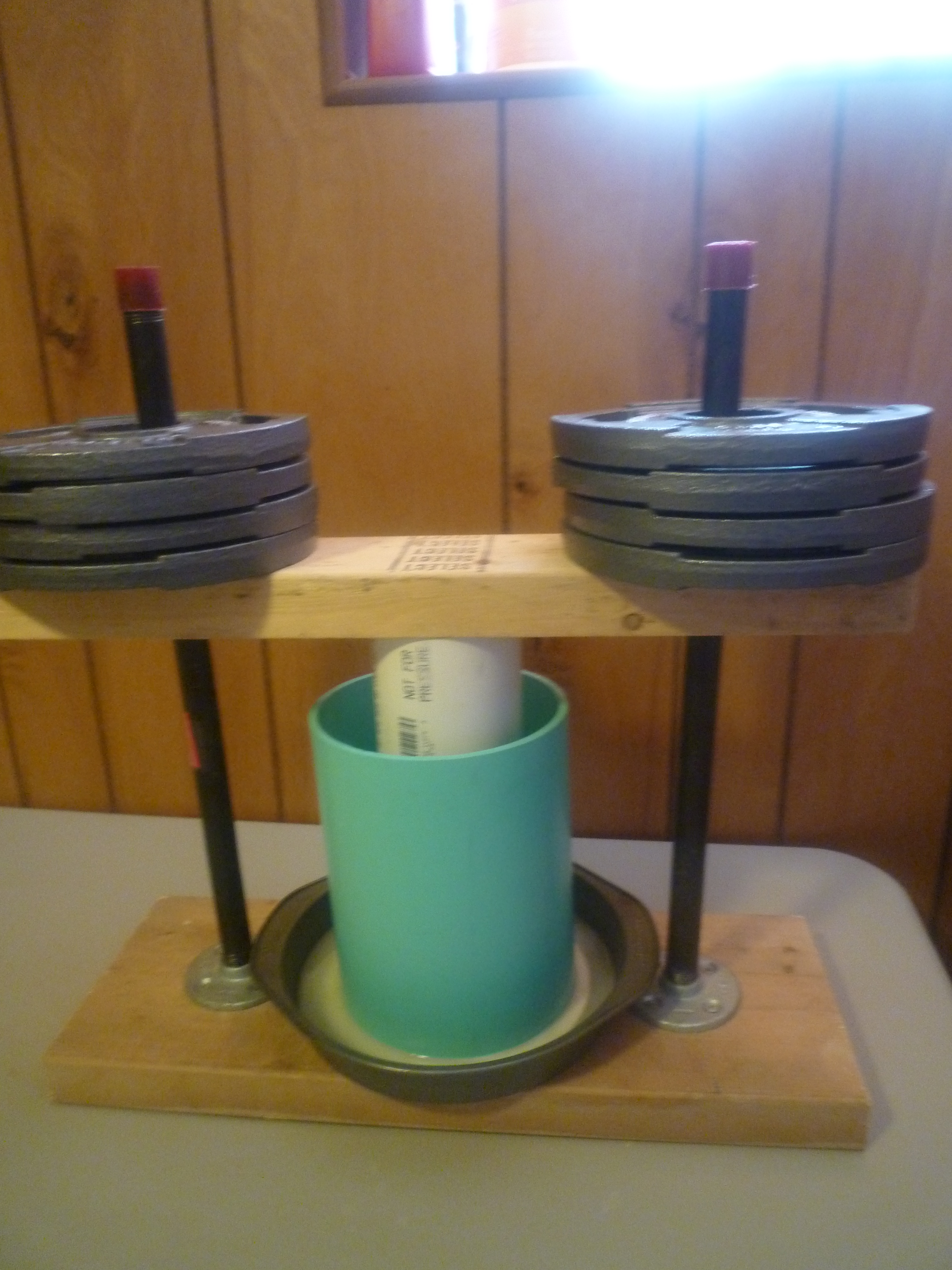
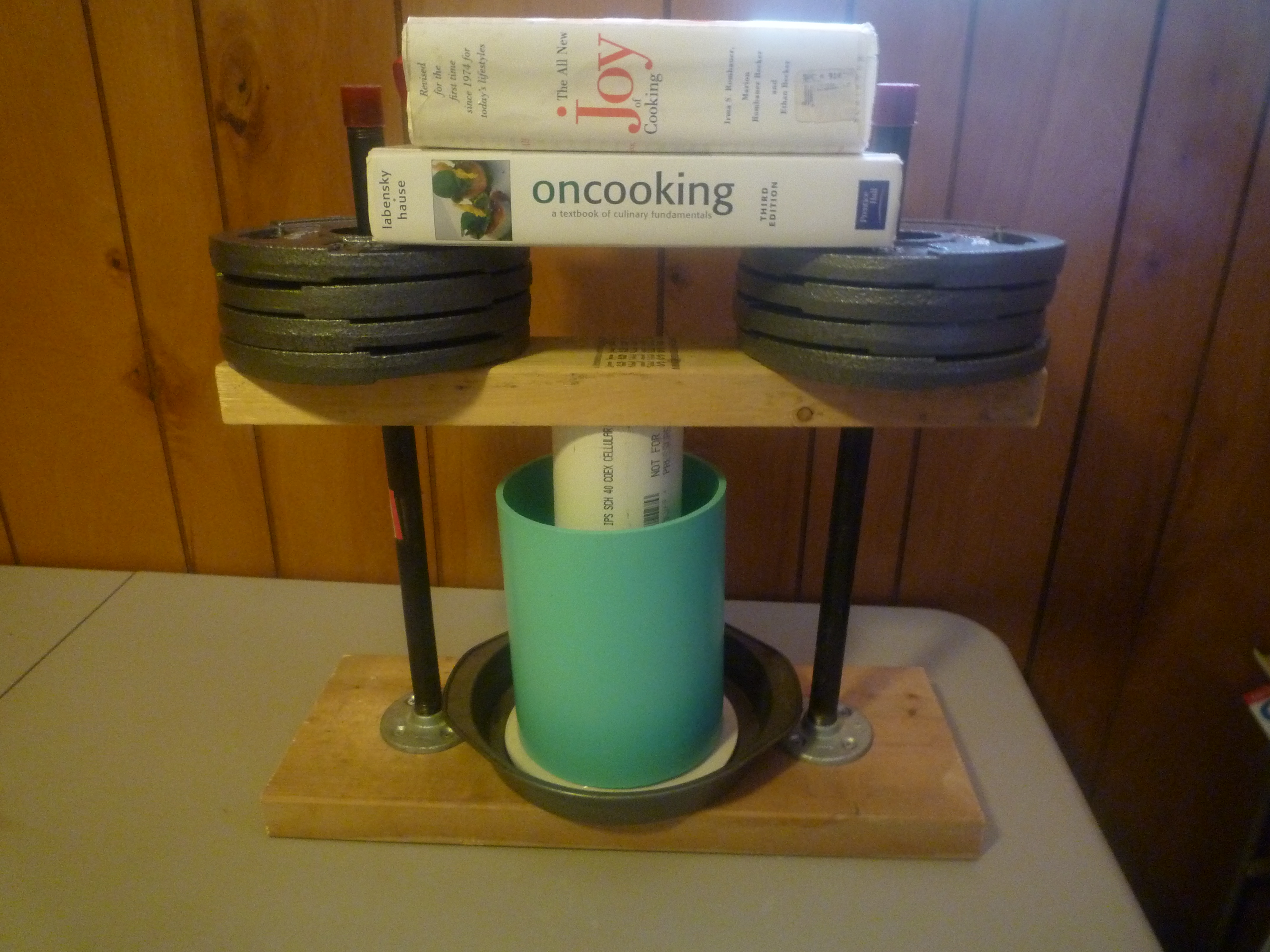
Line an 8 in. mold with damp cheesecloth and pack the curds into it. (See: Building a cheese press and Using a cheese press). Fold over the cheesecloth and press the curds at 8 lbs. of pressure for one hour. Remove the cheese from the press, flip it over, redress in the cheesecloth and press at 10 lbs. of pressure for 12 hours.

Remove the cheese from the mold and unwrap the cheesecloth. Pat the cheese dry and set on a rack to air dry 1-2 days at room temperature or until the surface is dry to the touch.

Coat with wax (See this post for how to wax cheese), and then age at 50-55 degrees F and (ideally) 85% humidity for 4-6 weeks. Flip the wheel of cheese daily to encourage even ripening.
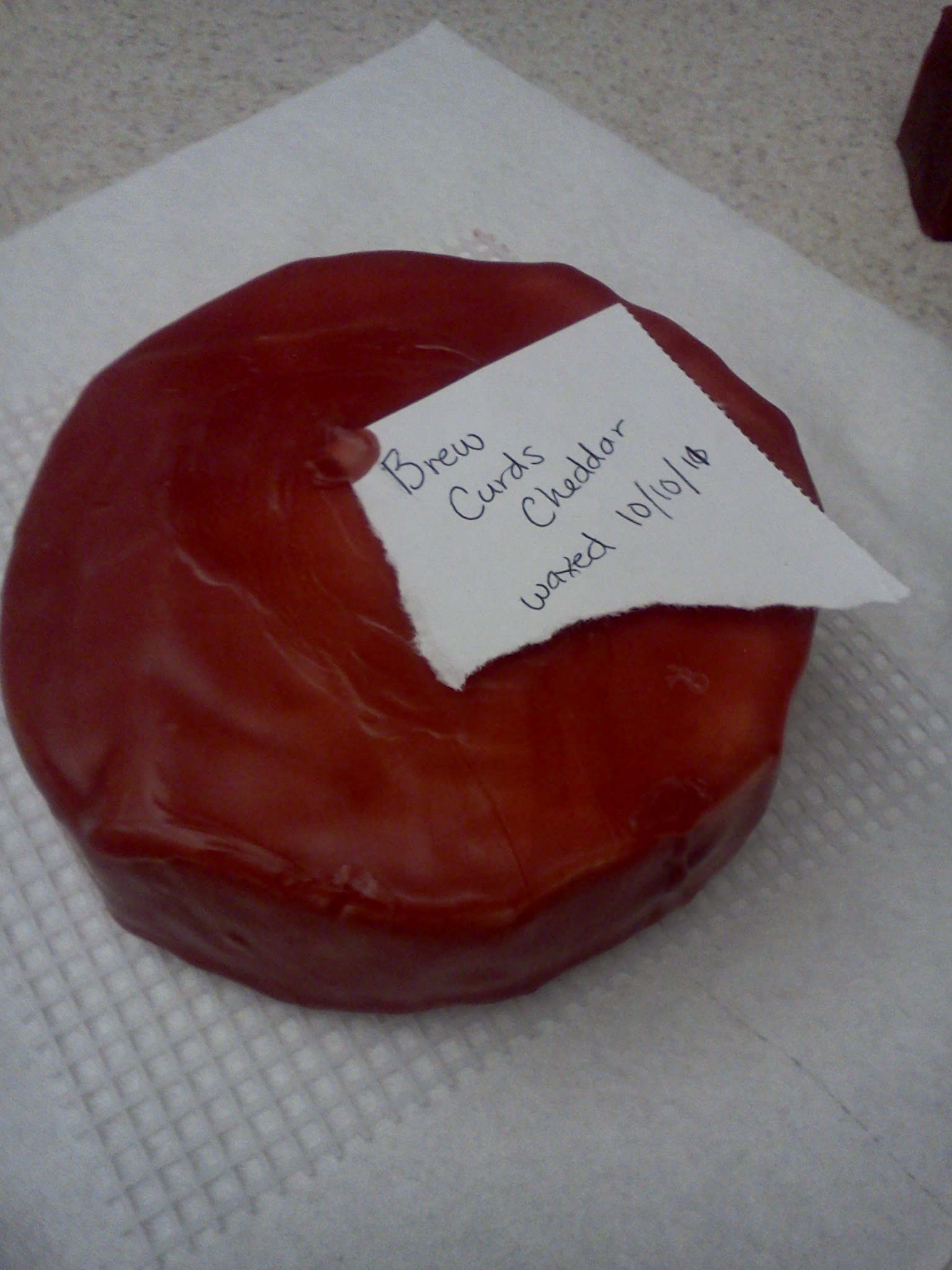
See you in six weeks (the cheese, not you my dear readers)!

This is a really great project for a rainy weekend when you just don’t feel like going outside and would rather huddle in the warmth of a cozy kitchen. Chart out the time you’ll need on paper and you’ll know exactly when certain steps will be ready. Breaking the process down that way really helps first-time cheese makers who might feel a little overwhelmed. As always, feel free to comment below with any questions you might have. I am more than happy to help others who want to take a stab at making their very own cheese.

Ciao for now,

Neen

DIY Charcuterie Returns: Duck Prosciutto

21 Sep

First, a bit of shameless self-promotion:

The Choral Arts Society of Washington (of which I am a member) is performing Carl Orff’s Carmina Burana with the National Symphony Orchestra, conducted by Rafael Frübeck de Burgos and featuring soloists Nicholas Phan (tenor), Laura Claycomb (soprano), and Hugh Russell (baritone). The performances will take place at the Kennedy Center Concert Hall on the evenings of September 29th, 30th, and October 1st. Also on the program is Beethoven’s Symphony No. 8.

Please come hear what is going to be a really spectacular show! Tickets are available through the Kennedy Center’s website here: http://www.kennedy-center.org/events/?event=NLCSV#blurb

Secondly, football season is at last in full swing, which is awesome, and also means the return of fantasy football. Let me tell you, team Merchant of Menace is looking pretty good so far (fingers crossed) aside from an injury or two. Here’s this year’s lineup so that I can look back at the end of the season and go “What was I thinking?” But hopefully not. The starters are in boldface:

  • QBs: Matt Ryan, Kyle Orton
  • WRs: Roddy White, Mike Wallace, Kenny Britt, Pierre Garcon, Hines Ward
  • RBs: LeSean McCoy, Tim Hightower, Ryan Mathews, LaDanian Tomlinson
  • TEs: Owen Daniels, Aaron Hernandez
  • K: Sebastian Janikowski
  • DEF: New England

I’ve been luckier than most the first few weeks. My only major downer is Aaron Hernandez going down with a sprained MCL. It could be anywhere from 2-6 weeks before he returns, but I’ll keep him on the bench until I absolutely need the roster spot. It’s a shame; he started off the season really strong.

Now let’s switch gears entirely and talk about duck. How is it that in all of my charcuterie posts from earlier this year that I never got around to sharing the delightful creation known as duck prosciutto? You can even see it hanging in the pictures of the pancetta and soppressata!

But honestly, it’s a good thing that I waited. Really. I’ve made the duck prosciutto from Charcuterie a few times now with my own little changes and have discovered a few things along the way that I think will make your first time trying it more successful. This is definitely the easiest charcuterie project to take on, so if you’re looking for a place to start, you’ve found it.

Duck Prosciutto, adapted from Charcuterie, by Michael Ruhlman and Brian Polcyn

  • One duck breast (I normally use a moulard duck breast weighing in around 20 oz.)
  • 2 cups kosher salt
  • Fresh sage and orange zest
  • Cheesecloth and butcher’s twine

First, find a lidded container that will snugly fit your duck breast. I use a small rectangular Ziploc tub, but a 1 qt. oval baking dish covered with plastic wrap would work well too.

Pat the duck breast dry and set aside.

Combine the 2 cups of salt with the herbs and zest to make a cure. You can use other flavors too. Some people like to add crushed juniper berries, herbs de provence, or a combination of hot pepper and brown sugar to their cure. Think about the kind of flavors you like. For my preference, nothing brightens up duck like orange zest and a few torn sage leaves.

Pour one cup of the salt cure into the storage tub or baking dish and place the duck breast on top of it. Pack enough of the remaining cure around and on top of it to just cover the surface on all sides. Cover the container and refrigerate for 24 hours.

Remove the duck breast from the cure and rinse it under cool water. Pat it dry once again and weigh it.

Wrap the duck breast in a layer of cheesecloth and hang it in a cool, dark, and mildly humid place to dry. Ideal conditions are around 60 degrees F. and 60-70% humidity.

Hang for 1-2 weeks, or until it has lost 1/3rd of its original weight. Store wrapped in butcher paper in the refrigerator or vacuum seal for longer-term storage. Serve very thinly sliced with peppery greens like arugula, and fresh tomatoes.

On slicing: To make it easier to slice thin, you can put the duck breast in the freezer for a half-hour or so prior to slicing to make it firmer. And just look at the beautiful color:

Happy Autumn to you all. I assure you that after the Carmina Burana performances, I’ll be back with more fall (football!) recipes.

Ciao for now,

Neen

Childhood Candy Becomes a Grown-Up Tart

28 Aug

When I was growing up, I spent nearly every day of the summer at our community pool. In part, this was because I was on the swimming and synchronized swimming teams, but it was mostly because I just loved being there. My friends and I would swim for hours and then play long card games while we ate snacks in the warm sun. It was a pretty sweet life.

One of the best treats at the pool snack bar was the frozen candy. Especially frozen Twix bars. There was a treat worth digging through your bag for 50 cents. I didn’t get them very often since weekly allowance was a precious thing, but when I did I savored every last crunchy bite (well, as much as one could before the chocolate started getting all melt-y).

I was asked to make a dessert for a recent dinner party and thought fondly of that summer treat, so I decided to play with those flavors. I came up with a decadent tart that most certainly tasted like that childhood favorite got all dressed up. Get out your tart pans people, this one’s most definitely worth the effort.

Chocolate-Caramel Tart

Super-duper no-fail tart crust:

No shrinking, no cracking, no problem!

  • 6 oz. unsalted butter (1-1/2 sticks)
  • 2 cups flour 1/2 cup sugar
  • 1 teaspoon vanilla
  • Zest of ½ lemon
  • 1/2 teaspoon kosher salt

Chocolate filling:

  • 3/4 cup whipping cream
  • 6 oz. dark chocolate, finely chopped (I used 70% dark and the sweetness was spot on.)

Caramel filling:

  • 3/4 cup sugar
  • 1/3 cup water
  • 1/3 cup whipping cream
  • 5 tablespoons unsalted butter
  • 1/2 teaspoon vanilla extract
  • Pinch of salt

Preheat an oven to 325 degrees F.

Melt the butter for the crust over medium-low heat. Remove from the heat and stir in the sugar, vanilla, lemon zest, and salt, stirring until smooth.

Blend the butter mixture into the flour with a rubber spatula and then press the dough into a 10 in. tart pan with a removable bottom.

Freeze the crust for 15 minutes and then bake for 25 minutes. Cool completely on a wire rack.

Bring the cream for the chocolate filling to a boil and then remove from the heat and add the chocolate, stirring until smooth. Spread one cup of filling into the prepared crust, reserving the rest. I put the remaining chocolate in a piping bag and stored it in the refrigerator.

Refrigerate the tart until the chocolate is firm, about 45 minutes.

Stir the sugar and water for the caramel in a heavy saucepan over low heat until the sugar dissolves. Then increase the heat and boil until the syrup turns amber, swirling the pan occasionally (do not stir!) and brushing down the sides of the pan with a wet pastry brush as needed. This will take about 10 minutes, and the syrup will register at about 300 degrees when it is ready.

Remove the pan from the heat and add the cream, butter, vanilla and salt. The mixture will bubble up. Return the pan to very low heat and stir until the caramel is smooth and the color deepens (see the finished picture) to a rich brown. This will take no more than 5 minutes.

Refrigerate the caramel until cold, but not firm, about 20 minutes.

Spoon the caramel over the chocolate layer in the tart and smooth with an offset spatula. Pipe the reserved chocolate over the caramel to decorate and return the tart to the refrigerator until the caramel is firm. It should firm up within an hour or two, and can be made up to two days in advance (cover once the caramel has firmed up).  Serve chilled.

The crust has a nice crunchy bite, the chocolate is firm but melts in your mouth, and the caramel is creamy and rich. That little bit of lemon in the crust adds a little zing to offset all of the richness. Share with friends and be merry.

Ciao for now,

Neen
Lost Bread: Found!

19 Aug

I don’t like pre-sliced bread. There, I said it. Back in the days of dieting, I used to buy this super low-calorie sliced wheat bread product that I thought could act as a base for sandwiches. It was very sad bread, mostly made of chemicals and air (as Alton Brown shows at 6:00 in this clip: http://www.youtube.com/watch?v=Vlb9gHVeBR0z).

But real bread, you might say, goes stale so fast.

And you’re right. It does. Most real bread goes stale quickly because it isn’t full of flour conditioners and preservatives. But stale doesn’t mean bad or unusable. Fresh bread is pretty awesome, but stale bread is better for a variety of things: Panzanella (in salad or soup form), bread crumbs (seasoned or plain), croutons, bread pudding, egg stratas, toast, and pain perdu, or “lost bread.”

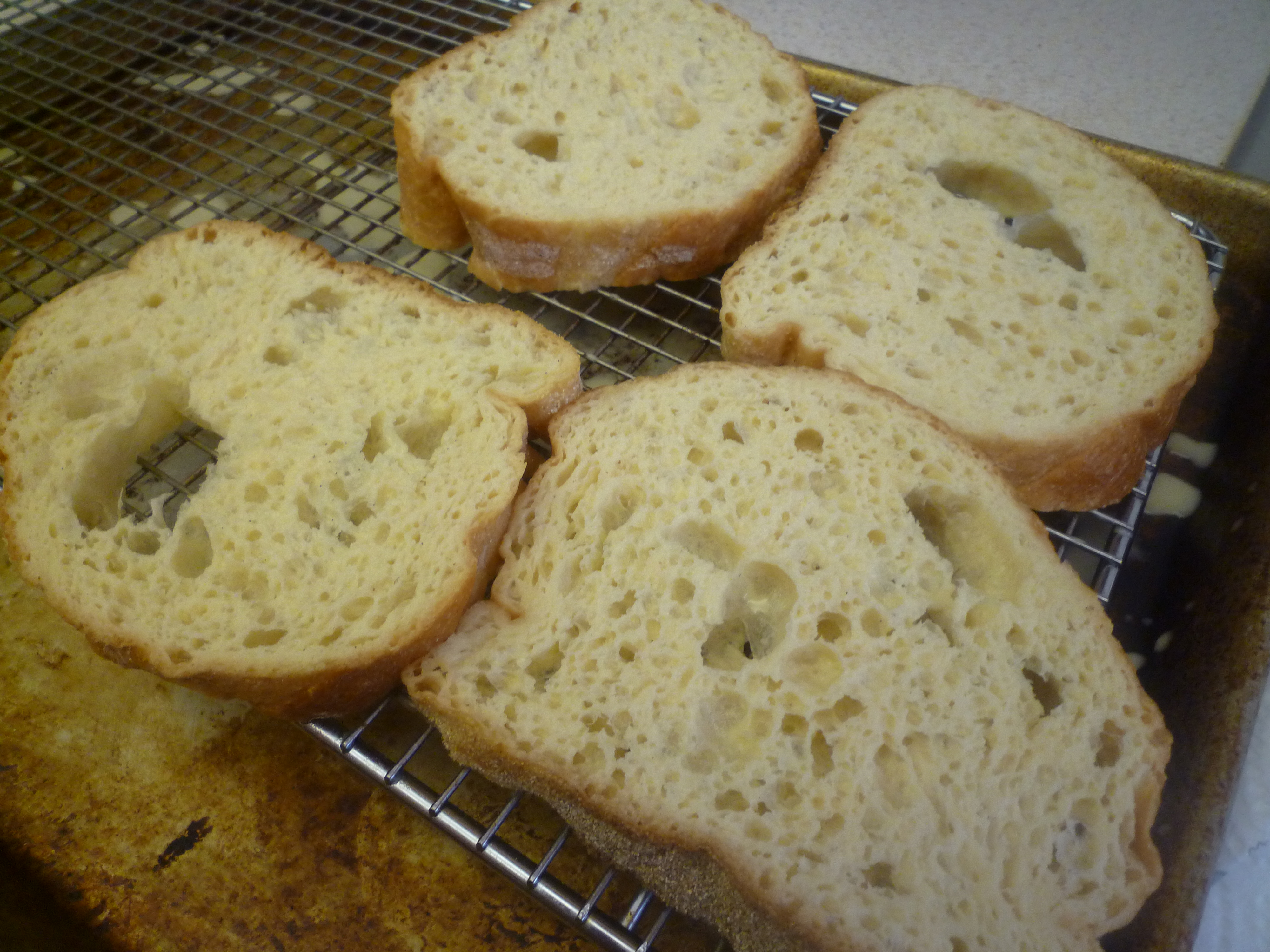
Pain perdu/French toast, one of the most delicious Sunday brunch foods, is best made with stale bread. Since bread that has gone stale loses a lot of moisture, it soaks up more of the custard and makes a much richer and more satisfying end product.

So grab your lost bread and get to reviving it!

Pain Perdu

  • Eight ½ in. slices of day-old or stale bread. Country, French, challah and brioche loaves are all good options.
  • ½ cup milk
  • ½ cup cream
  • 2 tbsp. maple syrup
  • 3 eggs
  • 1tsp. vanilla extract or vanilla bean paste
  • Dash of cinnamon
  • Pinch of salt
  • 4 tbsp. butter

Whisk the eggs, milk, cream, maple syrup, vanilla, and cinnamon together until thoroughly blended. You may do this a day ahead and store it in the refrigerator. When ready to dip the slices, pour the custard into a pie pan.

Preheat an oven to 375 degrees F.

Place a wire cooling rack over a baking sheet. Dip the slices of bread, two at a time, into the custard and allow them to soak for 30 seconds on each side. Move the dipped slices to the wire rack and allow them to sit while you prepare the others.

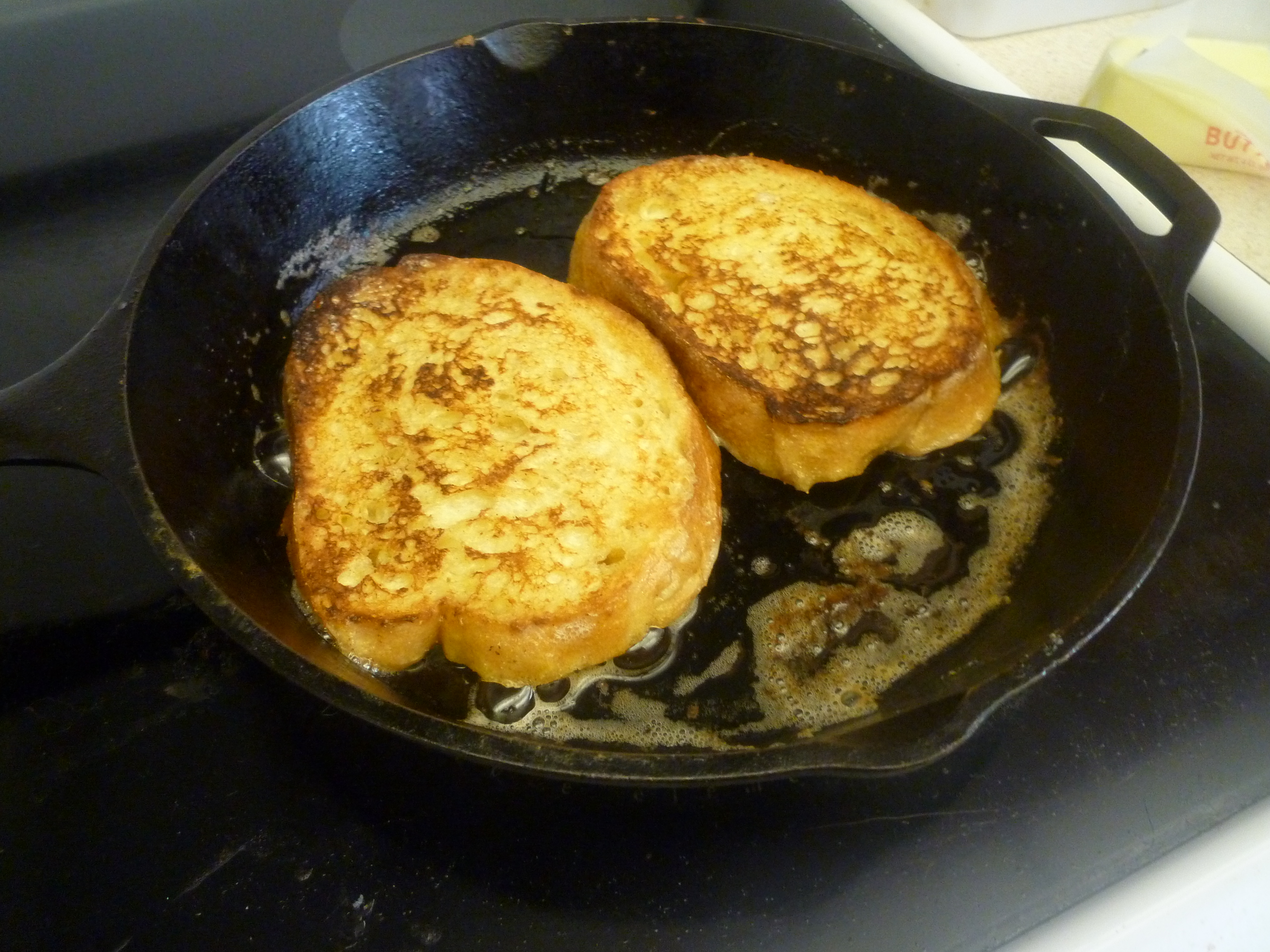
Melt 1 tbsp. of butter in a pan over medium-low heat. Place two slices of bread in the pan and allow them to cook until golden brown (about 2 minutes on each side).

Remove from the pan and place directly on a rack in the oven for 5 minutes. Repeat this process with the remaining butter and slices of bread. Serve immediately with maple syrup and fruit, whipped cream and berries, or powdered sugar and cinnamon.

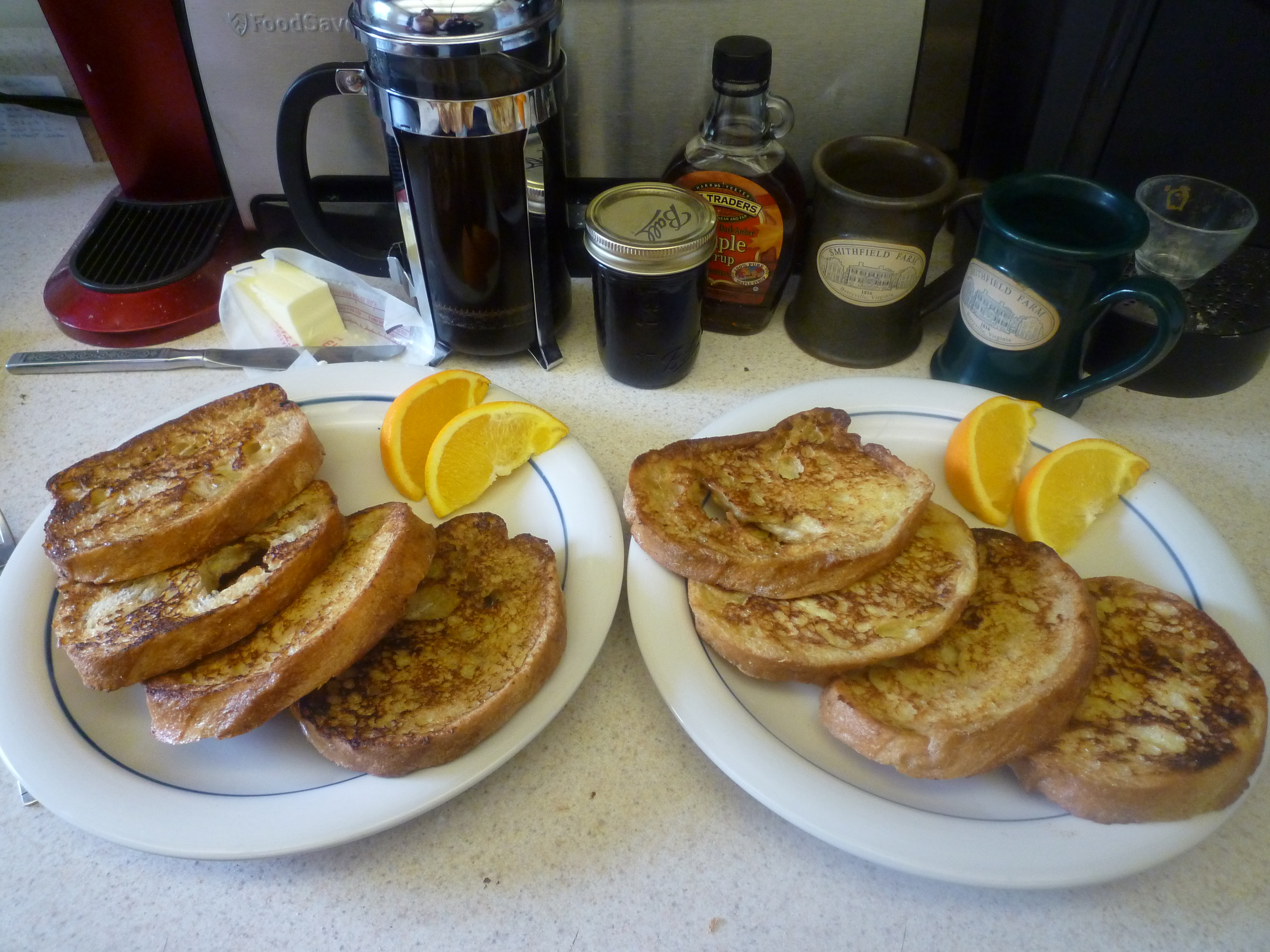
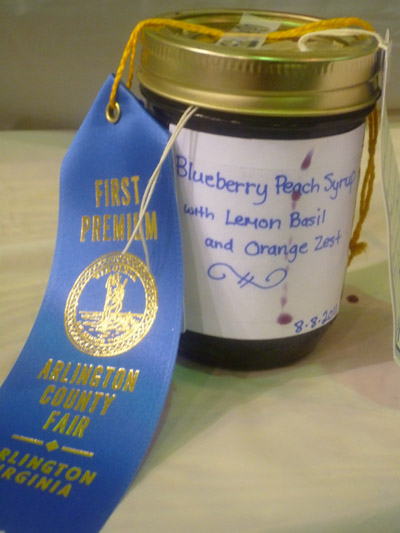
The best thing about this dish is the texture contrast. You get the wonderful crisp outside from pan-frying and a custardy, but not mushy inside from a short bake in the oven. We had ours with the classic maple syrup, but also some of my prize-winning (!) blueberry-peach syrup with lemon basil and orange zest:

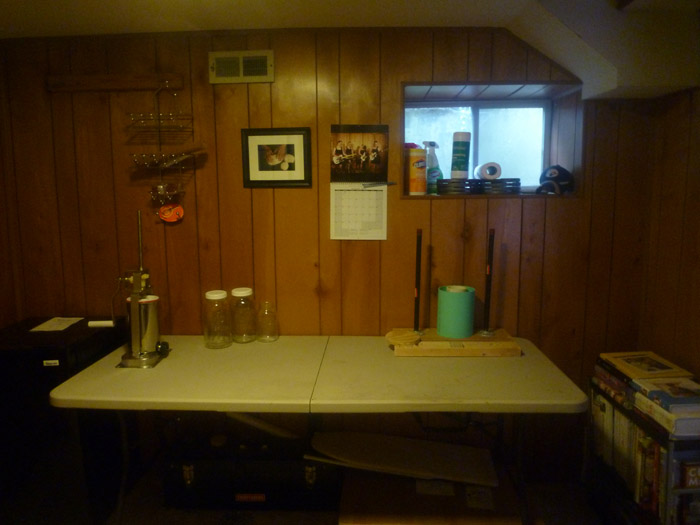
It’s been busy in the Neen’s Notes kitchen. After I made that wheel of gouda a few weeks ago, I realized that aging cheese in my refrigerator was getting pretty impractical. Since I’d already turned the downstairs closet into a curing cabinet for meat, it seemed only logical to take over the rest of the little room. Allow me to introduce my little kitchen extension:


On one side of the table, I have the meat grinder and on the other is a homemade cheese press (thanks again, Dad!). To the left of the table is a small refrigerator that I’ve made into a cheese cave. Kept on its lowest setting, the temperature hovers at around 50 degrees. With a bowl of water inside and the occasional spray of water along the walls, the humidity is around 75%. Ideally, I’d like to get it up to 80%. Right now inside you’ll find the aforementioned wheel of gouda and a wheel of montasio quietly aging. The curing closet is directly across from the refrigerator, out of view in this picture. To the right of the table is a small reference shelf. A second bookcase is at the other end of the room and it holds mason jars and other canning materials. The shelf above the table holds supplies (cheese mats, wax, curing salts…etc.), and the calendar is being used to mark dates and weights for cheeses and curing meats. It wasn’t an expensive project; mostly just a reorganization to use space more efficiently. The only new purchases I made were the refrigerator and a few hooks for the curing closet. It could use a few decorations, but all in all, it’s just a great little room that I’m looking forward to use for creating all sorts of fun, tasty things.

Ciao for now,

Neen

Gouda Memories

3 Aug

I’ve written before about the way that certain foods bring back palpable memories. Fresh pasta makes me think of warm nights and long meals with my mom and dad when we visited Italy seven years ago. Wedding soup reminds me of my paternal grandmother’s kitchen, and stracciatella reminds me of my maternal grandmother’s kitchen. I can’t make stew without being transported to our old house in Forest Hills, feeling so warm and comforted by my dad’s version after swim team practice in mid-winter. Sirloin tips with thyme and mozzarella bring me back to Davenport (my college dormitory), and the first meal I ever cooked for Joe. And funnel cake, a food which most people associate with fairs, surrounds me with memories of my best friends from Northeastern, and one infamous powdered sugar fight.

Gouda has somehow woven its way into several nostalgic spots in my brain. When Joe and I went to the Netherlands five years ago, I had the perfect grilled cheese sandwich. Fresh, bias-sliced baguette bread paired with a young, sweet gouda. Crisp and toasty on the outside with a warm, creamy inside. I paid no more than two euro for the delight, and ate it while we watched boats float effortlessly down the narrow canals.

And then, Hamlet. When I lived in Cambridge, my friends and I went to see a performance of Hamlet in the garden of one of the colleges. It was the night of the Storm Bird sauvignon-riesling (an oddly cheap, but delicious wine), strawberries, a seriously good-looking Danish prince, and a rich gouda that tip-toed the line between sweet & soft and sharp & crumbly. It was just firm enough to cut slices without breaking apart.

Last, but definitely and wholeheartedly not least was the gouda we tried just recently at the Green Goddess in New Orleans, LA. It was the day Joe and I announced our engagement to my family, and the cheese was eaten it in the midst of what I can only describe as pure, giddy joy. Green Goddess’ menu illustrates the flavor and texture of it more aptly than I ever could:

“Known as the Beemster, this walks a fine balance between creamy & salty with those crunchy crystals that aged cheeses can acquire. Rich, mellow toffee notes make the Beemster perfect with many after dinner liqueurs.”

When my dad recently procured a gallon of farm-fresh raw milk for me on my most recent trip to Pittsburgh, it seemed only appropriate to try and make a cheese to remember: My very own gouda.

We begin…

Ingredients

  • Two gallons of raw, whole milk*
  • One package of direct-set mesophilic starter
  • ¼ tsp. liquid rennet dissolved in ¼ cup cold, filtered water
  • Cheesecloth

Brine solution

  • 1 gallon cold, filtered water
  • 2 lbs. salt

*Can’t get raw milk? You can use pasteurized, but add ¼ tsp. of calcium chloride to improve the curd’s firmness

Pour the milk into a large pot and set it in a water bath warm enough to heat it to 90 degrees F. Once you have achieved this temperature, add the mesophilic starter and mix thoroughly. Cover the pot and allow the milk to ripen for 10 minutes, adding warm water to the bath as needed to maintain a temperature of 90 degrees.

Add the rennet and stir in a slow up-and-down movement for 1 minute. If you have used raw milk, stir for an additional minute. Cover the pot and allow the curd to set, maintaining 90 degrees F., for one hour or until the curd breaks cleanly when cut.

Heat a small pot of water to 175 degrees F.

Cut the curd into a checkerboard pattern and then crosswise into cubes, and let them sit for 10 minutes.

Ladle or pour off 1/3rd of the whey and, stirring consistently, add just enough of the hot water to bring the temperature up to 92 degrees F. Cover the pot and maintain this temperature for 10 minutes while the curd sets.

Ladle or pour off enough of the whey to bring it down to the level of the curd, and then again add hot water as needed to bring the temperature up to 100 degrees. Keep the curd at this temperature and stir on and off for 15 minutes.

Pour off the remaining whey and gently pack the curd into a cheesecloth lined mold, breaking it as little as possible. You can see how I prepare my cheese press in the demo for Farmhouse Cheddar Cheese.

Press the cheese at 20 lbs. of pressure for 20 minutes.

Remove the cheese from the cheesecloth, flip it over, re-dress, and press at 40 lbs. of pressure for 20 minutes. (No, my press is not lopsided…I just took this picture at a terrible angle. Photography fail.)

Remove the cheese from the cheesecloth, flip it over, re-dress, and press at 50 lbs. of pressure for 12-18 hours.

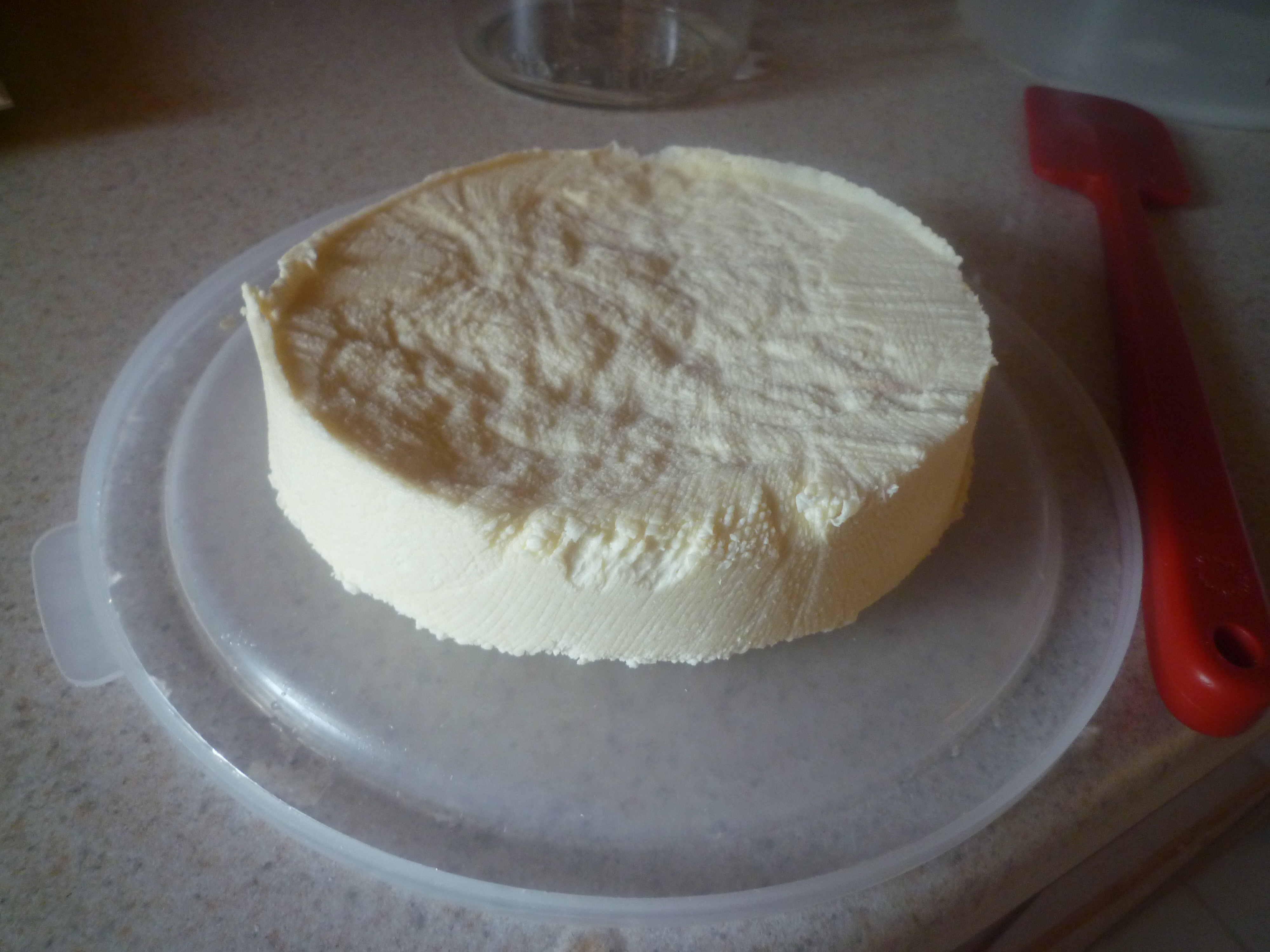
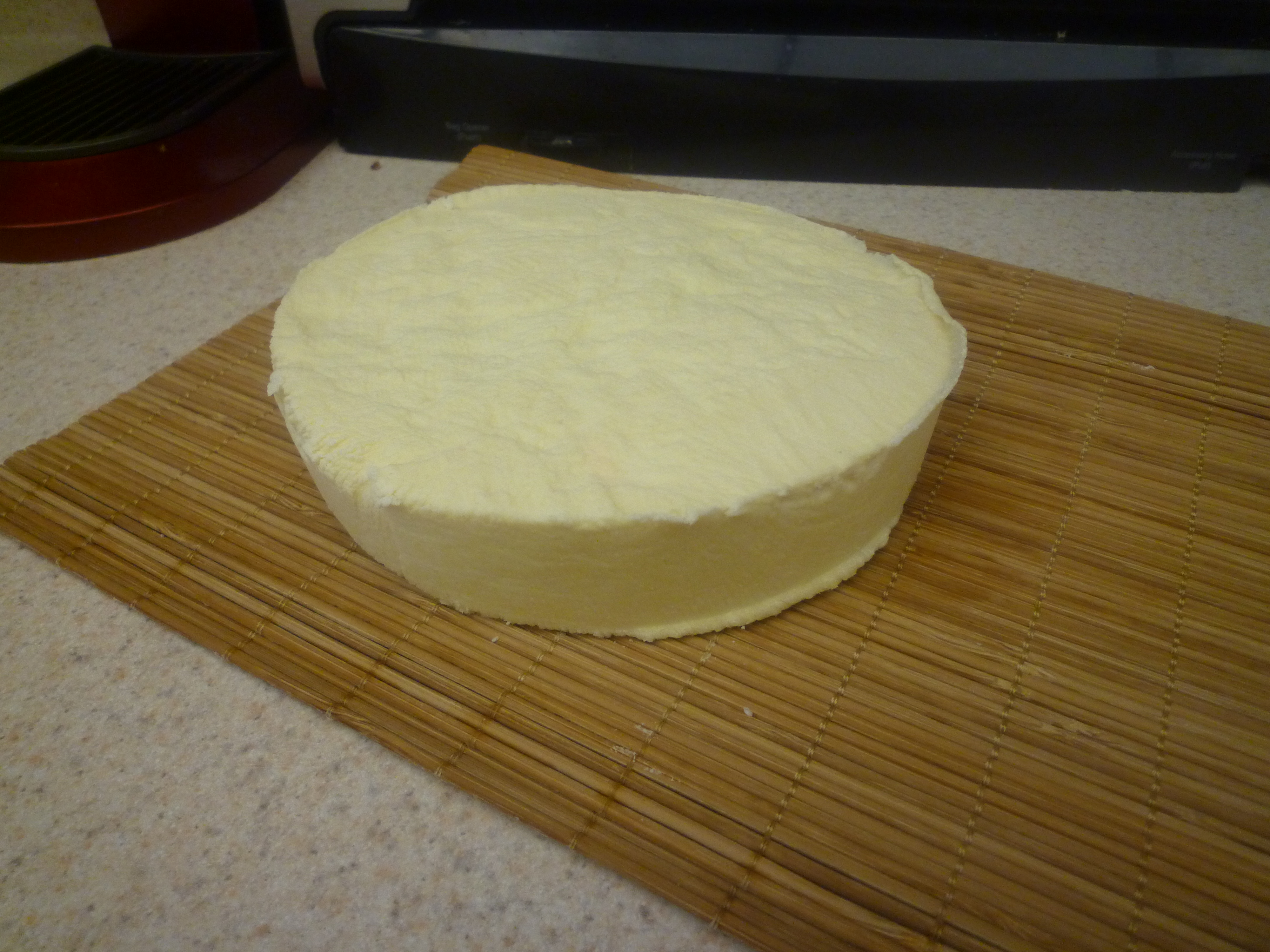
After 18 hours, my cheese looked like this:

Prepare the brine solution by mixing together the cold water and salt in a nonreactive container. Put the wheel of cheese into the solution and brine for 6 hours.

Remove from the brine, gently dry the cheese with a towel and move to the refrigerator.

Air dry in the refrigerator for 3 weeks, turning every 2-3 days to ensure even drying. You may then wax it or allow it to develop a natural rind. If you notice any mold forming on the surface, simply wipe it off with a cloth dampened with white vinegar.

Age the cheese in a 56-64 degree environment with 80-85% humidity for 3-4 months. The cheese will get darker and firmer with age. Honestly, I’m not really sure how long I’ll let this one go. I guess we’ll see what it looks like a little further down the road. I’ll be sure to keep you in the loop.

Who knows? Maybe this one will be a Christmas memory.

Ciao for now,

Neen

Busy June, Happy News, and Brand New Recipes!

6 Jul

Boy, have we been busy. First we ran off to Chincoteague for a weekend of fun in what I think may be the most peaceful place in the world.

Two weeks later, we hopped on a plane for a whirlwind four days in New Orleans. The days were sweltering, but the beignets were sweet and the coffee was strong. There is nothing so joy-filled and rejuvenating as a few days with the family.

As if all of that wasn’t enough excitement, somewhere in between (June 18th for precision’s sake) Joe got the wild idea to ask me to marry him. I bet you can’t guess what my answer was…

Of course, I said yes.

And so after a June full of excitement, we crashed over the 4th of July weekend. I spent most of it languishing in the joy of having nothing to do but enjoy the sun, play with the dog, and read.

But what would a summer holiday weekend be without a little outdoor cooking? Some smoky, savory chicken breasts and a bright summer salad of avocado, yellow squash and tomatoes made for a perfect Saturday picnic.

Pecanwood Smoked Chicken Breasts

  • 3.5 lbs. of bone-in split chicken breasts
  • 6 cups water, divided
  • 6 tbsp. kosher salt
  • The zest of one lemon (large strips)
  • 1/2 tsp. allspice berries
  • 1 tbsp. telicherry peppercorns
  • 2 cloves garlic, smashed
  • 5 sprigs thyme
  • 6-7 chives
  • 4-5 parsley leaves, chopped
  • 1.5 lbs. wood chips (I used pecanwood)

Combine 2 cups of the water with the salt, lemon zest, herbs, and spices and bring to a boil. Set aside to cool for at least one hour. Add the brine to the remaining 4 cups of  cool water in a large plastic tub. Put the chicken breasts into the brine and refrigerate for 4 hours, turning once.

1 hour before grilling, add the wood chips to a bowl of water to soak. Drain, and then place them in an aluminum foil basket.

Preheat a gas grill to 300 degrees F. with all burners on high. After preheating, maintain a temperature of between 275-300 degrees. On my grill, this took one burner set on high. Place the basket of wood chips directly over the heat source. Otherwise, you won’t get any of that wonderful smelling smoke.

Remove your chicken breasts from the brine, pat them dry, and then put them on the grill away from the lit burner. Indirect heat is key for slow smoking. Also, keep your grill lid closed as much as possible. Cook the breasts, turning 180 degrees every 40 minutes until the internal temperature close to the bone is about 160 degrees. It will take about 2-3 hours. Rest 10 minutes and then slice.

Lemony Summer Salad

I really loved this salad. Not just because it gave me a chance to use some of the (excessive) bounty of squash that appeared in my garden while I was in New Orleans, but because of the balance. It’s very zen. You get this bright, tart flavor from the lemon juice and tomato, a little bit of creaminess from the avocado, and a sweet crunchy bite from the summer squash. It played very well with the smoky, salty flavor of the chicken. Best part: five minute prep time.

  • 1 ripe avocado, chopped and treated with lemon juice or citric acid to prevent browning
  • 1 summer squash, matchstick cut
  • A handful of grape tomatoes, sliced
  • Juice of one lemon
  • 1 tbsp. olive oil
  • 5 or 6 lemon-basil leaves
  • Salt and pepper to taste

Combine the lemon juice and olive oil and a bowl and whisk together thoroughly. Toss with the avocado, tomatoes, squash, and lemon basil. Season with salt and pepper to taste. Garnish with a bit of lemon zest.

Happy July to all! Hope you’re enjoying the summer as much as I am. County fair season is coming up, so hopefully I’ll have some interesting recipes to share as I start experimenting with what to make for Arlington’s competition.

Ciao for now,

Neen