Archive | April, 2011

DIY Charcuterie the Third: Peperone (Pepperoni)

24 Apr

Project pancetta has come to its savory and delicious conclusion. Here’s a final shot:

I think a trip to Eastern Market for some nice, plump sea scallops is in order. Wrap them up in pancetta, roast quickly, and serve with a spicy plum or peach chutney…yum.

Ah, but with room in the drying closet comes room for a new project. With all of this bacon-y goodness and soon to be finished soppressata, I thought something a little bit leaner might be in order. I once bought peperone from a small Italian market that made it on-site and was pleasantly suprised by two things: It was much less fatty than the average slice you might see on pizza and also much more heavily spiced.

Pepperoni is the Americanized spelling of peperoni, the plural of the Italian word peperone which means “pepper.” Makes sense then, that this would be a peppery sausage that bites back a little bit when you taste it. So let’s go for it:

Meat:

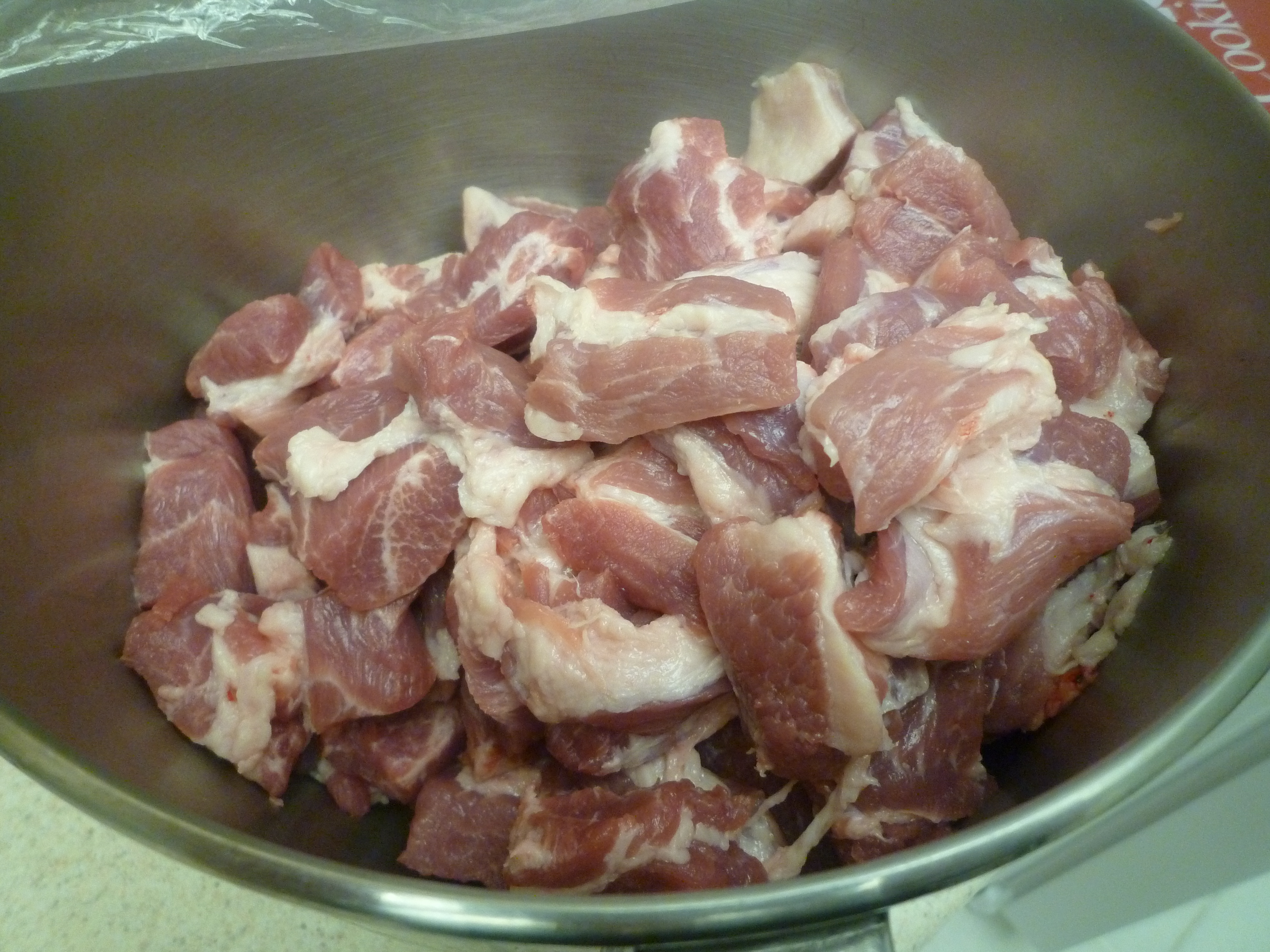
  • 5 lbs. of lean beef, cut into small cubes. A round or chuck roast with the sinew and fat trimmed away is perfect.

Cure:

  • 3 tbsp. kosher salt
  • 1 tsp. DQ curing salt #2 / Insta-cure #2 (www.butcher-packer.com)
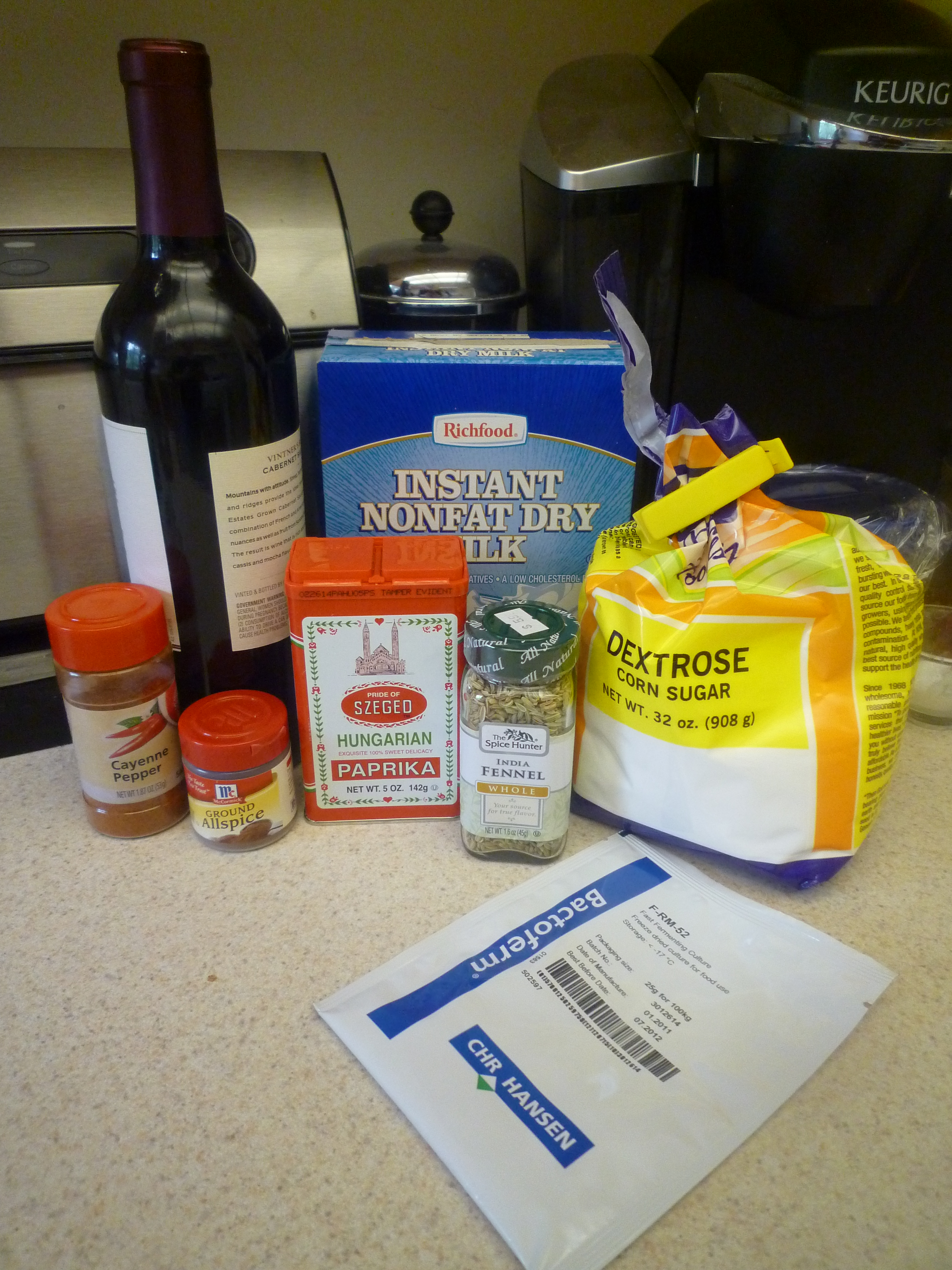
  • 1/4 cup Bactoferm F-RM-52
  • 1/4 cup distilled water
  • 3 tsp. cayenne pepper
  • 1/2 tsp. ground allspice
  • 1 tsp. ground fennel
  • 4 tbsp. dextrose
  • 3/4 cup nonfat dry milk powder
  • 2 tbsp. paprika
  • 2 tbsp. dry red wine
  • 10 ft. sausage casings

Soak the sausage casings in warm water for at least a half hour.

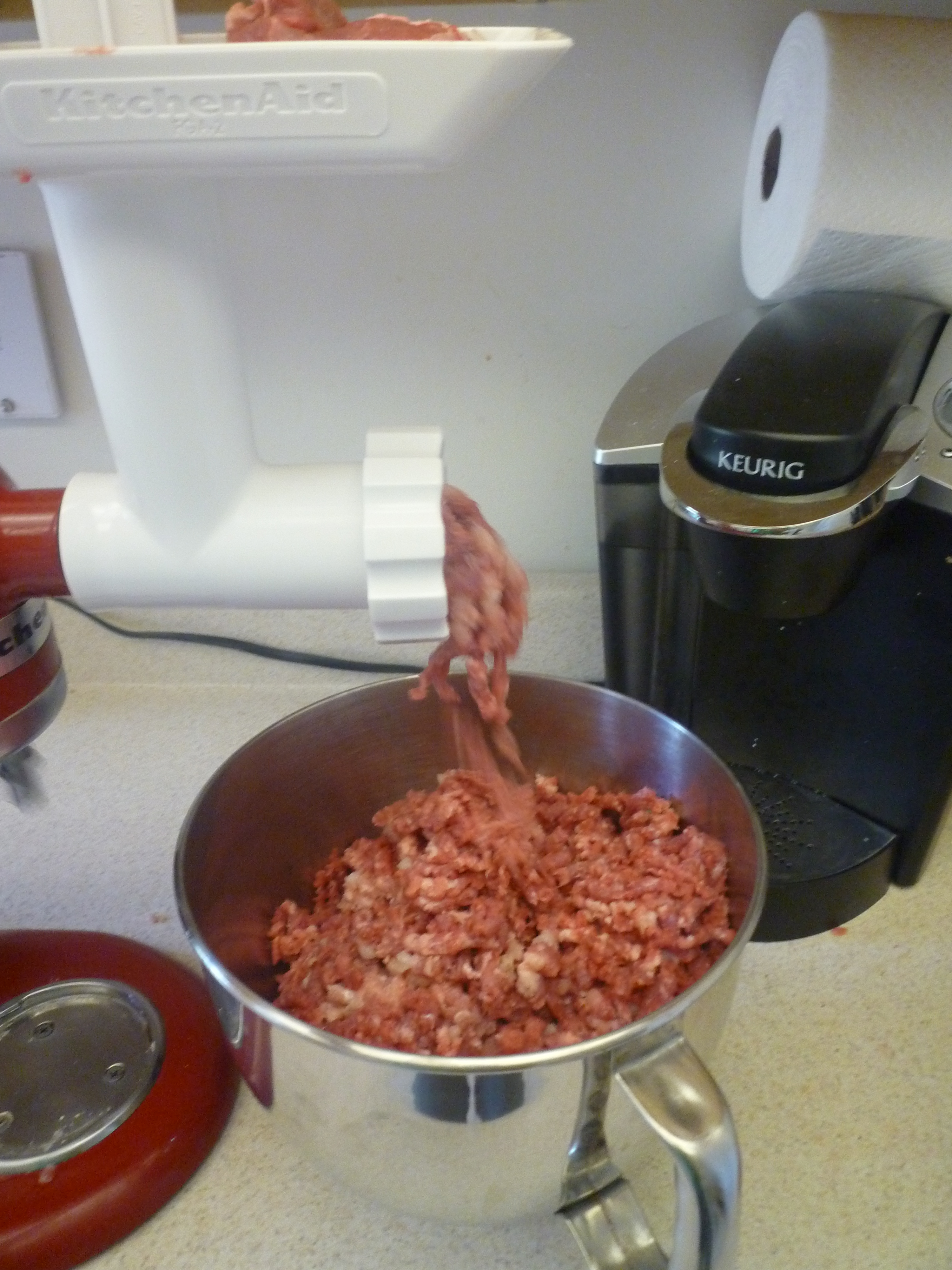
Combine the meat with the kosher salt and DQ curing salt #2 and grind through a small die into the bowl of a stand mixer.
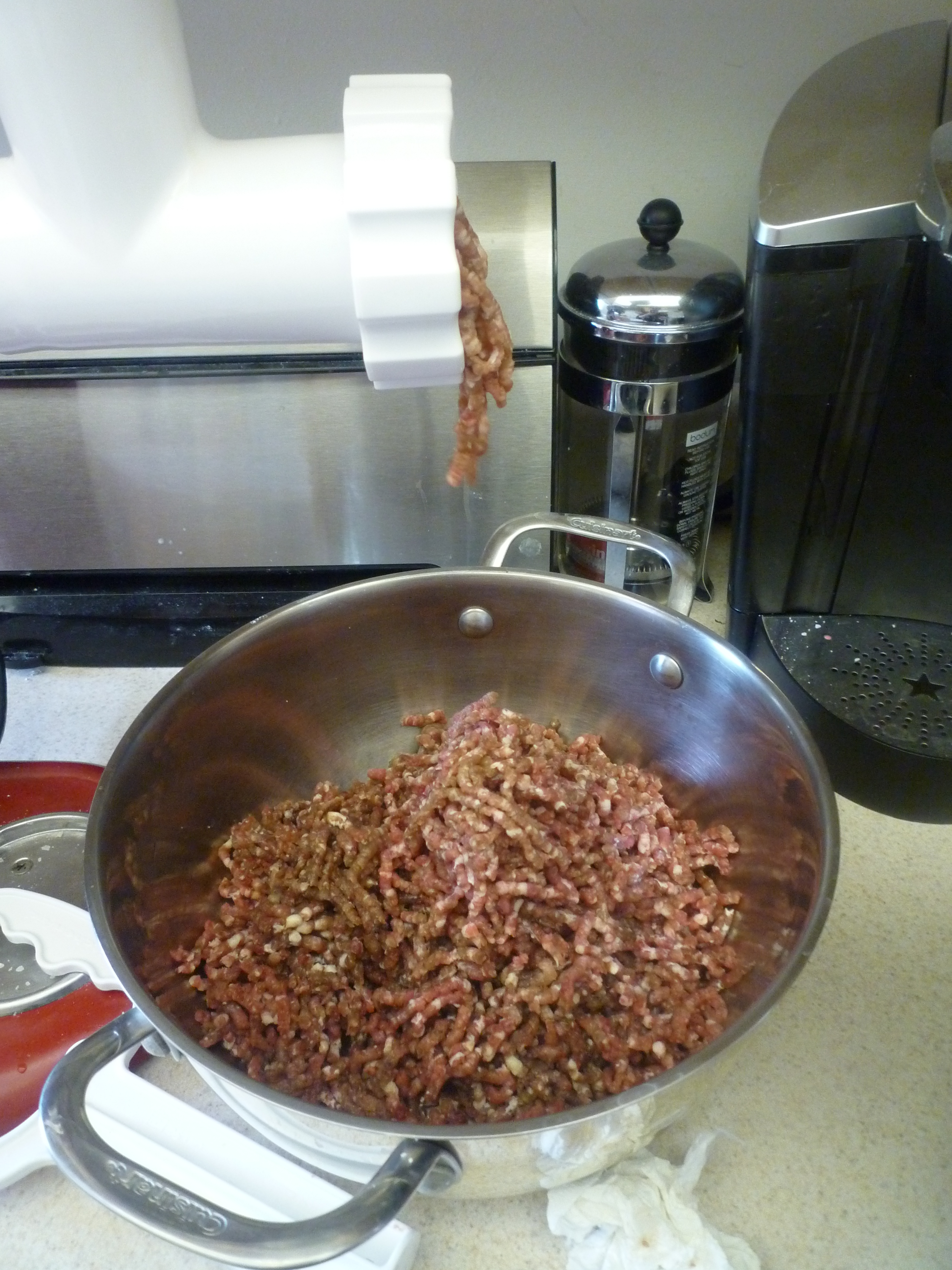
Dissolve the Bactoferm starter in the distilled water and add it, along with the rest of the ingredients, to the ground meat. Mix thoroughly to combine everything. At this point, I let the meat rest for a few hours in the refrigerator. Prior to stuffing, I also fried a small patty of the ground meat to check the seasoning.

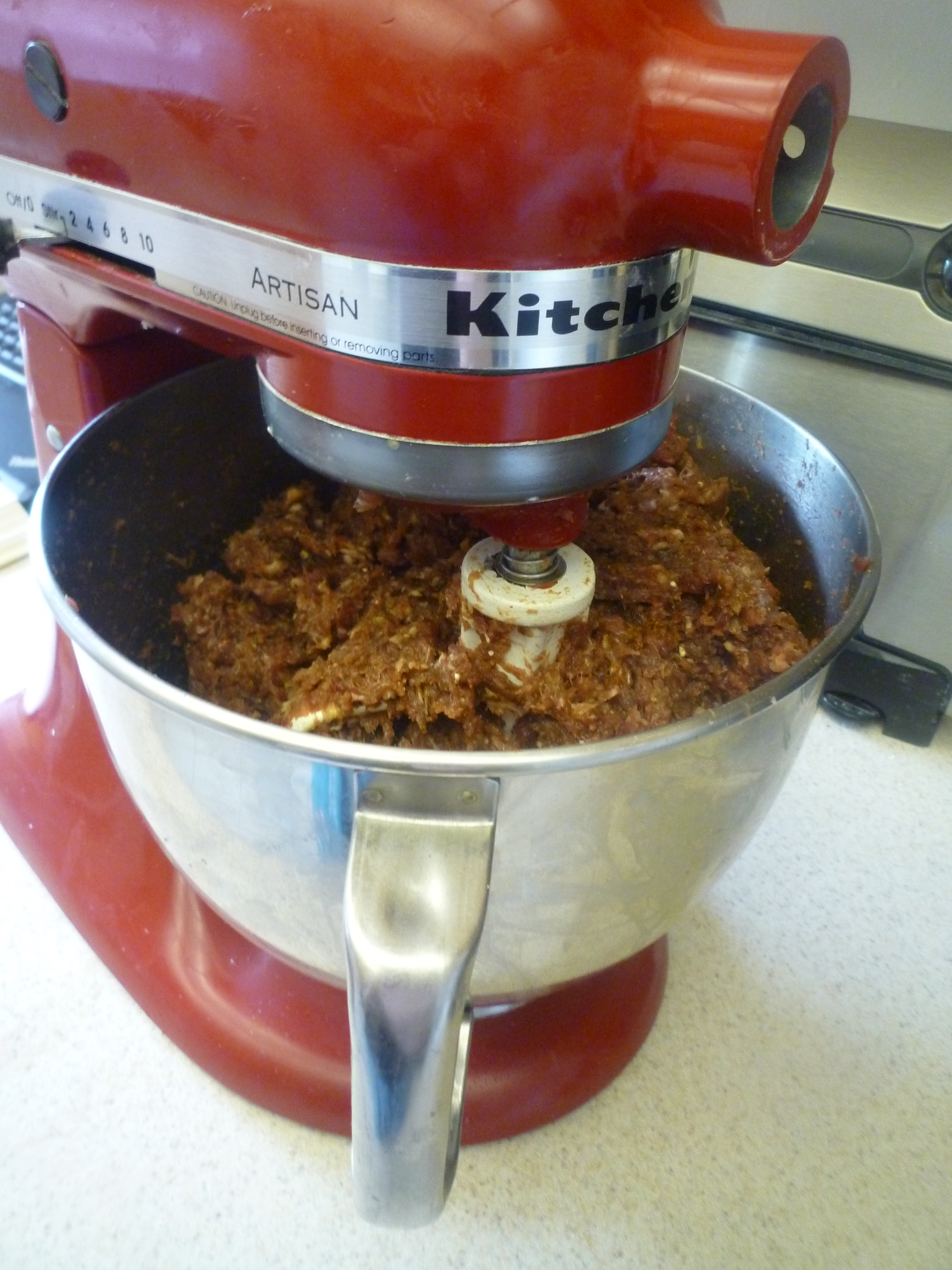
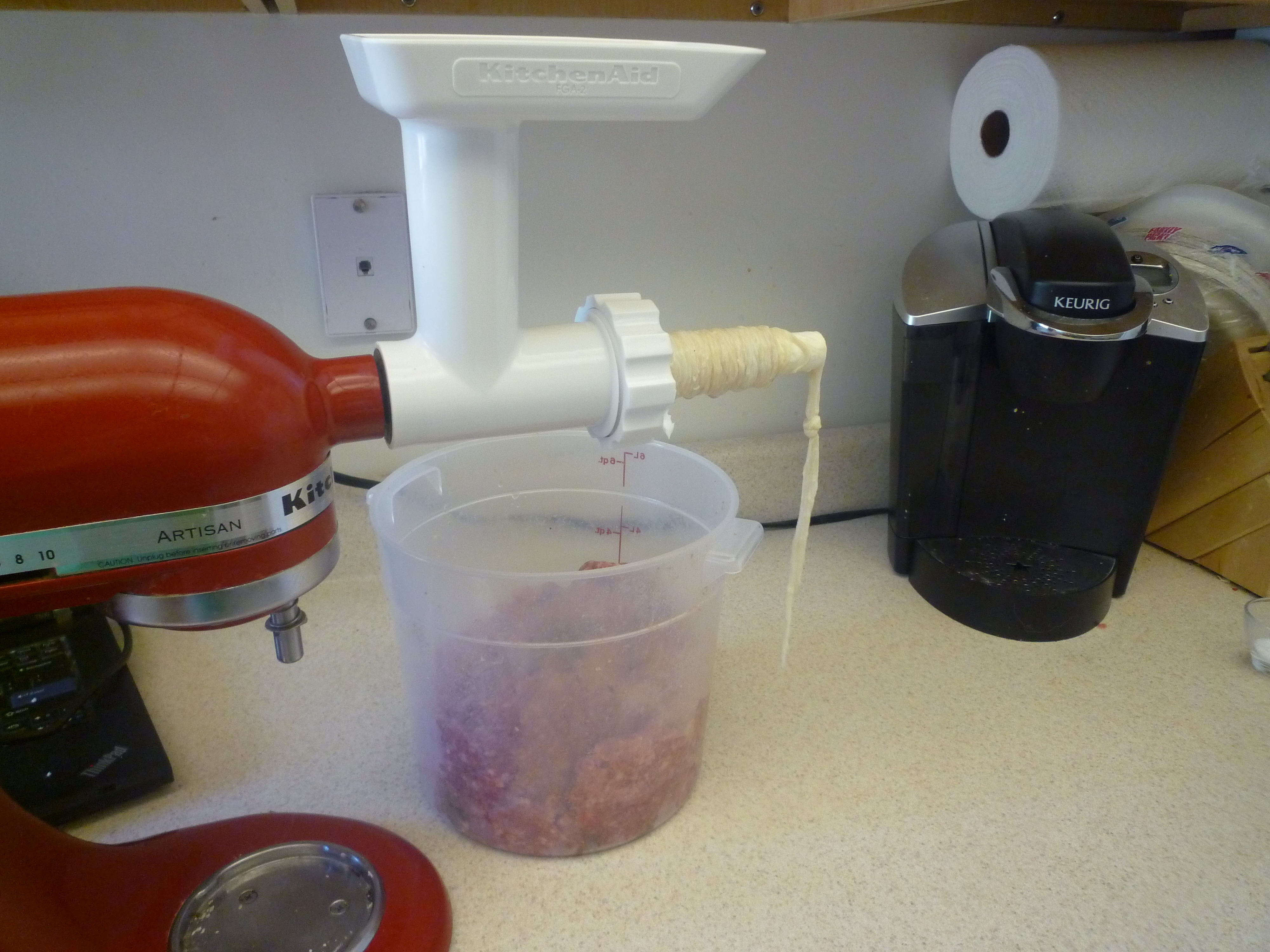
Grease a sausage stuffer (I use the attachment for the Kitchenaid) with a small amount of shortening. Find the opening in the soaked casing and run cool water down the length of the casing several times to remove any kinks, and then shimmy it onto the stuffer. Tie a knot at the end. Have a sterilized pin at the ready to remove any air pockets that form as you form the peperone. Stuff the seasoned meat into the casing using consistent speed and gentle, even pressure.

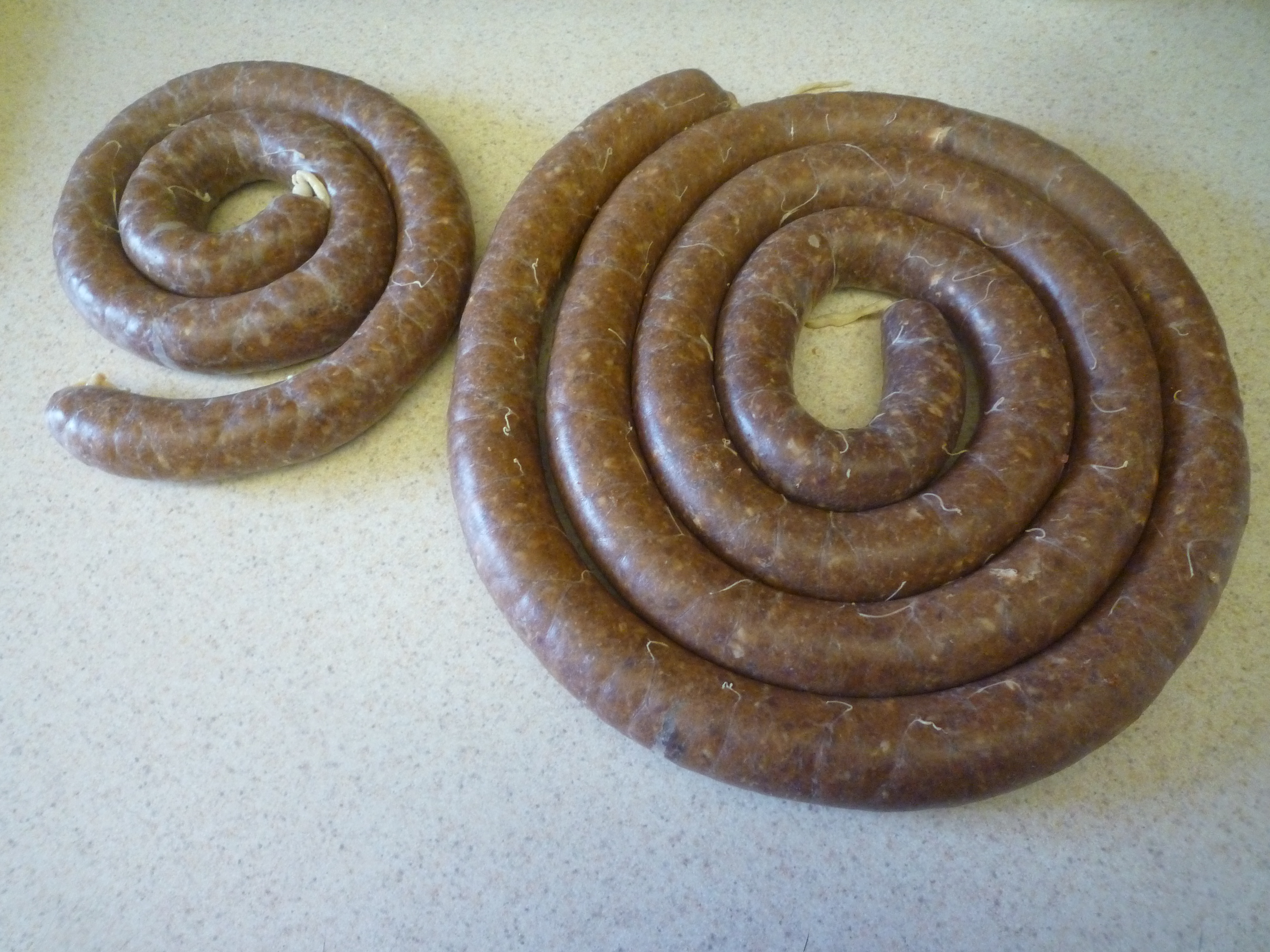
Once you have completed stuffing a rope of peperone, twist it into 10 in. links alternating directions, and then tie each link off with butchers twine. Prick the peperone all over to remove any remaining air pockets and facilitate drying. Weigh them and take note of the weight.

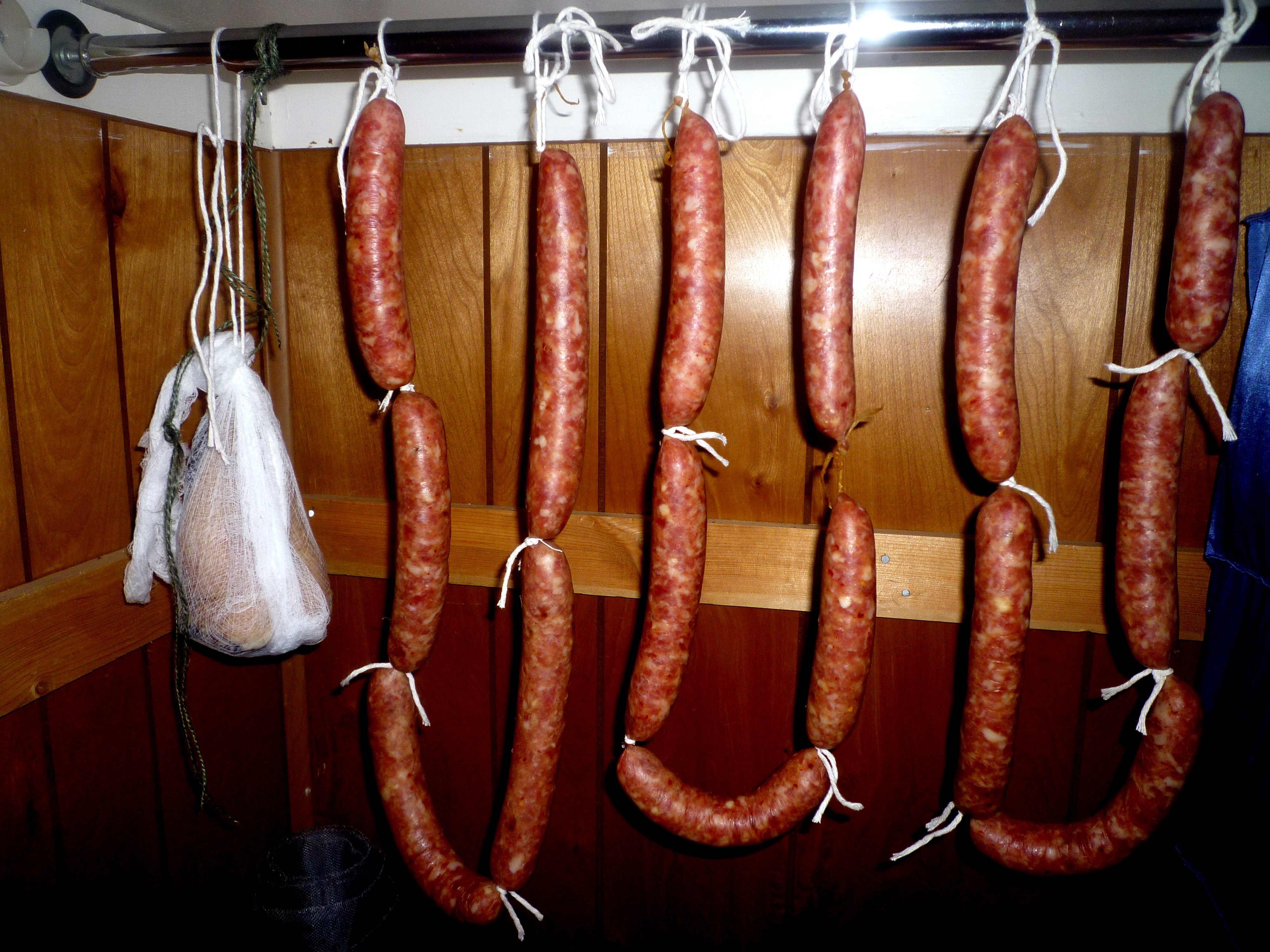
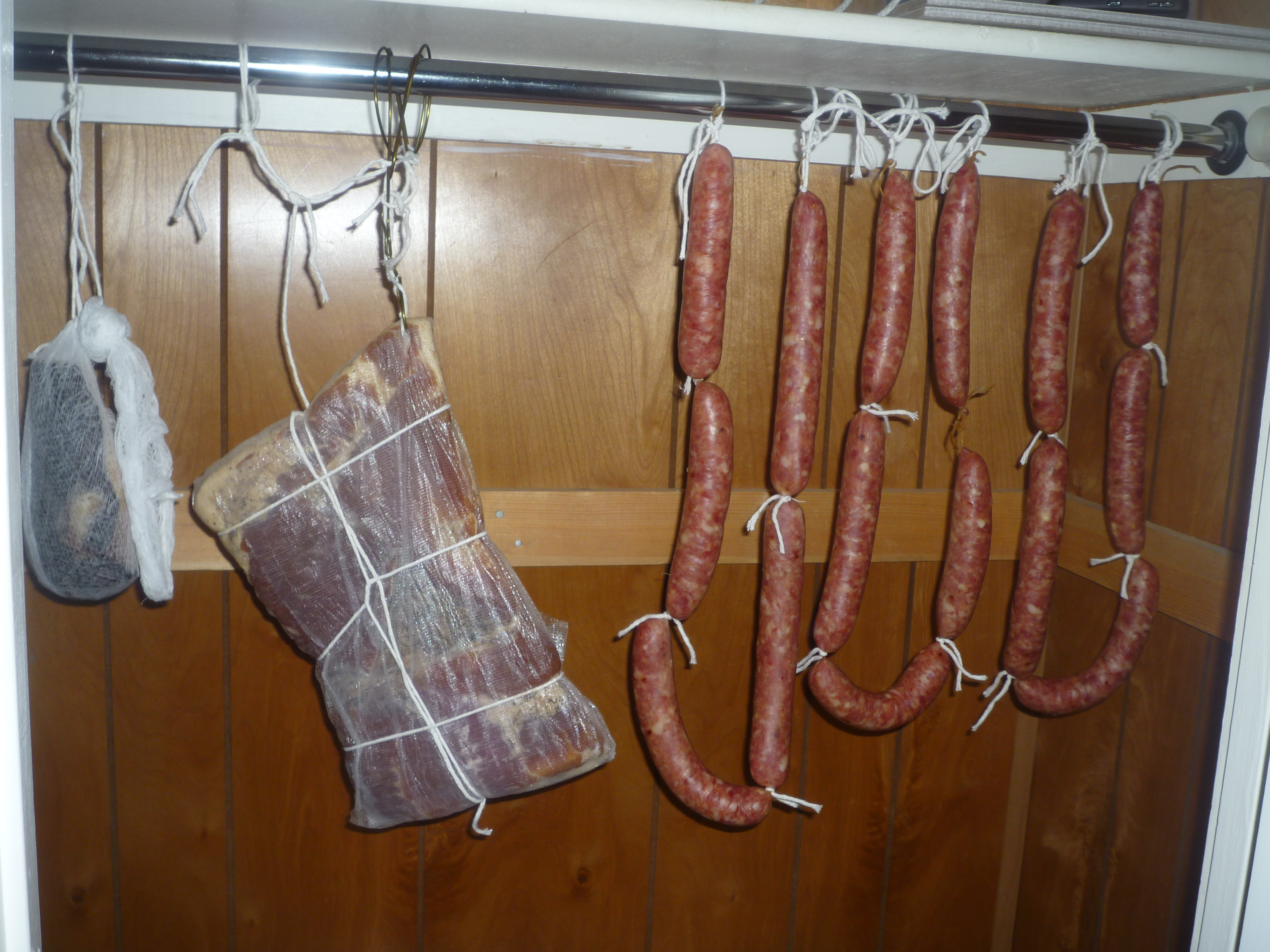
Hang the links at room temperature for 12 hours and then move to a cool, dark, humid place to dry completely. Ideal conditions are about 60 degrees and 60-70% humidity. The peperone is ready when it feels firm all the way through and has lost 1/3rd of its weight. Here it is hanging out in the drying closet on the left, with the soppressata (which is almost ready!!) on the right.

Depending on the thickness and size of the links, drying can take anywhere from one to three weeks. Then, well…mangia!

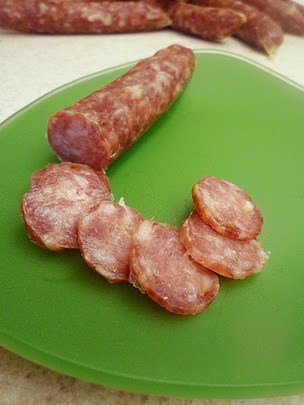
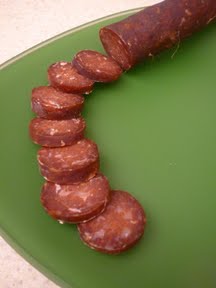
Update: Here’s what the finished peperone looked like. Had a nice little kick to it, but nothing too palate-numbing. Really worth the wait!
 

Ciao for now,

Neen

More DIY Charcuterie: Soppressata

19 Apr

As hard as it may be to believe, I don’t always feel like cooking. Like any other working person, there are days that I come home from the office entirely wiped out. There are also the rare occasions when Joe gets a fast-food craving, and unless it’s for burgers at Five Guys I usually pass. Those evenings, I turn to simple pleasures for dinner. Maybe an avocado, sliced thin with a squeeze of lime juice and a sprinkle of salt alongside thinly rolled slices of smoked turkey. If I have caramelized onions in the fridge, I might cut up some mild cheese (like queso blanco) and eat those together with a little bit of French bread.

But my favorite simple meals are things like little slices of soppressata and sharp provolone with some kind of raw or pickled vegetables on the side. That, some warm bread, and a glass of sparkling water and I’m a pretty happy camper.

Well, I did feel like cooking this weekend, and honestly, I can’t really think of why I haven’t been compelled before now to make my own soppressata. I’ve made fresh sausage lots of times. The only difference here is that this is left to dry for a few weeks.

Okay, so there are a few more differences than that, but only in the sense that you need to mix a spoonful of special salt and a starter into your ground meat. Most recipes you’ll find online don’t include them, but the authors of Charcuterie recommend them to guard against the growth of mold and prevent botulism. I’ve included a source for those ingredients and have found their shipping and service to be excellent.

Here’s what you’ll need meat-wise:

  • 4 lb. pork shoulder, cut into small cubes
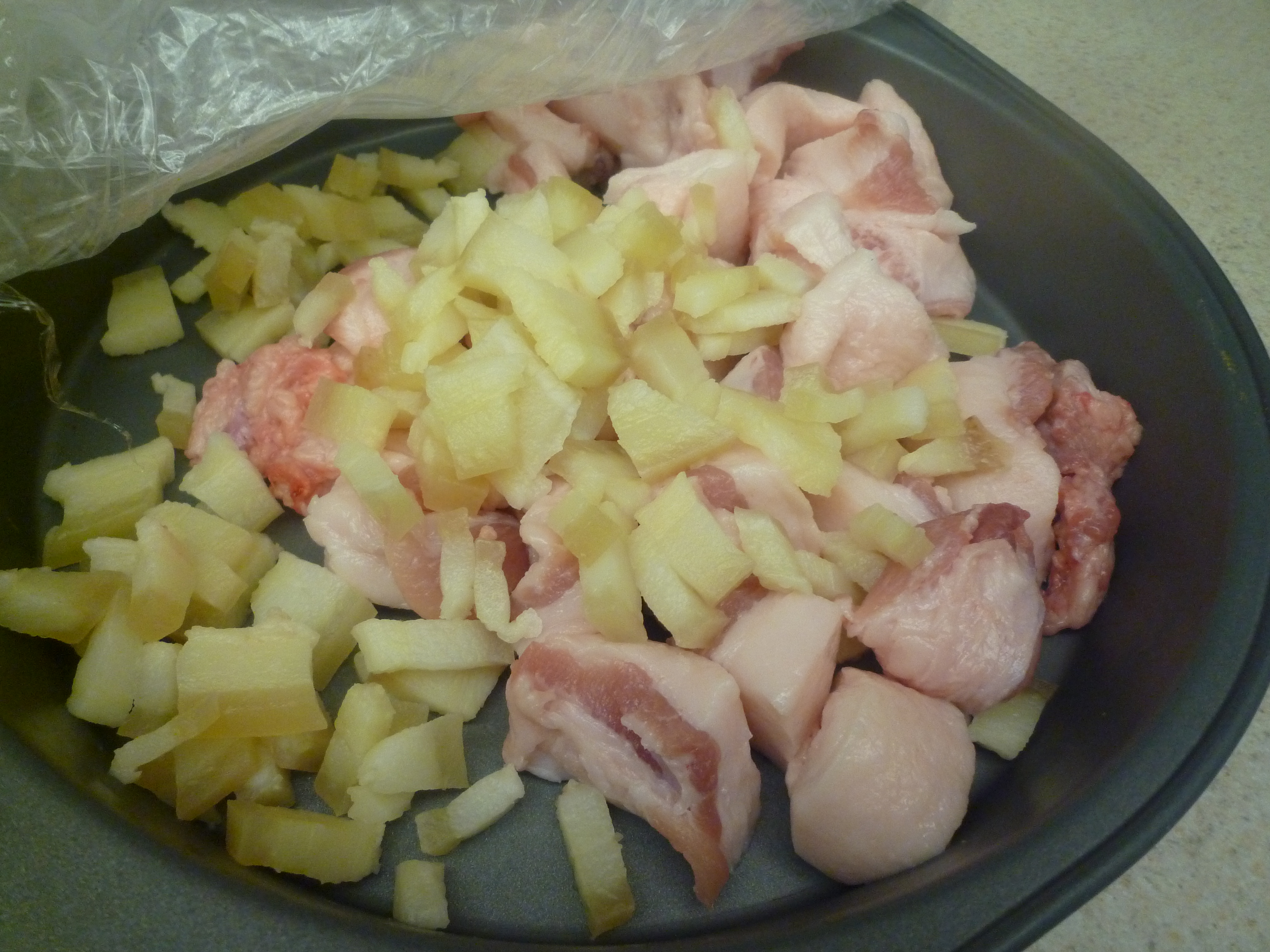
  • 1 lb. pork fat, diced (Back fat is recommended, but I used a little bit of belly fat and the fat cap from my pork shoulder.)

For the cure:

  • ¼ cup distilled water
  • 20 grams Bactoferm-f-rm-52 starter (www.butcher-packer.com)
  • 3 tbsp. kosher salt
  • 1 tsp. DQ curing salt #2, also called Insta Cure #2 (www.butcher-packer.com)
  • ½ cup nonfat dry milk powder
  • 3 tbsp. dextrose (www.amazon.com Ooh, one-day shipping!) You can also use plain sugar, but dextrose is a better food for your starter.
  • 1 tsp. ground white pepper
  • 1.5 tsp. minced garlic
  • 1 tsp. hot red pepper flakes (can be doubled if you like hot sausage)
  • ¼ cup Pinot Bianco or other dry white wine
  • 10 ft. sausage casing

Get both the fat and the meat very cold. In fact, you can even freeze the fat. This will keep it from smearing and give you those wonderful little bites of fat you see in soppressata.

Grind the fat and meat coarsely and then refrigerate.

Soak the casings in water that starts at 110 degrees F. while you prepare the rest of the ingredients.

Dissolve the Bactoferm starter in the distilled water. In a separate bowl, combine the rest of the dry ingredients for the cure and mix well.

Add the cure, wine, and starter to the meat and mix on your mixer’s lowest speed (or by hand) for a minute or two until well combined. Return the mixture to the fridge while you prepare the sausage stuffer.

Grease a sausage stuffer (I use the attachment for the Kitchenaid) with a small amount of shortening. Find the opening in the soaked casing and run cool water down the length of the casing several times to remove any kinks, and then shimmy it onto the stuffer. Tie a knot at the end.

Slowing stuff the meat mixture into the sausage casing. Have a sterilized pin handy to prick out any air pockets that form. Keep one hand on the extruded sausage and stuff as evenly as possible. (It is difficult to take pictures while doing this, but you can see more of the process in my earlier post on boerewors.) Once you have completed a rope of sausage, twist it into links alternating direction each time, or tie them off with small pieces of butchers twine. Prick the links all over with the sterilized pin to facilitate drying and remove any remaining air pockets. Weigh the sausage and take note of the pre-dried weight.

Hang the sausages to dry at room temperature for 12 hours. This will help to incubate the beneficial bacteria created by the starter. After 12 hours, move the links to a cool, humid, dark place to dry until they have lost 1/3rd of the original weight. On average, this takes 2-3 weeks.

This soppressata began drying on Saturday afternoon and was 74 oz., so it will be finished when it reaches 49 oz. See you then!

Update! Here’s a picture of the finished soppressata. It was amazing, but gone so quickly.

Ciao for now,

Neen

P.S. My basement smells delicious.

DIY Charcuterie: Pancetta

18 Apr

Picture this (if you want a laugh): Pouring rain, about 45 degrees, and I’d just come out of Eastern Market. The walk back to my office is about 6 city blocks and I had 5 lbs. of salt, a 5 lb. pork belly, a 1.25 lb. moulard duck breast, some spices, a few pieces of fruit, and a hunk of provolone cheese in my cooler bag. Oh, and I had a haddock sandwich from the lunch counter. Even if I had an umbrella, there was no free hand with which to carry it.

“You. Are. Brilliant.” I told myself. Admittedly, even if I’d had the forethought to consider how heavy my supplies would be I doubt it would have had much effect on the process. I was far too excited about my new book (Charcuterie: The Craft of Salting, Smoking, and Curing, by Michael Ruhlman and Brian Polcyn) to give much thought to my soon-to-be sore shoulders. Frankly, I was more concerned about locating a suitable place somewhere in the house that was cool, dark, and humid enough to hang cured meat.

I imagine that few people go home on Friday night with the thought, “Yes, I can’t wait to rub down a pork belly!” But that was my plan last week. I’d wanted to buy Charcuterie for a long time, but only recently convinced myself that the recipes in it were accessible enough to be done by a home cook without much special equipment.

So…who wants Pancetta?

Pancetta is cured, but not smoked Italian bacon. I chose this recipe to start with mostly for its simplicity. Also because you can buy an entire 5 lb. pork belly for roughly the same price as 1 lb. of finished pancetta. Seriously.

Here’s what you need:

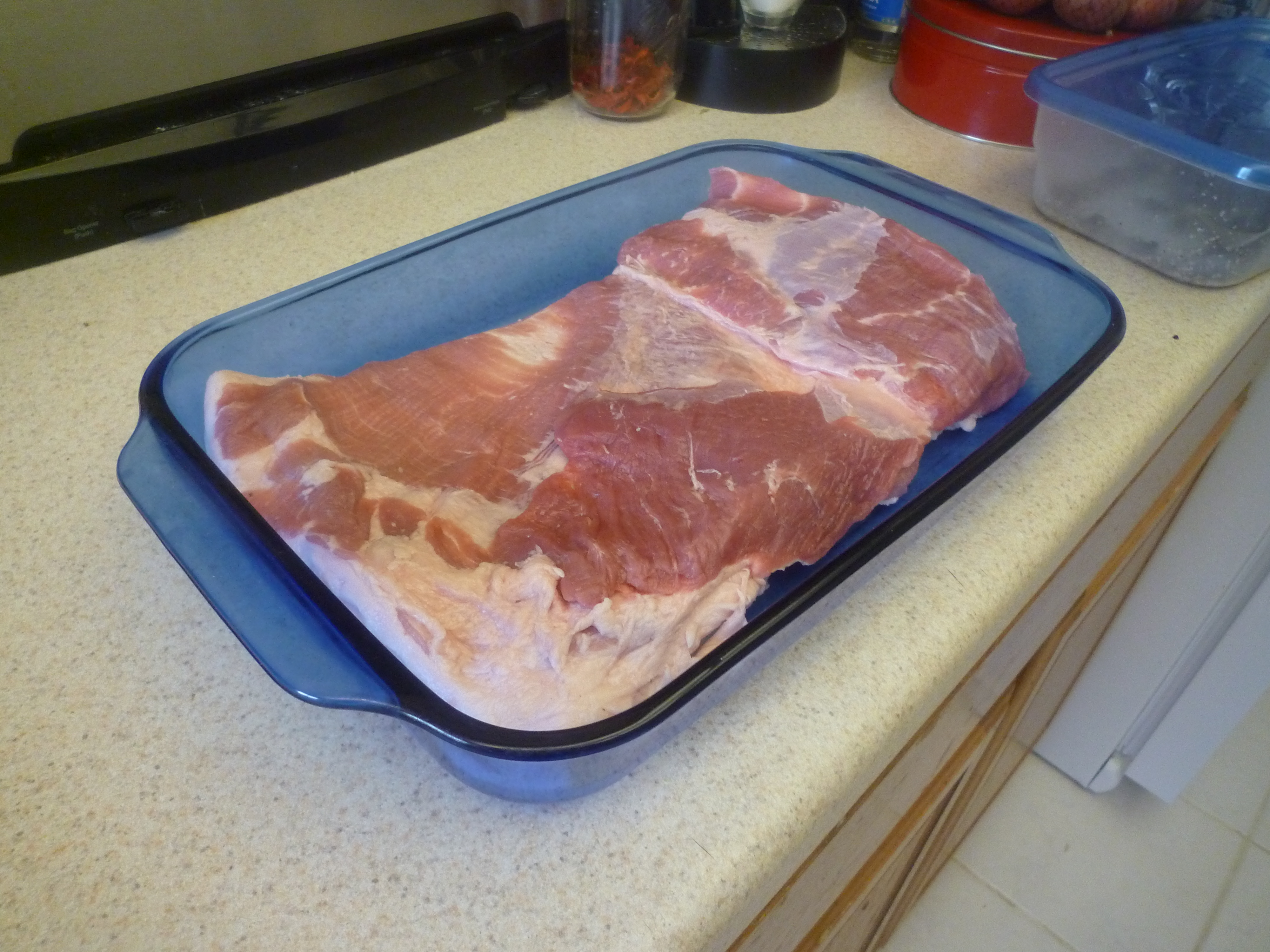
  • One 5 lb. pork belly, skin removed. (A butcher will do this for you, but if you do it at home you can save the skin for flavoring stock…mmm.)

Cure:

  • 4 garlic cloves, minced
  • 2 teaspoons pink salt*
  • 1/4 cup kosher salt
  • 2 tablespoons dark brown sugar
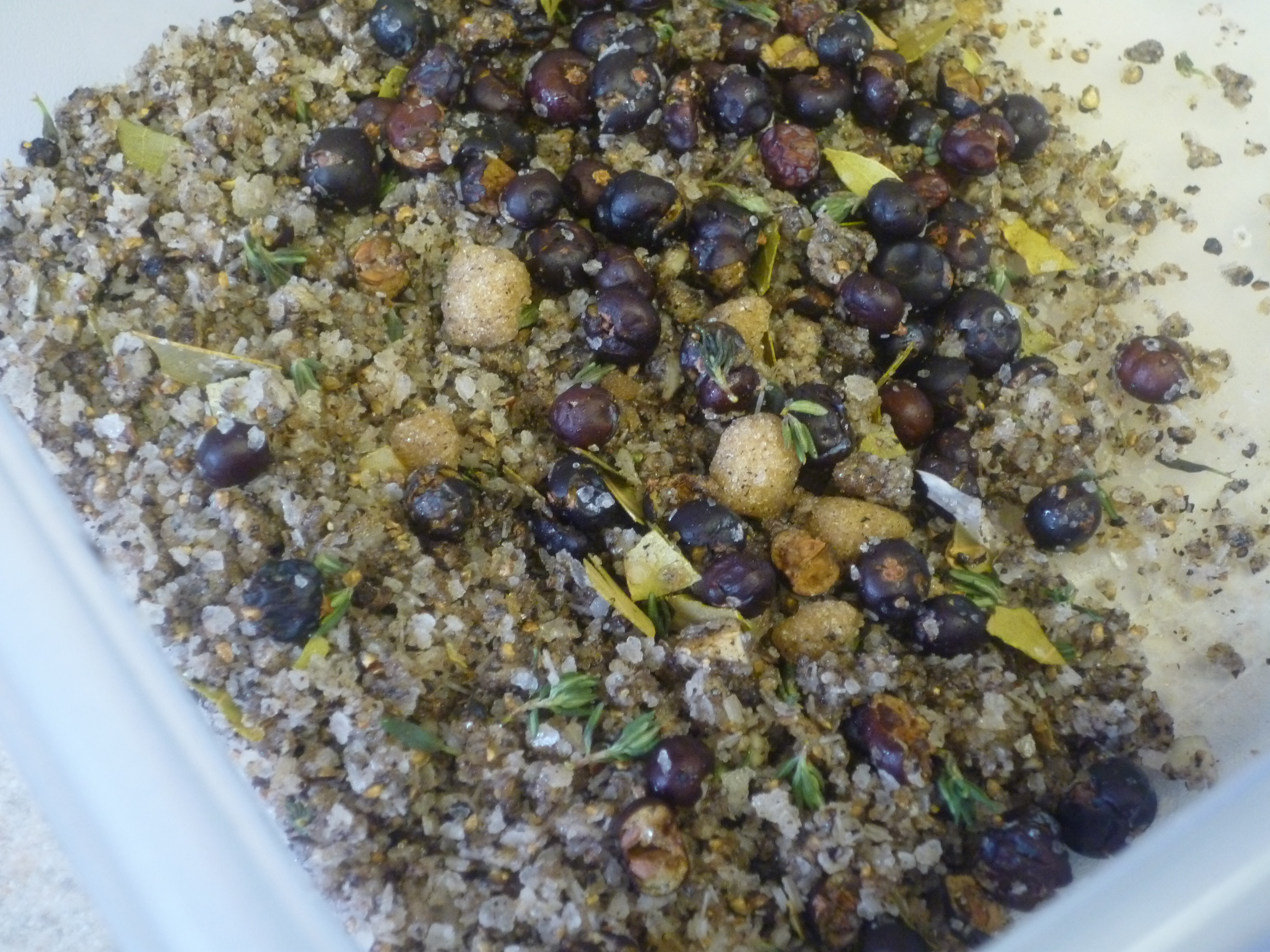
  • 2 tablespoons juniper berries, crushed with the bottom of a small saute pan
  • 4 bay leaves, crumbled
  • 1 teaspoon freshly grated nutmeg
  • 4 or 5 sprigs fresh thyme
  • 2.5 tablespoons coarsely ground black pepper

*Pink salt is a curing salt that contains nitrite and is sold under many names including Insta Cure #1 and DQ Curing salt. You can find it on Amazon.com or at www.butcher-packer.com.

Other equipment you may require: Cotton butcher’s twine and cheesecloth.

Start by cutting the belly into as uniform a square or rectangle as you can. Save the scraps for use in sausage or for making salt pork. (To make salt pork, cut the scraps into even pieces, dredge them in salt, and refrigerate in a sealed container for 12 days. Shake often to re-distribute the salt. After 12 days, rinse the pieces under cold water and pat dry. Store in the fridge in a sealed bag, they will keep for several months.)

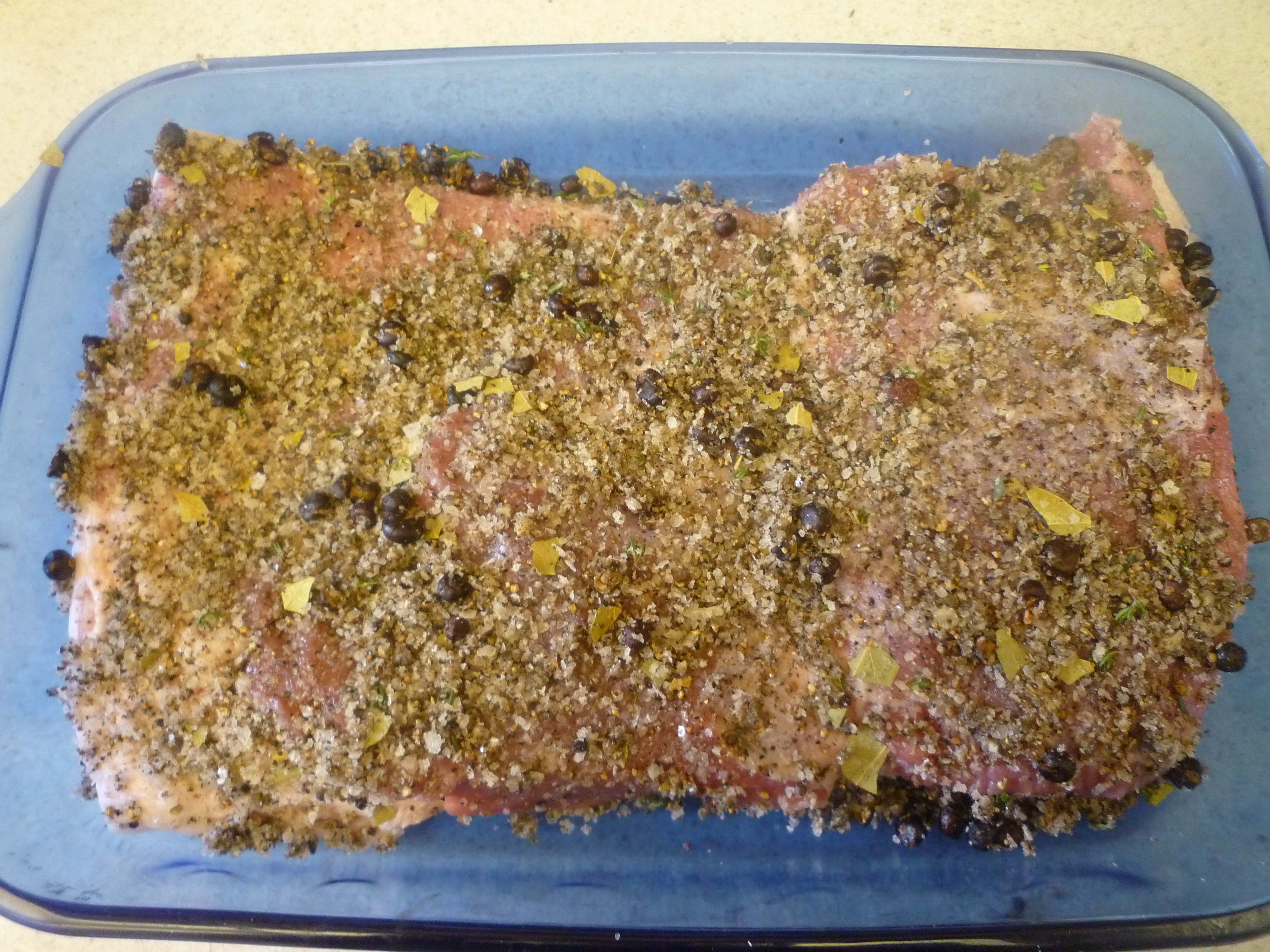
Combine the ingredients for the cure and mix together well. Rub the cure all over the meat side of the belly and place it in a non-reactive container just large enough to hold it. This belly fit nicely in a 9 x 13 in. baking dish. Cover the container with plastic wrap.

Refrigerate the belly for 7 days. Rub it to redistribute the seasonings and flip it over every other day. After a week, check for firmness. If it feels firm at the thickest point, it is cured. If it still feels squishy, refrigerate for another day or two as needed. This one required 8 full days. Here it is at the end of the curing:

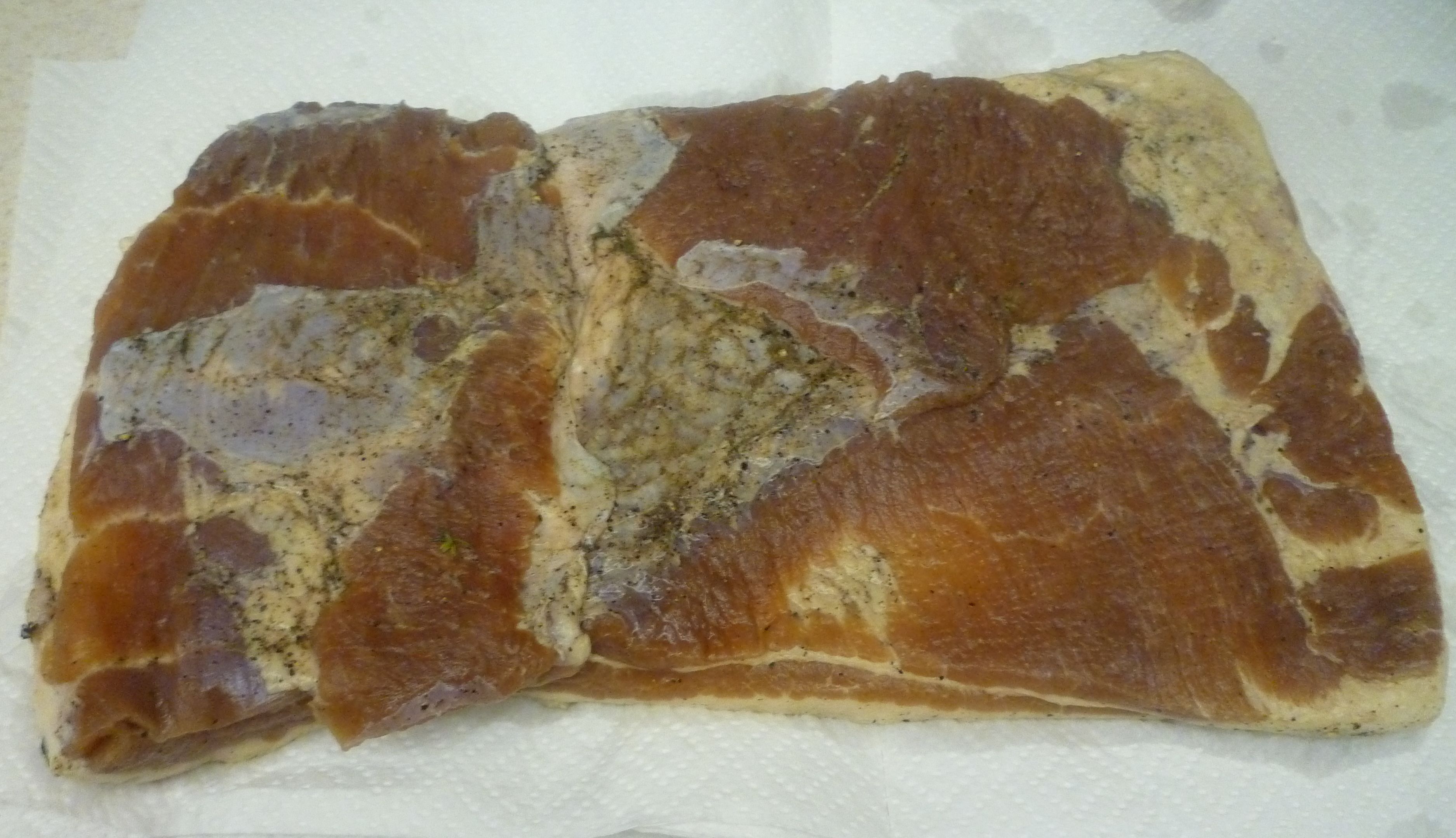
Remove the belly from the container and rinse it thoroughly under cool water. Pat dry. Sprinkle a little bit more coarsely ground black pepper on the meat side if you’d like.

From here you have two options: Pancetta is traditionally rolled up jelly-roll style and trussed into a cylindrical shape. However, if you don’t roll it tightly enough, air pockets can form inside and cause mold growth (ew). The other, easier option is to wrap the flat belly in cheesecloth, poke a hole in one corner and hang it to dry flat. I went with the latter choice.

Hang the belly in a fairly cool, dark, and slightly humid area for one week. If it begins to dry out and get hard, wrap and refrigerate it. Pancetta should be firm, but quite pliable. This is why humidity is important. If you are concerned that your air is not humid enough, put a small container of equal parts salt and water in your drying area. Our basement is fairly cool and humid and I cleaned out a closet down there for meat-drying…

Ruhlman writes that you can also opt to skip drying and that the pancetta will still taste great when it is cooked, but that the drying phase improves texture, intensifies flavor, and helps it last longer.

After drying, the pancetta should be wrapped in plastic and stored in the refrigerator for up to a month, or can be frozen for up to 4 months. Freezing makes it easier to slice thin.

Mine just went into the “meat closet” for drying last night, but I’ll post a picture when I cut into it. Yum.

Next up? The recipe for those links of soppressata hanging next to the pancetta.

Ciao for now,

Neen
Press Your Luck: The Grand Opening

2 Apr

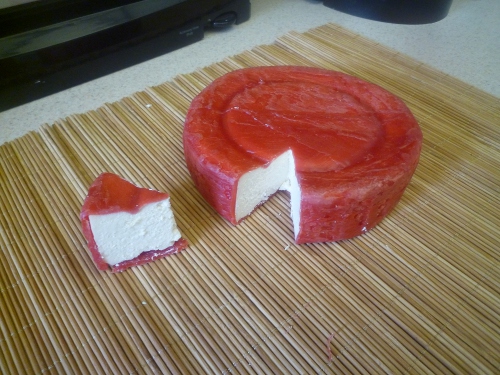
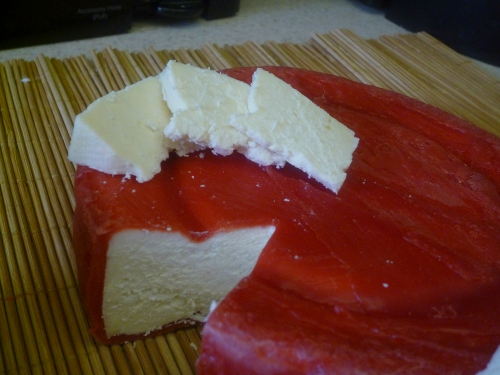
Yesterday, I cut into the wheel of farmhouse cheddar that has been so patiently aging in the refrigerator since the beginning of March. (Hooray!)

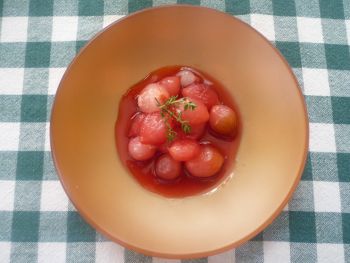
So, what’s it like? Texturally, there is a very nice balance between crumbliness and creaminess. It’s more than firm enough to slice, but has a soft mouthfeel. Flavor-wise, it is mild (since it’s still so young), but has a saltiness to it that is very pleasant. I think it will melt fairly well and would pair nicely with a plum chutney or those juicy, spicy little caramelized pearl onions I made for Joe’s birthday party.

I plan to cut half to eat in the near future and re-wax half of the wheel and let it age a few more months. I’d love to see how it tastes when it’s a little bit sharper.

Another cheesy success. What to do next?!

Ciao for now,

Neen