Archive | Breads RSS feed for this section

A Delightful Trio of Bread

26 Jan

I am constantly amazed at the variety of ways people respond to stress. Joe goes for video games. I see the appeal in that—particularly because he likes the role-playing games where the story changes based on the decisions your character makes. There’s a certain amount of control, and yet a freedom in the whole escape aspect of it. I have other friends that smoke, and some that simply insist that there’s no better way to unwind than a glass of red wine or a cocktail. Still others would chime in that the best way to relieve stress is a good, hard run.

I don’t see any of these responses in the light of “good” or “bad.” More and more I think that we need to be lenient with ourselves. Technology has allowed communication (and thus, work life) to speed up so much that I think people take what they can get to find some relief from the constant barrage of work communication. No, smoking isn’t really a great habit. Nor is drinking to excess. And if you played video games or exercised 24-7 that would be a problem too. But I think that every person needs an outlet. To say that choosing to do yoga over watching a movie is “better” because of its benefits to the mind and body is oversimplifying, in my opinion. There are days when I need yoga.

But there are also days where I need…to knead. Like I said, some folks go dancing to unwind…

I bake bread.

What is it about bread in particular? I don’t know. I’ve always loved bread. As a kid, my family teased me about being the carbo-queen. At family dinners, I’d gladly opt out of dessert in favor of another slice of fresh, warm bread.

And so maybe it is those memories of childhood… the thought of dad’s Easter bread peeking out of the oven, golden-yellow and perfect from being baked at just the right temperature after receiving a careful egg-wash… the thick slices of soft Italian bread covered in butter I used to get at Primanti’s before I was old enough to enjoy the sandwiches… the perfect toast at Jo Jo’s that sopped up the rich yolks from fried eggs on Sundays after church…

When I’m stressed out, sad, or just wanting to feel better, there is nothing so soothing as making bread. The very idea of creating the food that is the very symbol of a “staple” and sharing it with others always makes me feel warm and fuzzy inside.

Focaccia (Roman Flatbread)
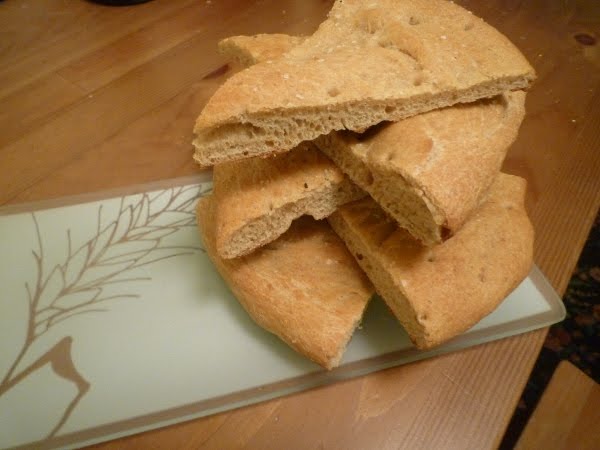

The first yeast bread I ever made was focaccia. It seemed logical to start out with something that wasn’t entirely dependent on rising or shaping…but I fell in love. A basic olive oil flatbread became heaven on a plate with a sprinkle of coarse salt or the addition of some chopped rosemary. This also makes a great pizza base. In fact, I was making a batch of this last week when Joe came home from work exhausted and prepared to order a pizza. The dough was already in the middle of rising. “No need,” I told him, “I’ll make you one.” He looked at me like I was a little bit crazy, but 25 minutes later he was eating homemade pizza.

Ingredients

18 oz. flour (I use half white and half whole wheat)
12 oz. warm water
1 tbsp. active dry yeast
1 tbsp. sugar
1.5 tsp. salt
1 tsp. olive oil

Method

Combine water, sugar and yeast and let stand until foamy (about 5 minutes). Add the flour, oil, and salt and mix well. Turn out onto a floured surface and knead until smooth.

Let the dough rise in an oiled, covered bowl until it has doubled. Punch it down, and then stretch and press it out onto an oiled sheet pan. I generally make two round loaves (about the size of a medium pizza) with this recipe. Let rise again for 15 minutes.

Brush with olive oil and a bit of coarse salt or herbs and bake at 400 degrees F for 20 minutes.

Yield 16 slices.

Perfect Bread Knots
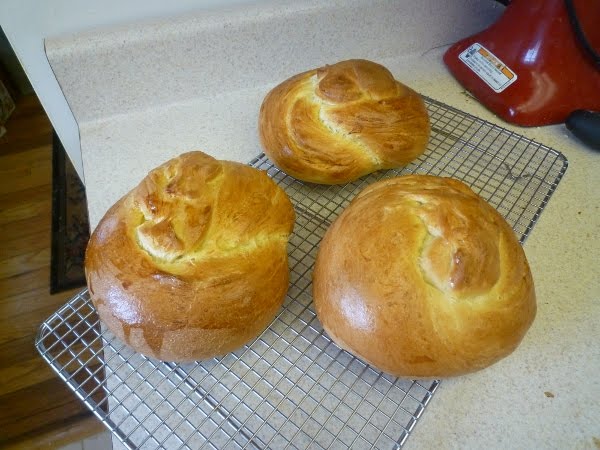

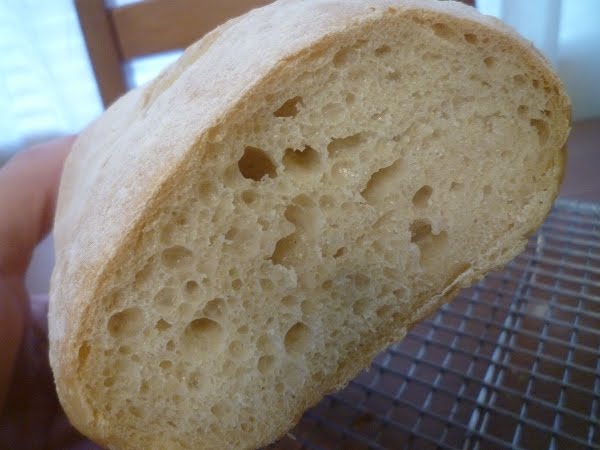
I can take no credit for this recipe. In fact, after years of stealing leftover bread knots after holidays at my parents’ house, I only recently (think: December) got around to asking my dad for the recipe. It makes 24-2.2 oz. knots, but as you can see in the picture, it works for larger shapes as well. I made three small loaves this last time around. It makes a perfect sandwich bread, but I think it’s best when it’s warm or toasted.

Ingredients

1 tbsp. active dry yeast
1.5 cup warm water
1/3 cup vegetable oil
1/4 cup sugar
6-7 cups flour
1 egg
2 tsp. salt

Method

Combine water, sugar and yeast and let stand until foamy (about 5-10 minutes). Add the oil, egg, and salt and mix well. Then add the flour, one cup at a time until a cohesive dough forms. Turn out onto a floured surface and knead until smooth. Roll into a ball and place in an oiled bowl. Cover the bowl with a tea towel or plastic wrap.

Let the dough rise at room temperature for an hour, then punch down and let rise again for a half hour. Alternatively, you can just let it rise in the fridge overnight. I think that works best, honestly.

Shape the dough into loaves or knots and then let them rise for another 15-30 minutes. Brush lightly with an egg wash (1 egg mixed with 1 tbsp. water). Bake at 375 degrees for 15-20 minutes for small knots or about 30 minutes for larger loaves. The bread is done when it is golden brown or sounds hollow when the bottom of the loaf is tapped with a finger.

Yield: 24 dinner-sized rolls

No Knead Artisan Bread
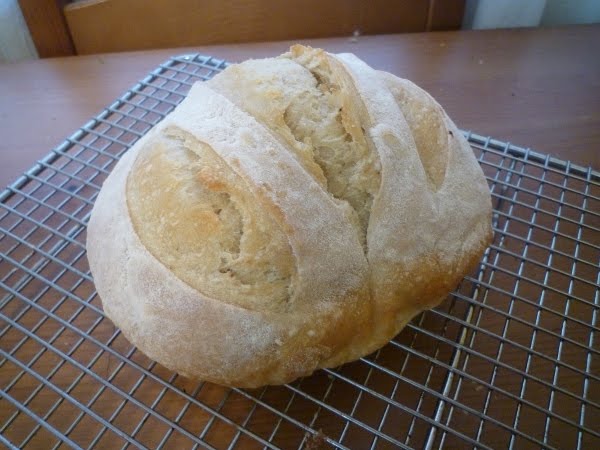

This is the easiest bread I’ve ever baked, and frankly tastes like it’s straight from a bakery. The minute I pulled the first crusty loaf out of the oven I knew that this would become my “go-to” bread recipe. The ingredients and method can be found here.

Note: I don’t have a stone or a pizza peel and this still comes out fantastic. After shaping the loaf, I simply put it on a piece of parchment paper and put a baking sheet in the oven while it is pre-heating. When the bread is ready to go in the oven, I just take it on the parchment and set it on the pre-heated baking sheet. It’s not exactly the same, but it does produce a slightly crispier crust.

If you’re someone who has always wanted to bake bread, but feels intimidated, it’s a great recipe to try. I find that the loaves are more flavorful after the dough has been sitting in the fridge for a few days, so don’t worry about using it all at once. For a few minutes of your time before or after work, you can have fresh-baked bread that is worlds better than anything you can find at the grocery store. Trust me.

When I finished baking these various breads, I felt good. But let me tell you the best part of it all:

I got to feel good again when Joe smiled as he sunk his teeth into a 3rd slice of the focaccia pizza…
And again when Amanda’s eyes lit up upon seeing the bread-knot loaf I made for her…
And again when I passed one of my artisan loaves along to Roger during a week where he had little time or energy to cook…

Bread-baking is the gift that keeps on giving. So bake some bread, and pass it on. You’ll be glad you did.

Cheers,
Neen
Mystery Food Week 2 (and Bonus Bread!)

22 Jun

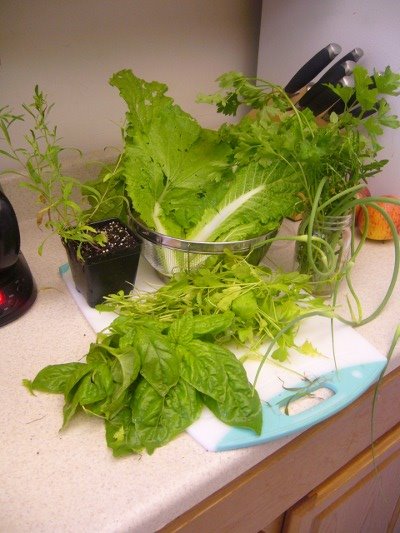
Sorry it’s taken me so long to report on Week 2’s goodies. I’ve been very busy with schoolwork. Anyway, here’s what I got:

Included in last week’s bag was an enormous head of Chinese cabbage, more garlic scapes, parsley, basil, sage, oregano, rosemary, and mustard greens. Again, I ended up making some delicious soup (recipe available here) and a hearty whole-wheat rosemary-garlic focaccia.

Focaccia, for those who may not be familiar, is an Italian flatbread made using a method similar to that for making pizza dough. I make mine entirely with whole wheat flour, which has a reputation of making bread turn out dense. Fortunately, there are ways to combat this:

Bloom the yeast: Begin with 1 cup of warm (105-110 degrees F) water and then sprinkle in 2 tsp. of dry active yeast and 1.5 tsp. of sugar. Let it sit for 5-10 minutes or until it looks foamy on top. This is a sure sign that the yeast is active and ready to work.

Flour: Add to the water 1 tbsp. of olive oil, 1.5 tsp. of salt, and about 3 and a half cups of flour. I use about half regular whole wheat flour and half whole wheat pastry flour. The pastry flour is finer and helps the bread remain more tender. Since this was to be rosemary bread, I chopped up the leaves from a sprig of rosemary and added it to the dough.

Knead, knead, knead: Once the ingredients are mixed together well, turn the dough out onto a lightly floured surface and knead for at least 10 minutes. Give those forearms and hands a good workout! Kneading helps activate gluten in the dough which will make for a better final rise. When the dough is smooth and elastic, roll into a ball, coat lightly with oil, and put it in a bowl to rise.

Rise: The rising time for whole wheat dough is significantly longer than that for all-purpose flour dough. Leave the dough in the bowl covered with a damp tea towel for a few hours in a warm place. Overnight is best. I usually sit mine on top of the stove because it’s far away from any drafts and is likely the warmest place in the house (except for the attic in the summer…). You want the dough ball to double in size. After the long rise, punch the dough down and allow it to rise for another half hour.

Oven Prep: Pre-heat the oven to 400 degrees F. Press the dough out onto a lightly oiled baking sheet (a 1/4 sheet pan works well for this amount) and very lightly brush the top with oil. I usually also add a few spices and herbs here depending on the batch. For the one I made this week, I added a little bit of coarse salt, cracked pepper, some finely chopped garlic scapes, and some more crushed rosemary leaves. Bake for 20-25 minutes or until golden on top and lightly browned around the edges.

Makes about 20 pieces at 80 calories each. Cut in half if you plan to use them for dip or fondue. I like to top pieces with sautéed peppers and onions for a really filling snack. Mangia, mangia!

NoVa/DC loca-vores, cherries are now in season and they are a-MAZing. I picked up some from Toigo Orchards at the Penn Quarter FreshFarm Market last week and can’t wait for more. I suggest getting some before I eat them all…

Have a happy Monday all!

Inspiration at the Farmer’s Market

11 May

I think that I must have been a farmer in another life.

There’s nothing that gets me more motivated to eat well and eat clean than to buy groceries fresh from their sources. I have accepted that this means putting a few extra dollars aside every week, but it is a.) incredibly important to support local farms that focus on sustainable agriculture and b.) much better for all who eat my cooking to not be unwillingly inundated with extra hormones/salt solutions…etc.

It was with that motivation that I set out for a Saturday morning trip to the Arlington Farmer’s Market. For many folks, the image of these street markets conjures up thoughts of craft stands with the occasional person selling homemade preserves or fresh herbs. Arlington’s market, however, is a clean eater’s paradise. There’s a vendor for nearly any grocery item you might need including (but not limited to) a baker that sells whole-grain products (some gluten-free items), several dairy farmers featuring fresh eggs, milk, and cheese, veggie/fruit farmers with produce of all kinds, tomato and herb plants, livestock farmers selling meat and poultry, a mushroom vendor with a wide variety of types, and even someone selling raw honey. The Master Gardener’s club also has a tent on-site to answer any gardening questions people purchasing plants might have.

This week’s trip yielded a whole chicken, some buffalo burgers and jerky, pork chops, vine tomatoes, homemade ricotta (which is so good that eating it out of the container with a spoon is perfectly acceptable) and mozzarella cheeses, a dozen eggs, two giant portobello mushrooms, baby arugula, romaine lettuce and a sweet onion.

Many of the farms are located in Loudon County, which is having their spring farm tour this coming weekend. I’ve already decided that I want to visit one of the places where you can gather your own eggs, but it’s also getting close to the time of year when strawberries are candy-like, so…decisions, decisions!

Anyway, my motivating trip to the market segued nicely into cooking. Looking to use up some of the grains I had around, I decided that pizza dough was in order…

Ingredients

2 1/4 cups whole grain spelt flour
1/2 cup whole wheat pastry flour
1/4 cup whole grain durum flour (Usually labeled as semolina, has the consistency of fine cornmeal)
1/2 tbsp. light olive oil or grapeseed oil
1/2 tsp. kosher salt
2 1/2 tsp. dry active yeast
1 cup warm water (105-110 degrees F)
1 tsp. sucanat or evaporated palm sugar

The method is the same as you’d do for any normal yeast based pizza dough…

*Dissolve the sucanat in the warm water and sprinkle the yeast on top. Allow this to sit for 5 minutes or until the yeast foams.

*In a separate bowl, combine the flours and salt. Make a well in the center and gently pour in the yeast/sucanat/water mixture.

*Add the olive oil.

*Mix until a soft dough forms and then turn out onto a board lightly dusted whole wheat pastry flour. Knead 10-15 minutes or until smooth and elastic.

*Roll the dough into a ball and put it in a bowl that has been greased lightly with olive oil. Toss to coat the dough with the oil and then cover with a towel and allow it to rise for one hour.

*Preheat the oven to 425 degrees F.

*Punch the dough down and allow it to rise for another half-hour.

*Now, you’re ready to bake! Stretch the dough out on a cookie sheet or pizza stone, top with your favorites, and bake for 15 minutes. (I made some homemade sauce out of those vine tomatoes and topped with the fresh mozzarella and a few dollops of ricotta)

NOTE: I did a slow-rise with this the first time I made it (24 hours in the fridge as opposed to 1 hour in a warm place), but it came out a touch tough. I prefer a crust that is crisp on the outside, but has a little softness to the bite.

A common complaint from people who try this and other whole-grain based breads/crusts is that it’s heavy. Yes, it’s true. I ate one piece of this pizza and was full for the rest of the afternoon. (Joe had two pieces and was full to give you an idea of how the average stomach reacts.)

You’re absolutely going to feel full. Eating whole grains means that you’ve got to digest every part of the grain including the germ, bran, and kernel. It takes a lot of time and effort for the body to do that. When you eat refined flour, a lot of those elements get taken away, thus it takes more to fill you up. This is, I think, the main issue in the American diet that causes weight trouble. Most of what’s hanging out on the grocery store shelves contains huge amounts of highly-refined ingredients, which in turn allow us to eat large quantities without feeling full. Add sugar, fat, and salt and you’ve created the drug that so many of us get hooked on.

Fortunately, many farmer’s markets (including Arlington for those of you in my area) stay open year-round, and more and more natural food stores are opening up and forcing competition with some of the chains. While it’s still more expensive than a trip to Safeway, I find that I am able to stretch the ingredients I buy further because I’m eating less. (We did have more than half of a pizza left yesterday!)

If you want to try some different flavors, replace the whole wheat pastry flour with garbanzo bean or white bean flour. It’s a neat texture difference and really nice if you have a bit of a gluten-sensitivity(it is not, however, gluten-free).

That’s all for now! Hopefully, the next few weeks will mean more time to experiment while I’m on break from school. If you have a recipe that you’d like to see reformed for a clean diet, please shoot me an e-mail at bananafish711@gmail.com. I’d be glad to give it a go!

Ciao friends!
-Neen